Clinic-to-Home Skincare: Why Korean Products Borrow From Treatments
From PDRN-inspired creams to calming post-laser masks, Korean skincare often follows what happens in the clinic.
By A Drop of Seoul Editorial ·
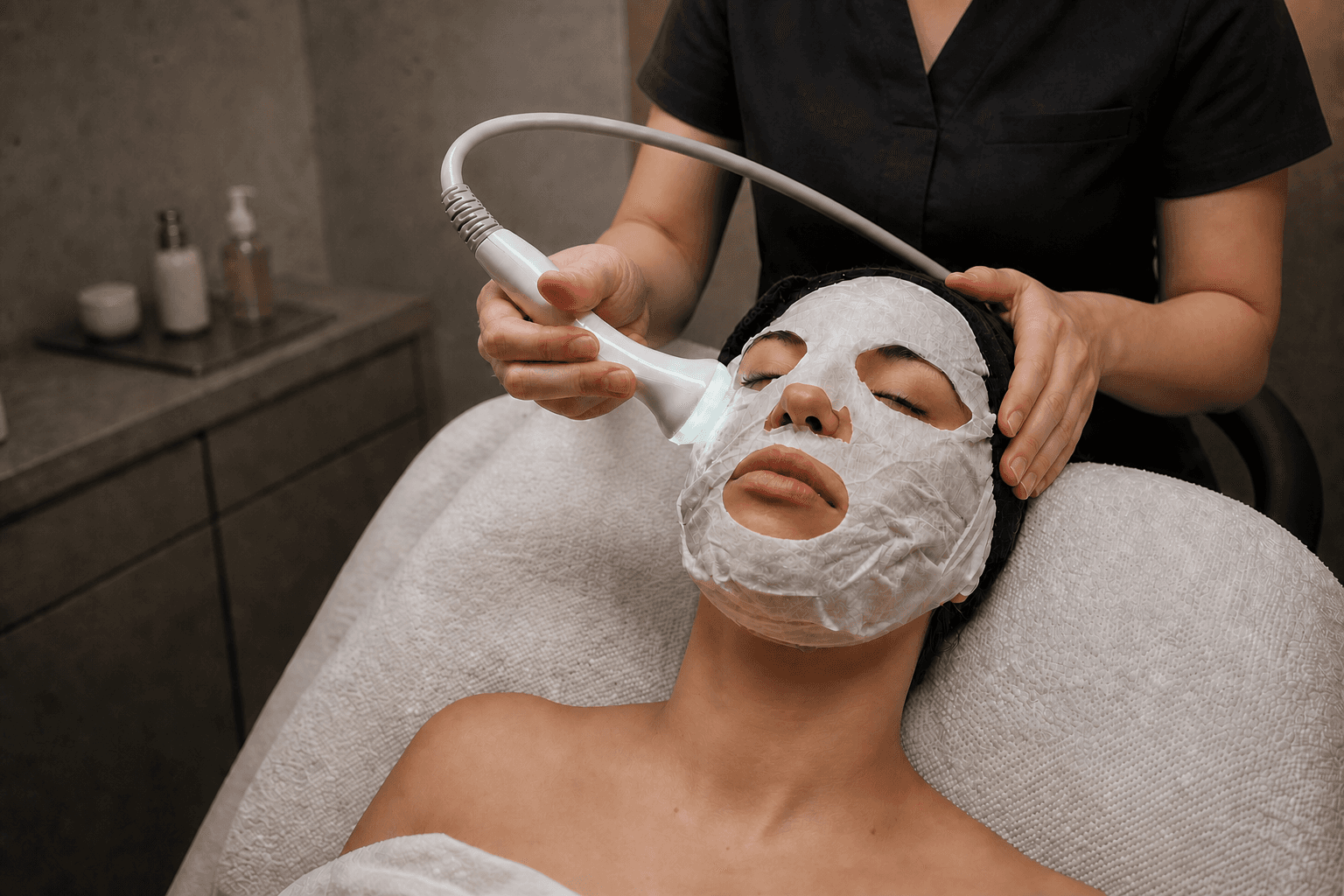
One reason K-beauty moves so quickly is that Korean skincare and Korean clinics talk to each other. A treatment becomes a buzzword. A recovery step becomes a sheet mask. A procedure-adjacent texture becomes a serum. Soon, the product shelf starts sounding like a dermatology waiting room.
This can be exciting. It can also be confusing.
Quick answer
Clinic-to-home skincare means at-home products inspired by professional skin treatments, post-treatment recovery, or clinic ingredients. Think PDRN-inspired creams, spicule serums, calming masks, barrier creams, and sunscreen routines. These products can support skin maintenance, but they do not equal in-clinic procedures.
For the gentle recovery version, read Post-Treatment Recovery Routine.
Why this happens in Korea
Skin clinics are a visible part of beauty culture in Seoul. People may visit for lasers, facials, acne care, skin boosters, or maintenance treatments. Product brands watch what people do before and after those visits. The result is a retail shelf full of formulas that promise recovery, glow, calming, or "booster" effects.
That does not mean every product is medical-grade. It means the language of clinics travels fast.
Common clinic-to-home categories
PDRN-inspired skincare.
PDRN is discussed heavily in Korean beauty because of its association with regenerative treatments and skin boosters. In skincare products, it is usually positioned around bounce, recovery, and glow. Treat it as a support ingredient, not a procedure in a bottle.
Spicule products.
Spicule or microneedle-inspired skincare creates a prickly application feel and is marketed around delivery and texture. It can be too much for sensitive or barrier-damaged skin. Do not combine it casually with acids and retinoids.
Post-treatment masks.
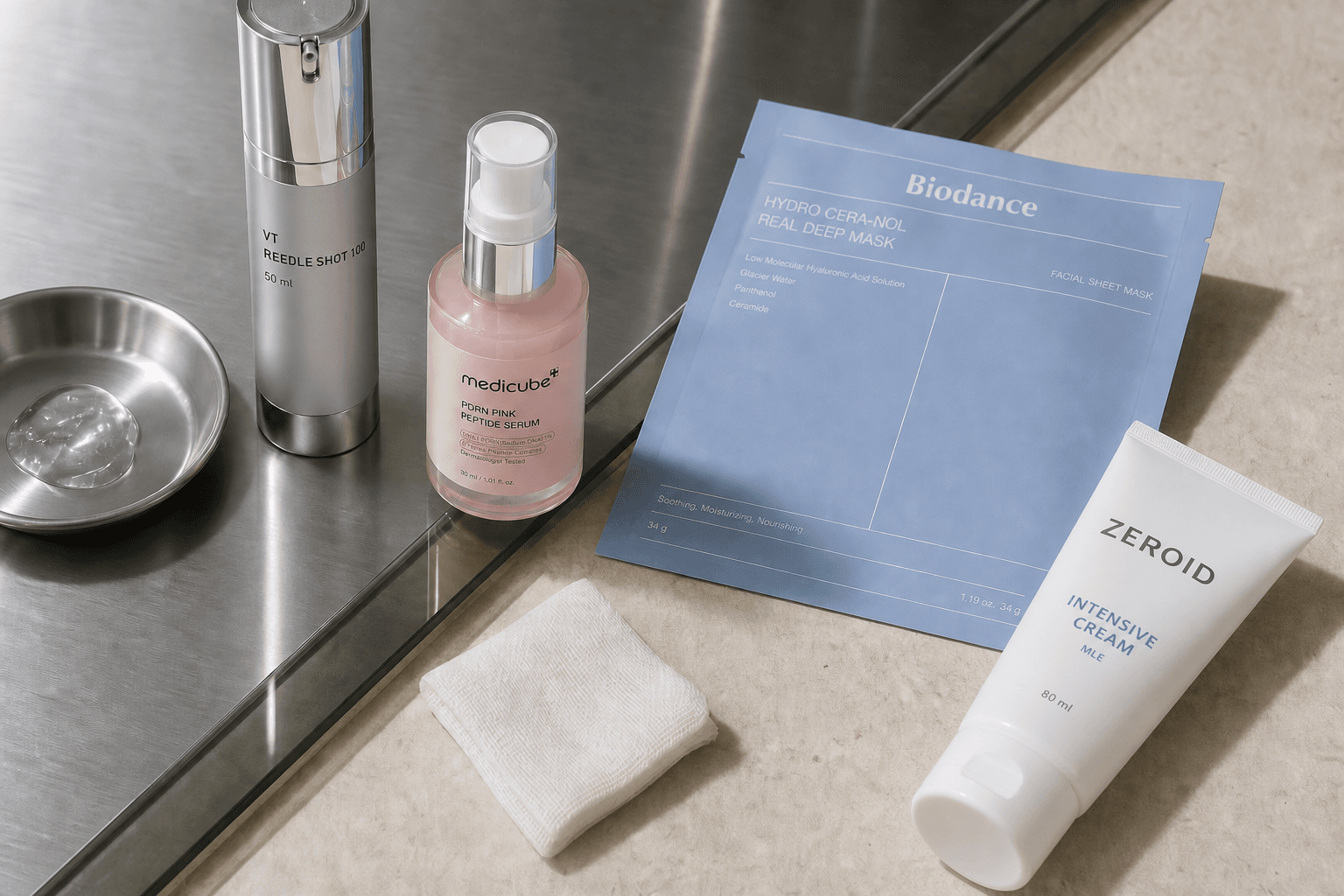
These usually focus on calming: centella, madecassoside, panthenol, allantoin, hyaluronic acid, and ceramides. This category often makes the most practical sense at home.
Barrier creams.
These are the least flashy and often the most useful. After any aggressive routine, the skin usually needs moisture, lipids, and time.
How to use clinic-inspired products wisely
Ask what the product is actually doing. Is it hydrating? Calming? Exfoliating? Creating controlled irritation? Supporting the barrier? If you cannot answer, do not build a whole routine around it.
Introduce one clinic-inspired product at a time. Keep sunscreen strong. Avoid using spicules, retinol, exfoliating acids, and strong vitamin C together unless your skin is very tolerant and you know exactly why.
What this means for A Drop of Seoul readers
Clinic-to-home is culturally important because it shows how Korean beauty blends retail, dermatology, and daily habit. It is not only about shopping. It is about how a city turns professional beauty language into routines people can understand and try.
That is why we cover it carefully: curious, practical, and allergic to miracle claims.
Read next
For a slow-aging routine that borrows carefully from this world, read Korean Skincare in Your 30s. For irritated skin, use A Korean Barrier-Repair Routine.
FAQ
What does clinic-to-home skincare mean?
Clinic-to-home skincare means at-home products inspired by professional treatment culture, recovery care, or clinic ingredients. It includes PDRN-inspired creams, spicule products, calming masks, and barrier creams. These products can support a routine but do not replace procedures.
Is PDRN skincare the same as Rejuran?
No. PDRN skincare products are topical formulas, while Rejuran and similar treatments are professional procedures. A cream or serum may borrow the ingredient story, but it cannot deliver the same result as an in-clinic treatment.
Are spicule skincare products safe to use at home?
Some people tolerate spicule products, but they can irritate sensitive or damaged skin. Avoid combining them casually with retinol, exfoliating acids, or strong vitamin C. Patch test and start slowly.
What should I use after a Korean skin clinic treatment?
Follow your provider's instructions first. In general, the safest categories are gentle cleanser, calming hydration, barrier moisturizer, and sunscreen. Avoid strong actives until your skin is clearly recovered.
Why do Korean skincare products talk about clinics so much?
Korea has a visible skin clinic culture, so retail skincare often borrows clinic language around glow, recovery, and boosters. The important question is what the product actually does at home: hydrate, calm, exfoliate, or support the barrier.