A Slow Sunday in Seoul
A day with no landmarks. This is the one people end up remembering.
By A Drop of Seoul Editorial ·
Every Seoul itinerary is additive. One more neighborhood, one more café, one more palace, one more thing that closes at six so you'd better hurry.
This is the opposite. It's the day we'd give a friend who's been here four days and has started to look slightly hunted.
Nothing on it is a landmark. If you skipped every stop, nothing would be lost. That's the point — and it is, without fail, the day people bring up afterward.
Quick answer
Coffee somewhere unhurried. Then water or a hill. Then a bookstore. Then one shop, not five. Then a long dinner.
Two rules make it work: pick one side of the river and stay there, and don't book anything.
First, what's actually closed
Sunday in Seoul is not a shutdown day the way it is in parts of Europe. Almost everything commercial is open — often busier than a weekday. But a few things catch people out.
Galleries are usually closed Sundays and Mondays both. If art is what you want, this is a Saturday plan, not a Sunday one. The Hannam gallery row is a Tuesday-to-Saturday proposition.
Museums are typically closed Mondays, so Sunday is fine for them — but they'll be full.
Department stores close one or two days a month, usually a Monday, and the date moves. Check before you build a plan around one.
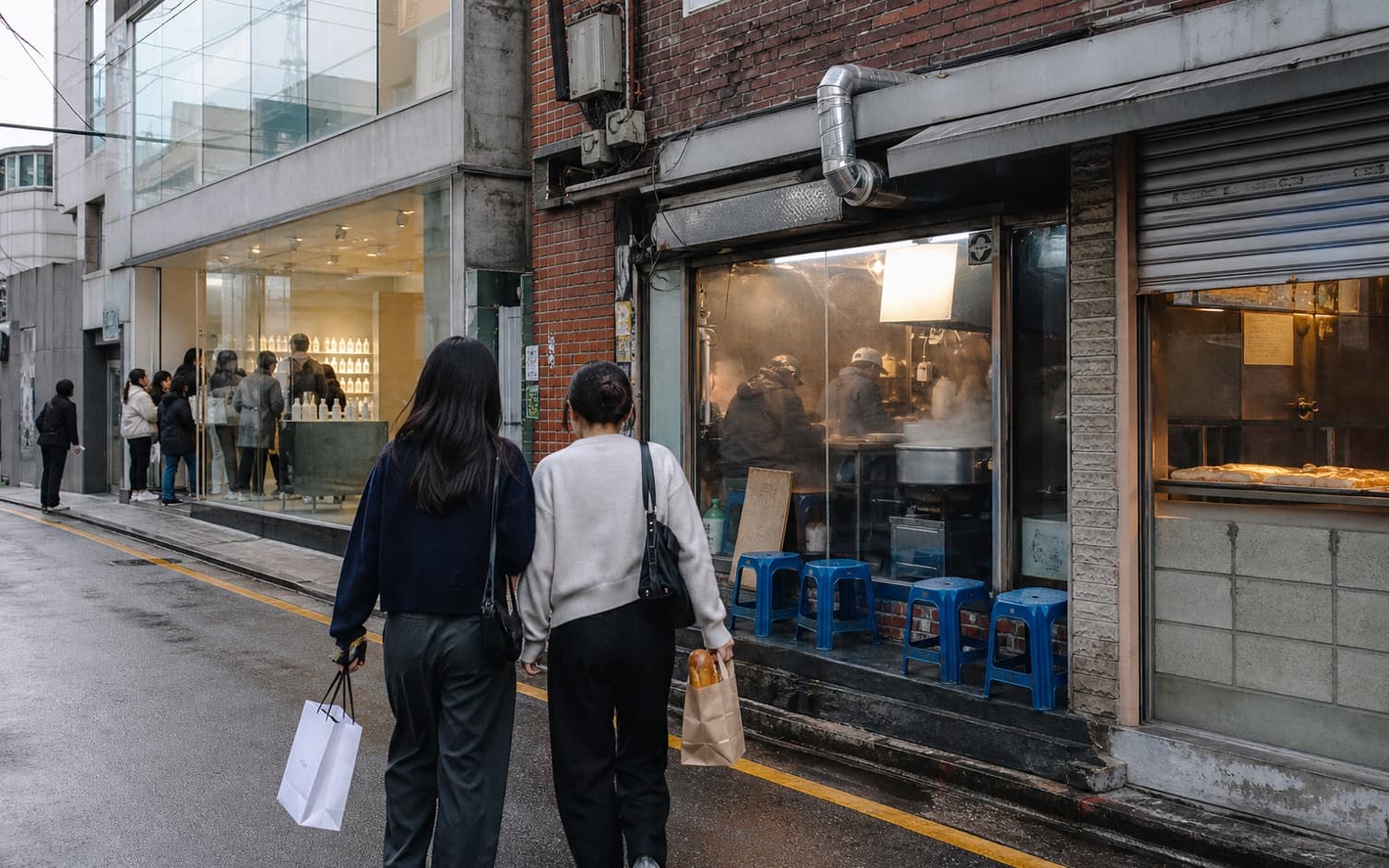
Seongsu and Ikseon-dong are at their worst on a Sunday afternoon. Genuinely. If your image of this day involves a photogenic café lane, understand that you'll be queueing in it with several thousand other people who saw the same post.
Late morning: coffee, sitting down
Start late. This is the entire premise.
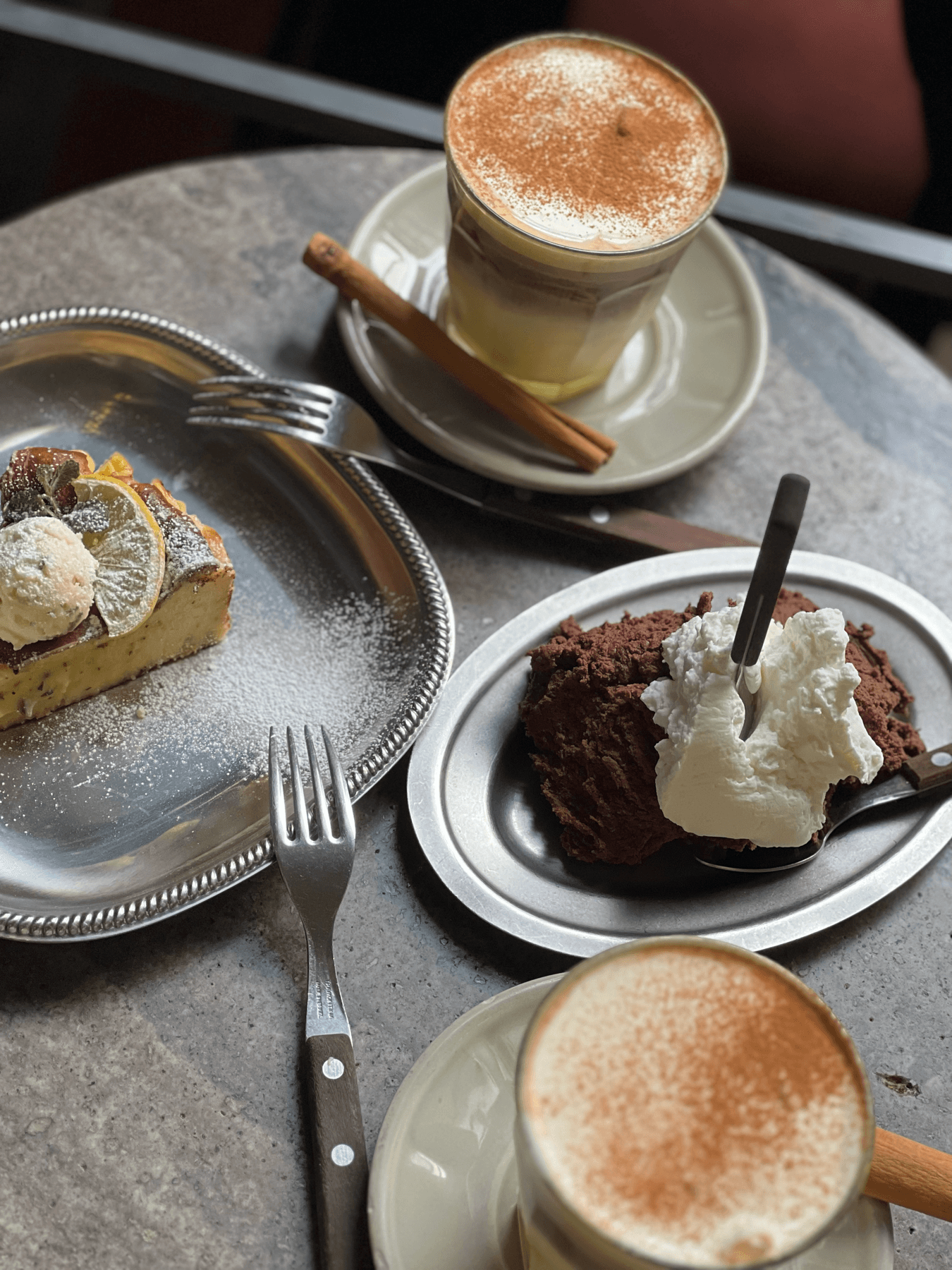
The coffee itself is easy — Seoul's standard is absurdly high and you're rarely more than two minutes from something good. What you're choosing is the type of room.
If you want the original warehouse thing: Onion Seongsu is the converted factory that's widely credited with turning Seongsu into a café district, and the bakery counter is genuinely good rather than merely photogenic. Go before 11am or accept the queue.
If you want something dramatic: NUDAKE Tea House sits on the fifth floor of Gentle Monster's Haus Nowhere near Seoul Forest Station — tea and dessert as installation.
If you want good coffee and nothing else: Mesh Coffee near Seoul Forest is takeout-only, no seating, entirely focused on the brew. Take the cup and walk. Which is the next part anyway.
Midday: water or a hill
Pick one. Don't do both.
The river
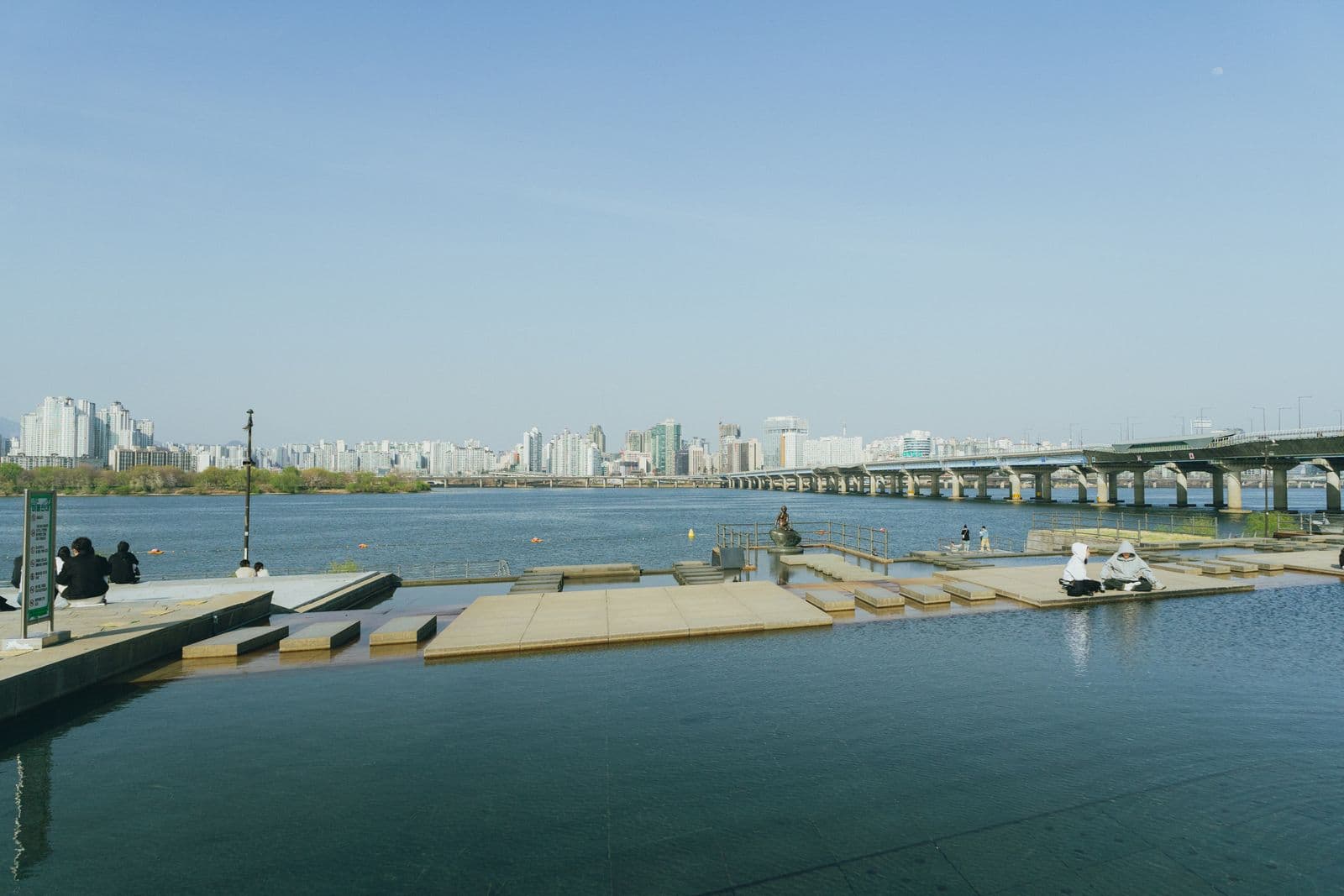
The Han is the thing visitors consistently under-use, and Sunday is when it's most itself — families, couples, cyclists, people who have simply come to lie down.
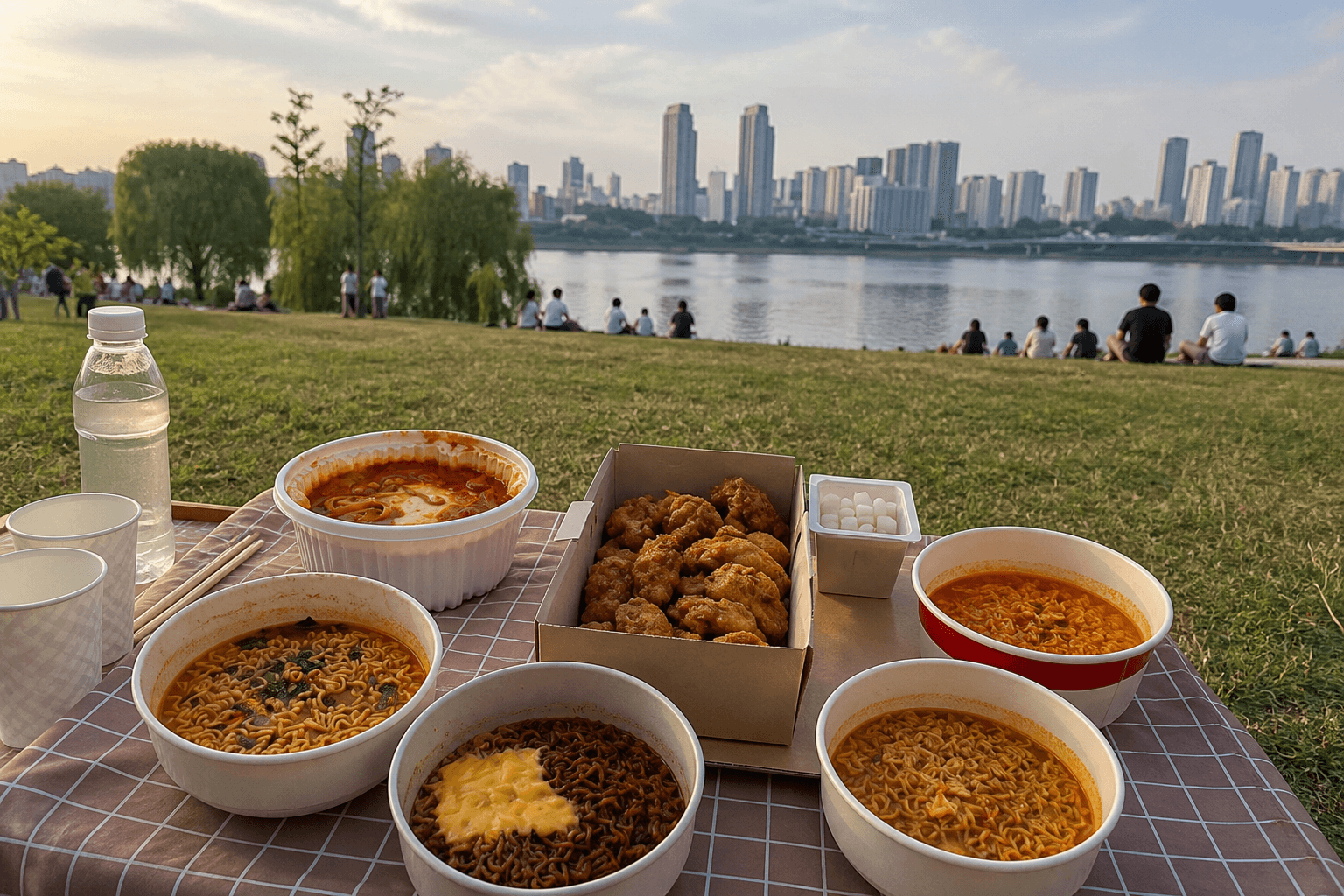
The local ritual, and you should do it: the riverside convenience stores have hot-water machines for instant noodles. You buy a cup ramyeon, cook it at the machine, and eat it sitting on the grass looking at the water. It costs about ₩2,000. It is, unironically, one of the best things about this city.
Bring or buy a mat. Order fried chicken to the park if you want the full version — delivery to the riverside is a normal, well-established thing here, and the drivers find you.
The hill
Or go up. Seoul is ringed by mountains and Koreans use them constantly — around 78% of adults go to a mountain at least once a month, and Bukhansan alone drew roughly 7.53 million visitors in 2025, more than any other national park in the country. It's inside the city limits.
The important part: you don't have to summit anything. The clear trend here is toward 둘레길 (dulle-gil) — the gentler perimeter trails that circle a mountain rather than climb it. Roughly 83% of people surveyed say light trekking is what's growing, not peak-bagging.
Namsan's loop is the easy version and reachable from almost anywhere in the center. Seoul Forest is the flat version if a hill is more than you signed up for.
Go with someone and talk. That's how it's done here. More on Korean habits worth stealing.
Late afternoon: a bookstore
Seoul takes bookstores seriously, and a Korean bookstore is a genuinely good place to spend an hour even if you can't read a word of Korean.
The reason is the design sections, the stationery, the art books, and the fact that nobody will approach you. Large chain bookstores have vast English-language sections and enormous stationery floors. Sounds Hannam has a bookstore inside a courtyard complex, which is the more atmospheric version.
The souvenir angle: this is where to buy something worth carrying home. Notebooks, art books, small objects. Our full souvenir list leans heavily on this category for a reason.
Early evening: one shop
Not a shopping trip. One shop.
Whatever you've been thinking about since earlier in the week — the fragrance you smelled, the store you walked past, the thing you didn't buy. Go to that one. Buy it or don't.
The forty-eight-hour test does most of the work here: what you still want days later is usually worth having, and what you've forgotten never was. Where we'd shop if you need somewhere to point yourself.
Dinner: long, and not booked
The right Sunday dinner in Seoul is the kind where you sit for two hours and the table keeps filling up with small dishes you didn't order.
What we'd look for: a place with no English sign, full of families, where you point at what the next table has. Korean restaurants are structurally good at this — the side dishes arrive regardless, they're refilled for free, and a full meal for two runs well under what you'd expect.
What we'd avoid: anywhere requiring a reservation, anywhere with a queue system involving a tablet, and anywhere that came up first when you searched. You've spent the whole day not optimizing. Don't start now.
The two rules again
Stay on one side of the river. The single most common way this day fails is crossing the Han twice, which costs ninety minutes and all of the calm.
Don't book anything. The moment there's a 3pm reservation, the day before it becomes a countdown. This is the one day of the trip where being late is not possible.
Why we think this matters
We write a lot about what to do in Seoul — routes, neighborhoods, where to book. All of it assumes you want to make the most of limited time, which is fair.
But the thing that actually makes a city feel like somewhere you've been, rather than somewhere you photographed, is an unstructured day in it. Sitting by a river eating instant noodles is not an experience anyone sells. It's just what people here do on a Sunday, and doing it with them is the closest a visitor gets to living somewhere.
That's what this whole section is for.
Read next
Want a route with more structure? The Seongsu warehouse café crawl. Somewhere quieter? A local's afternoon in Hannam. Picking a neighborhood by mood? The Seoul neighborhoods guide.
FAQ
What's open in Seoul on a Sunday?
Almost everything commercial — shops, cafés, restaurants, and museums — and it's often busier than a weekday. The main exceptions are art galleries, which typically close Sundays and Mondays, and department stores, which close one or two days a month on a shifting schedule.
What do locals do on a Sunday in Seoul?
Go to a mountain, go to the river, eat a long meal. Around 78% of Korean adults visit a mountain at least monthly, and the Han River parks fill with families and picnickers. Neither involves a ticket.
Can you eat at the Han River?
Yes, and it's a local ritual. Riverside convenience stores have hot-water machines for cup noodles, and food delivery to the riverside parks is completely normal — drivers will find you in the park.
Is Seongsu worth visiting on a Sunday?
It's the busiest day of the week there. If you want the cafés and flagships, go on a weekday morning. If you're going anyway, arrive before 11am.
How much does a slow Sunday in Seoul cost?
Very little. Coffee, a cup of noodles by the river, a bookstore hour, and a local dinner comes in well under ₩50,000 per person — the expensive part of any Seoul day is the shopping you decide not to do.