The Korean Wellness Habits We'd Actually Take Home
Not the ones with a brand attached. The ones nobody here thinks of as wellness at all.
By A Drop of Seoul Editorial ·
The Korean wellness content that travels tends to be the expensive part. The clinics. The devices. The ten-step everything.
But the things that actually shape how people live here are much smaller, and almost none of them are marketed, because nobody in Korea experiences them as wellness. They're just what's on the table, what's in the cup, what you do on a Saturday.
Those are the ones worth stealing.
Quick answer
Barley tea instead of water. Vegetables arriving whether you ordered them or not. A small mountain on a Saturday morning. A scheduled body reset. Shoes off.
None of it costs anything. None of it requires believing in anything. And unlike most wellness advice, all of it survives contact with a normal life.
1. Barley tea instead of water
Ask for water in a Korean restaurant and what usually arrives is 보리차 (bori-cha) — roasted barley tea, unsweetened, no caffeine, free, in a stainless steel cup. Warm in winter, cold in summer, on every table, forever.
It's the most quietly effective habit on this list. It makes drinking enough liquid pleasant rather than virtuous, which is the only reason anyone sustains a hydration habit. Corn silk tea (옥수수수염차) does the same job with a slightly sweeter, rounder taste and is sold cold in every convenience store.
To take home: buy a bag of roasted barley, boil a pot, keep it in the fridge. It costs almost nothing and it is the single easiest thing on this page.
2. Vegetables that arrive without being ordered
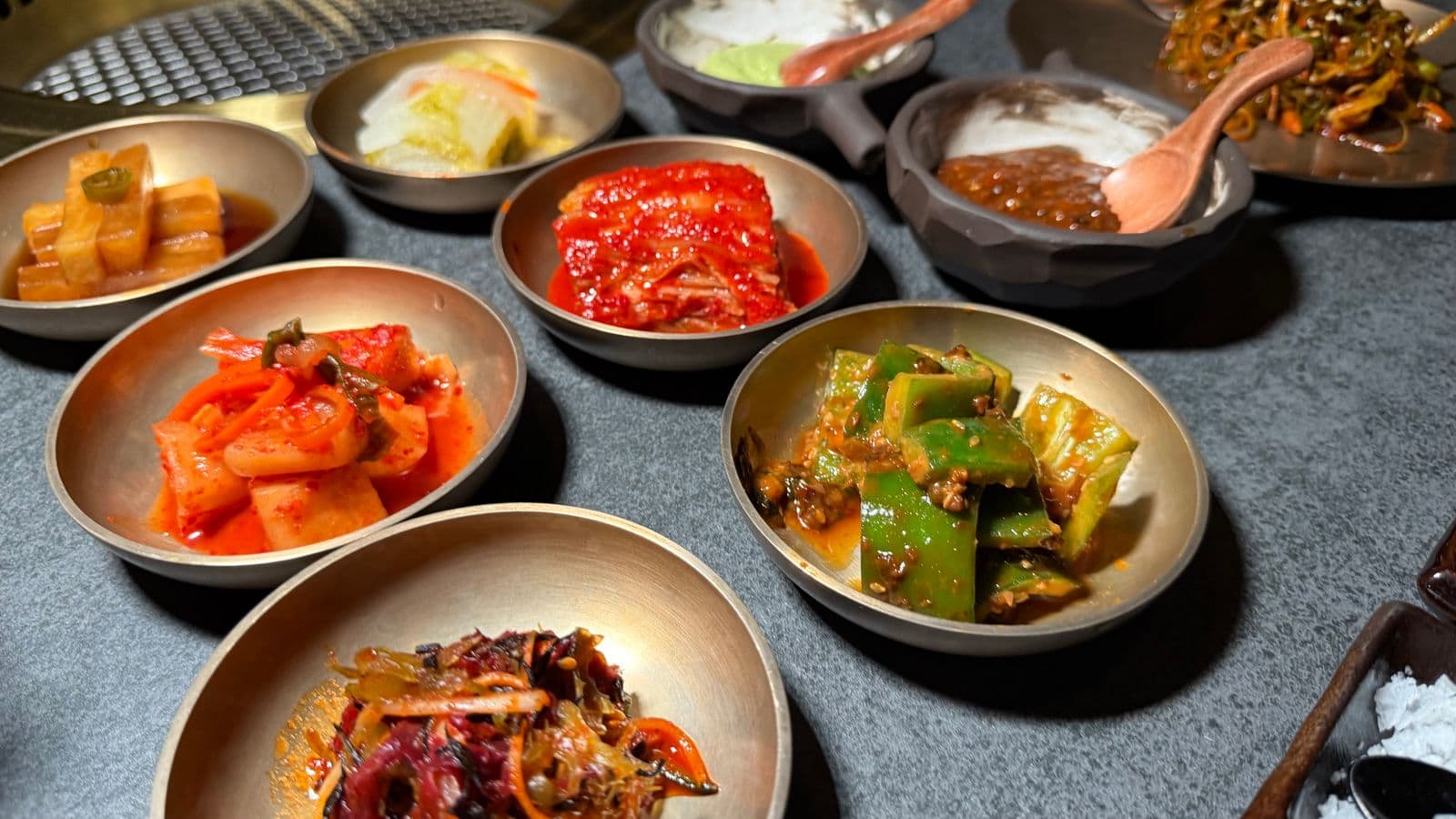
A Korean meal comes with 반찬 (banchan) — the little dishes. Seasoned spinach, bean sprouts, radish, seaweed, whatever the kitchen made that morning. You didn't order them. They're refilled for free.
The result is that you eat four to six different plants at a meal without ever making a decision about it, and this is the part worth copying. Every functional food habit anywhere in the world works the same way — it removes the choice. Willpower is not the mechanism. Default is the mechanism.
To take home: make two or three simple vegetable dishes on a Sunday and put them on the table at every meal that week. Not as a diet. As furniture.
3. A small mountain, socially
Seoul is ringed by mountains, and Koreans use them constantly. Bukhansan National Park drew about 7.53 million visitors in 2025 — the most of any national park in the country — and it sits inside the city limits. You can be on a trail forty minutes after leaving a café in Seongsu.
Around 78% of Korean adults go to a mountain at least once a month. But the more interesting shift is what kind of going: surveys show a strong move toward low hills and 둘레길 (dulle-gil, perimeter trails) rather than summits — about 83% of respondents say light trekking is increasing rather than peak-bagging.
And it is fundamentally social. You go with people, you walk slowly, you talk, and afterward there is food. It has none of the grim solitude of a gym.
To take home: the reframe. Walking uphill with a friend for two hours is not exercise you have to schedule against your social life. It is the social life.
4. The scheduled reset
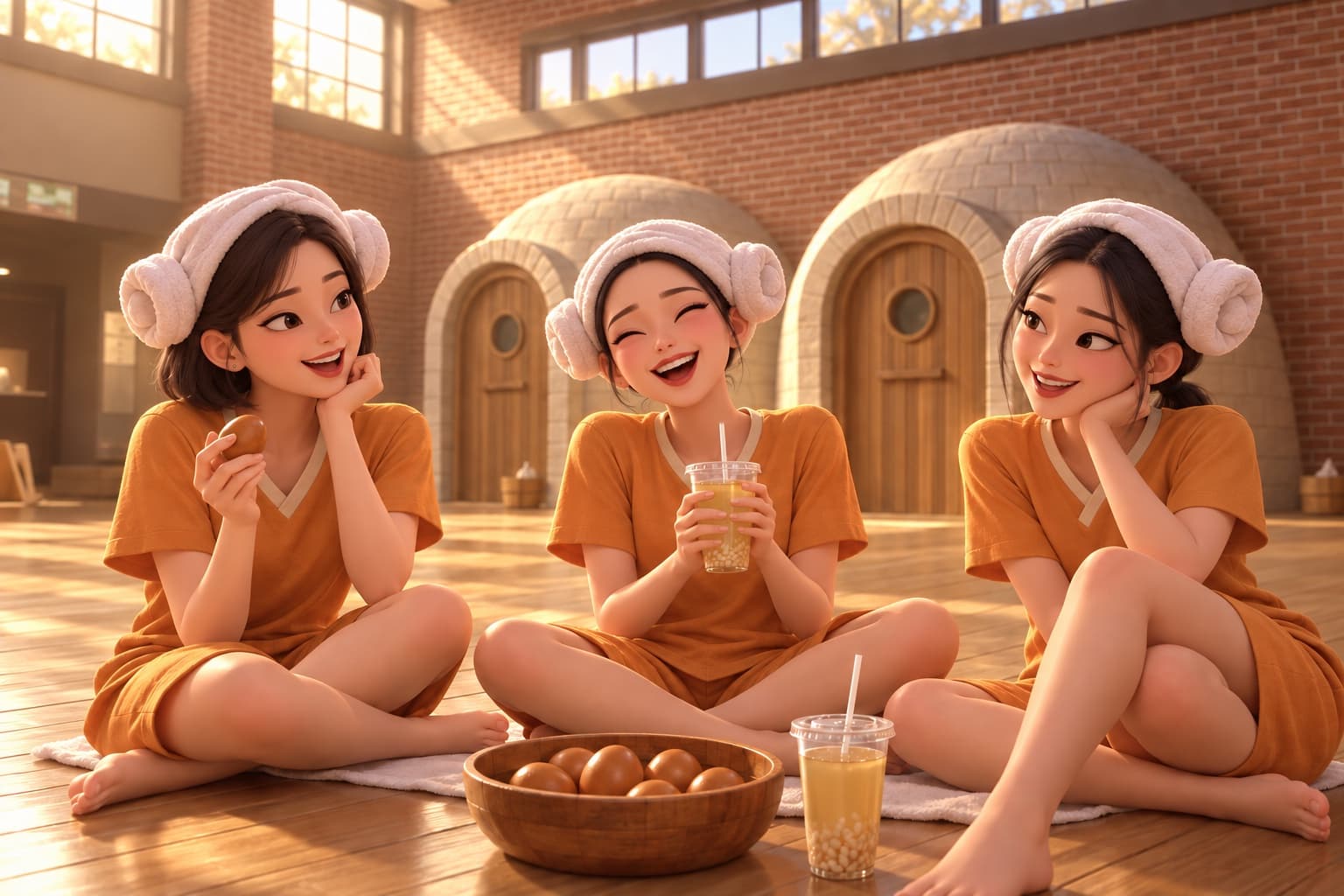
Once every few weeks, a lot of people here go and get boiled, scrubbed, and left alone on a heated floor for three hours. The jjimjilbang is not a treat or a splurge — it's maintenance, it costs about the price of two coffees, and people go alone without it being sad.
The Korean bathhouse, explained covers how to do one without embarrassing yourself.
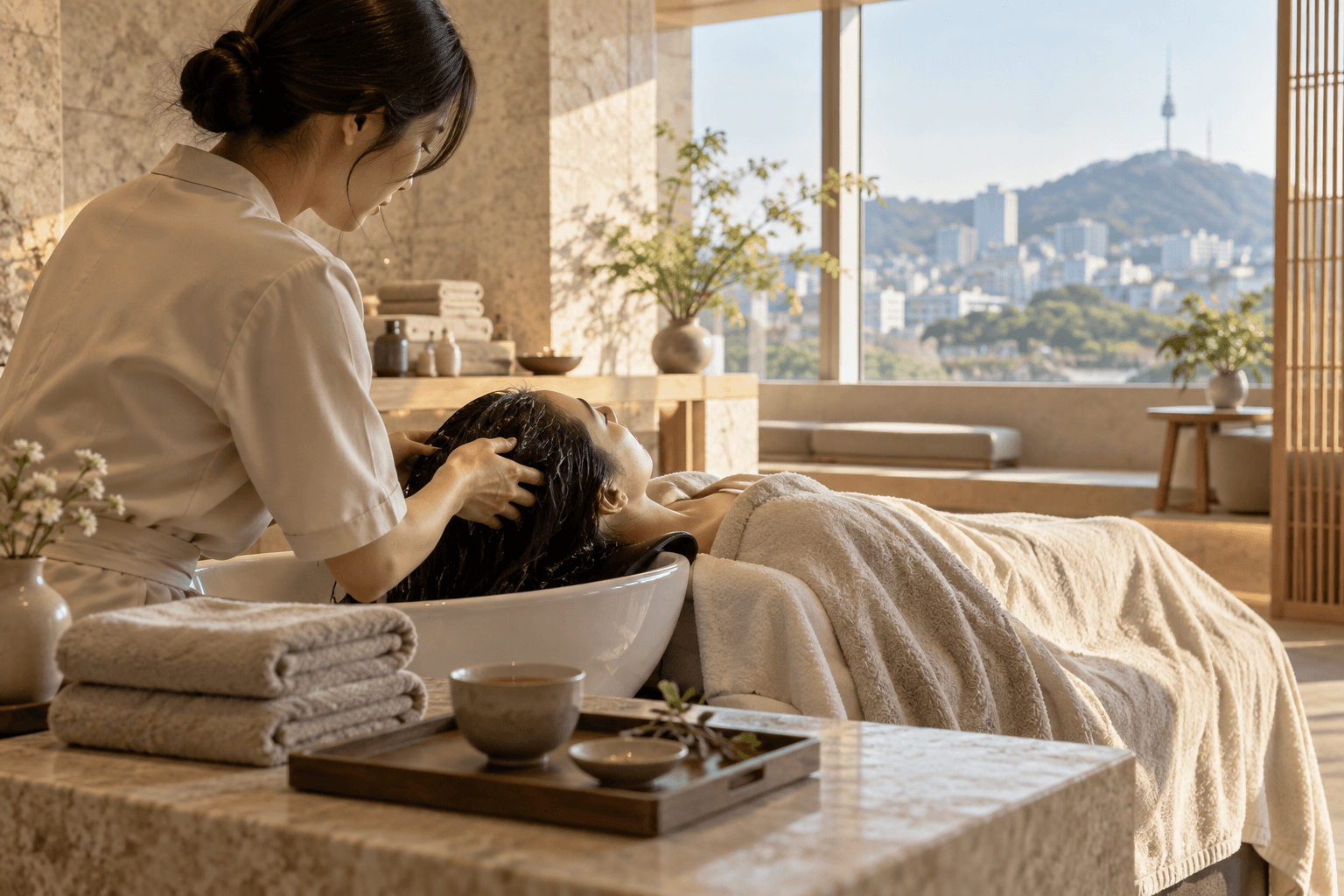
To take home: the concept of a recurring, cheap, physical reset that isn't tied to a special occasion. The specific bathhouse is hard to replicate. The idea of scheduling one isn't.
5. Shoes off, and life closer to the floor
Shoes come off at the door. Always, everywhere, no exceptions, and there's a small raised threshold to make the boundary obvious.
Under that floor there's usually 온돌 (ondol) — underfloor heating, a genuinely old Korean technology. Which is why so much of life here happens low: sitting on the floor, sleeping on the floor, eating at a low table. In winter, a warm floor is a better heater than any radiator, and lying on one is a legitimate remedy for most things.
To take home: the shoes, at minimum. It's free, it takes a week to become automatic, and your floors will never go back.
6. Walking after eating
밥 먹고 산책 — eat, then walk. After lunch, whole office buildings empty into the streets for fifteen minutes. After dinner, riverside paths and apartment complexes fill up with people doing slow laps.
It's not framed as exercise and nobody changes clothes for it. It's just what you do between finishing a meal and returning to the rest of the day, and it happens to be one of the better things you can do after eating.
To take home: fifteen minutes. That's the whole habit.
7. Checking before something is wrong
Korea runs a national health screening that most adults do on a two-year cycle — a fairly comprehensive one, tied to birth year, largely covered.
The cultural effect is bigger than the medical one. Because it's scheduled and normal, going to get checked isn't an admission that something's wrong. It's just the year you go. That removes an enormous amount of the dread that keeps people elsewhere from ever booking anything.
To take home: put it in the calendar as a recurring event rather than waiting for a reason.
What we would not take home
This country is not a wellness utopia, and a list like this is dishonest without the other half.
The drinking. Korean work and social drinking culture is heavy, still fairly compulsory in places, and it undoes a great deal of what's on this page. Nothing in the slow-aging conversation here is louder than the soju bottle sitting next to it.
The sleep. Korea has some of the shortest average sleep in the developed world and a genuine national habit of treating rest as optional. The 2am convenience store is well-lit and busy for a reason.
The salt. Soups and stews are the backbone of the food and they carry a lot of sodium. The vegetables are real; so is that.
The comparison. The most damaging thing about Korean beauty and wellness culture is not any product — it's the ambient assumption that your body and face are ongoing projects with visible progress bars. Take the barley tea. Leave that.
Read next
Want the framework behind a lot of this? What "slow aging" means in Korea. The bathhouse, properly explained: the Korean jjimjilbang guide. Where beauty and wellness are merging here: why beauty in Seoul is becoming more holistic.
FAQ
What is Korean wellness culture actually like day to day?
Much less product-driven than the exported version suggests. The everyday version is barley tea instead of water, vegetable side dishes at every meal, frequent short walks, regular bathhouse visits, and weekend hiking. Very little of it is bought.
What is bori-cha?
Roasted barley tea — 보리차. Caffeine-free, unsweetened, served free in most Korean restaurants and drunk instead of plain water. It's the most easily copied Korean habit on this list.
Do Koreans really hike that much?
Yes. Around 78% of Korean adults visit a mountain at least monthly, and Bukhansan — inside Seoul's city limits — recorded roughly 7.53 million visitors in 2025, more than any other national park. The trend has shifted toward gentler perimeter trails rather than summit climbs.
Is Korean food healthy?
The structure is — lots of vegetables, fermented foods, and moderate portions arriving by default. The sodium is not; soups, stews, and many side dishes are salty. Take the vegetable habit, watch the broth.
What is ondol?
Traditional Korean underfloor heating, still standard in modern apartments. It's why so much of domestic life here happens at floor level, and why lying on a warm floor is a normal answer to feeling unwell.