The Korean Bathhouse (Jjimjilbang), Explained
Naked baths, a sauna in your pajamas, and a nap on a heated floor — here's what actually happens inside a jjimjilbang.
By A Drop of Seoul Editorial ·
Walking into a jjimjilbang for the first time, fully dressed and mildly unsure what to do with a locker key strapped to your wrist like a hospital bracelet, is a rite of passage for most visitors to Seoul. Within the hour, the same first-timer is usually asleep on a heated clay floor next to a stranger's grandmother, both in identical baggy shorts, and nobody has looked at them twice. That's the whole secret of the jjimjilbang: everyone is there to relax, not to look at you.
A jjimjilbang (찜질방) is a Korean bathhouse and sauna — part public bath, part 24-hour lounge, part budget hotel. If you've only seen the nude bathing side on TikTok and assumed the whole building works that way, this guide covers what's actually naked, what isn't, what to bring, what it costs, and the etiquette nobody explains until you've already broken it.
What a jjimjilbang actually is
A jjimjilbang has two zones, and mixing them up is the source of most first-timer anxiety.
The bathhouse (mokyoktang) is gender-separated and nude. Men's and women's baths are in completely separate rooms — hot tubs, cold plunge, showers, scrub stations. Everyone bathes naked; it's a public bathing culture closer to a Japanese onsen than a Western spa.
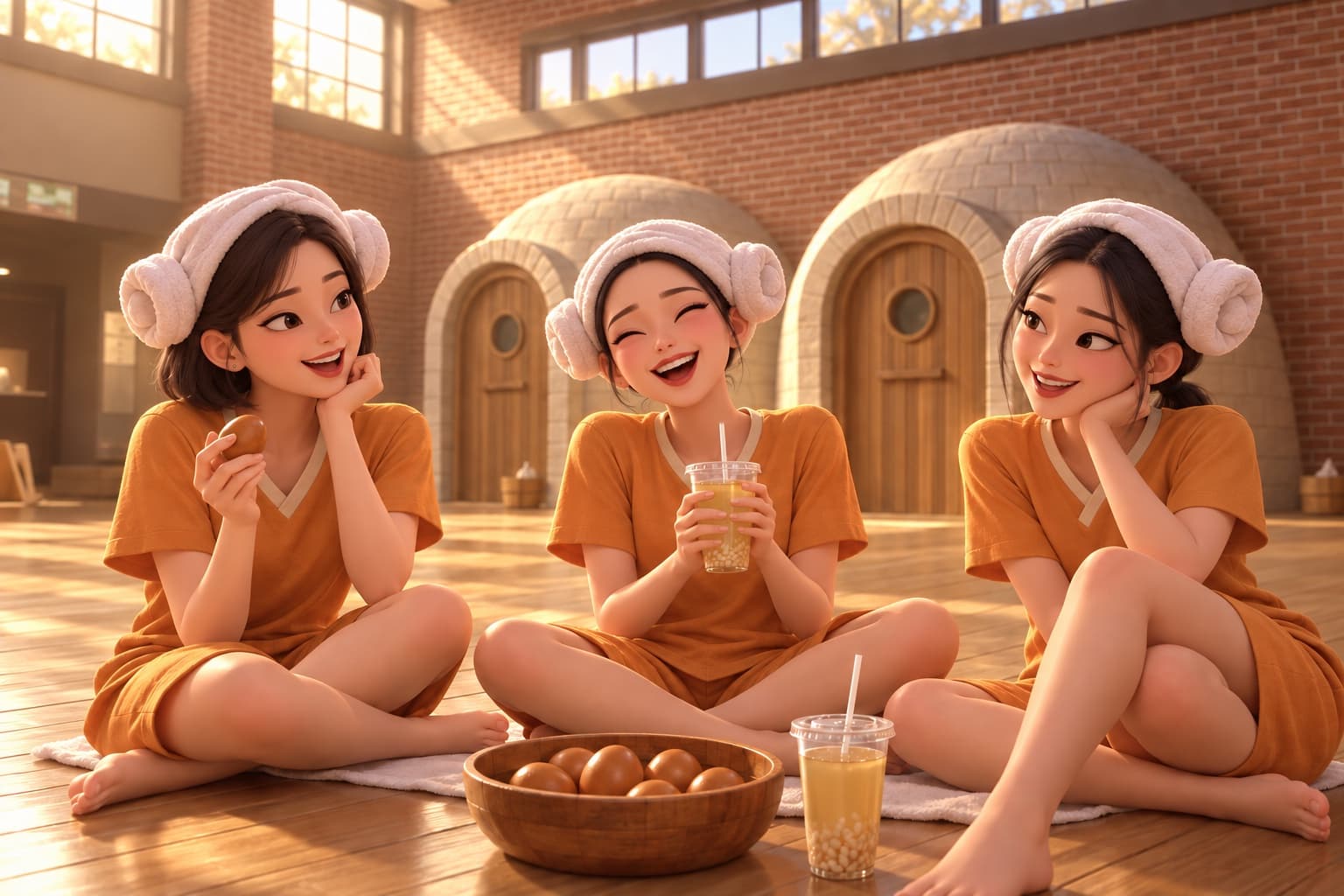
The sauna floor is co-ed and clothed. After bathing, you put on the cotton uniform the front desk gives you and head to shared heated rooms — a salt room, a clay dome, an ice room — plus a lounge, sleeping mats, and a snack counter selling the usual jjimjilbang staples: sikhye (sweet rice punch), boiled eggs, and instant noodles. This part is fully clothed and mixed-gender.
What to expect at a glance
- Bathhouse: nude, gender-separated, showers required before entering tubs
- Sauna floor: clothed (uniform provided), co-ed, open to all ages
- Hours: most are open 24 hours; a lot of people nap overnight
- Cost: entry typically ₩10,000–15,000 for unlimited hours; extras (scrub, massage) billed separately
- Bring: a hair tie, any contact-lens supplies, and a phone charger — towels and the uniform are provided
Step by step: what actually happens
1. Pay and get a locker key — a wristband that opens both your shoe locker and clothing locker.
2. Split off by gender, undress completely in the locker room. No swimsuits, and towels are for drying, not covering up.
3. Shower before any tub — sit on a low stool, rinse fully, then move to the hot tubs, cold plunge, or a scrub service. Scrubs are typically requested separately at a counter near the baths and performed on a vinyl table beside the tubs, not in a private room.
4. Dress in the uniform and head to the shared sauna floor, where men and women reunite.
5. Rotate through the heat rooms, roughly 10–15 minutes at a time, cooling off in the lounge between. Most jjimjilbang keep a pitcher of water or barley tea nearby — use it, since the hottest rooms are dry-heat saunas that dehydrate faster than they feel like they do.
6. Nap, eat, repeat. Grab a mat or order from the snack counter — many Koreans use jjimjilbangs as an all-night option after missing the last train.
The unspoken rules first-timers worry about
- Nobody is looking at you. Koreans have done this since childhood; the bath is a functional space, not a performance. The self-consciousness is almost entirely a foreigner import.
- Tattoos were historically linked to organized crime here, so a few bathhouses still hesitate, though this has relaxed considerably in Seoul's tourist-facing spots. If you're heavily tattooed, it's worth a quick search or call ahead for a specific location rather than assuming.
- Phones stay in the locker in the bathhouse — taking photos near nude bathers is a serious breach.
- Kids bathe with either parent up to about age 4–6, so don't be surprised to see a small child on either side.
- The scrub ajumma will be brisk and unceremonious about your body. That's the job, not a judgment.
Who should skip it
We think every visitor should try the sauna floor once — cheap, communal, relaxing in a way no Western spa replicates. But the nude bath side isn't for everyone: real body-image anxiety makes it a hard first step (skip the tubs, do the sauna floor only), the heat rooms run surprisingly intense for anyone prone to claustrophobia or heat sensitivity, and light sleepers won't get a peaceful overnight with snoring and fluorescent light at 3 a.m. First-timers often find the biggest adjustment isn't the nudity but the pace — there's no staff choreographing your visit, so it helps to watch what regulars do and follow along rather than expecting instructions.
What it costs — and is it worth it
Entry alone is inexpensive — expect roughly ₩10,000–15,000 for unlimited hours, which is what makes overnight stays such a popular budget option in Seoul. Add-ons like a full-body scrub (around ₩15,000–25,000) or a massage (₩30,000 and up, depending on length and type) are billed separately and worth trying once, even though the scrub is more intense than relaxing the first time. If you'd rather ease into Korean bathing culture, a neighborhood public bathhouse (mokyoktang) without the sauna floor is a gentler, cheaper starting point before a full jjimjilbang.
Yes, it's worth it — one of the most genuinely local things you can do in Seoul for under ₩20,000. It's not a polished spa experience; it's a real, slightly chaotic, communal Korean institution, and that's the point.
FAQ
Do you have to be naked at a jjimjilbang? Only in the gender-separated bathhouse. The shared sauna floor is fully clothed.
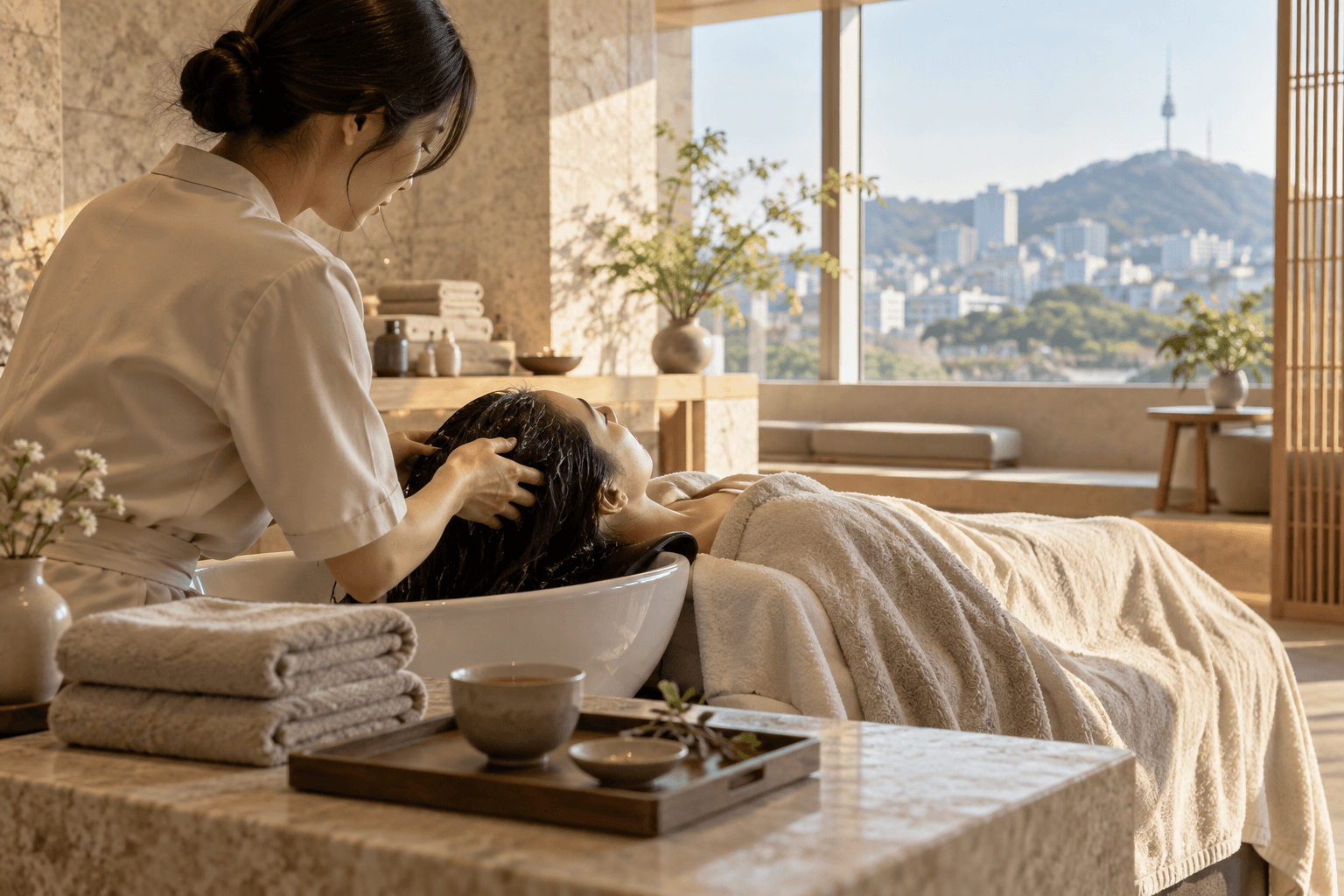
Is a jjimjilbang the same as a spa? No — it's closer to a public bathhouse with an attached 24-hour sauna lounge. A Korean head spa is a scalp-focused beauty treatment instead, with no bathing or nudity involved.
Can you sleep overnight at a jjimjilbang? Yes — mats and blankets are provided in the communal sleeping area, and it's a common budget option after a late night out.
What should I bring? Towels and the uniform are provided, but pack a hair tie, any contact-lens supplies, a phone charger, and cash or a card for extras like food and scrubs.