Beyond Skincare: Why Beauty in Seoul Is Becoming More Holistic
Face, then scalp, then body, then gut, then sleep. Watch where the money moved.
By A Drop of Seoul Editorial ·
There's a moment in a large Seoul beauty store where the categories stop making sense.
You're in skincare. Then you're in scalp ampoules, which look like skincare and are shelved like skincare and are, functionally, skincare. Then there's a wall of sachets — melatonin, GABA, collagen, things for sleep — merchandised with the same restraint and the same typography. Then a cushion foundation whose packaging talks about barrier repair.
At no point did you leave the beauty section. The beauty section just kept going.
Quick answer
Korean beauty has stopped being a face category. The expansion runs face → scalp → body → gut → sleep → mind, and it isn't a vibe — you can see it in what people buy.
Some of it is real. The scalp genuinely is skin, and treating it that way produced better products.
Some of it is category creep — the same industry discovering new surfaces to sell to, with borrowed vocabulary standing in for a mechanism.
The useful test is at the end of this piece.
The evidence, in three numbers
Skincare language invaded makeup. Searches for soothing, barrier, and hydration within the makeup category jumped more than 150% year on year. People are no longer choosing foundation on coverage alone; they're choosing it on what it does to the skin underneath. That's a genuinely strange thing for a color category to do.
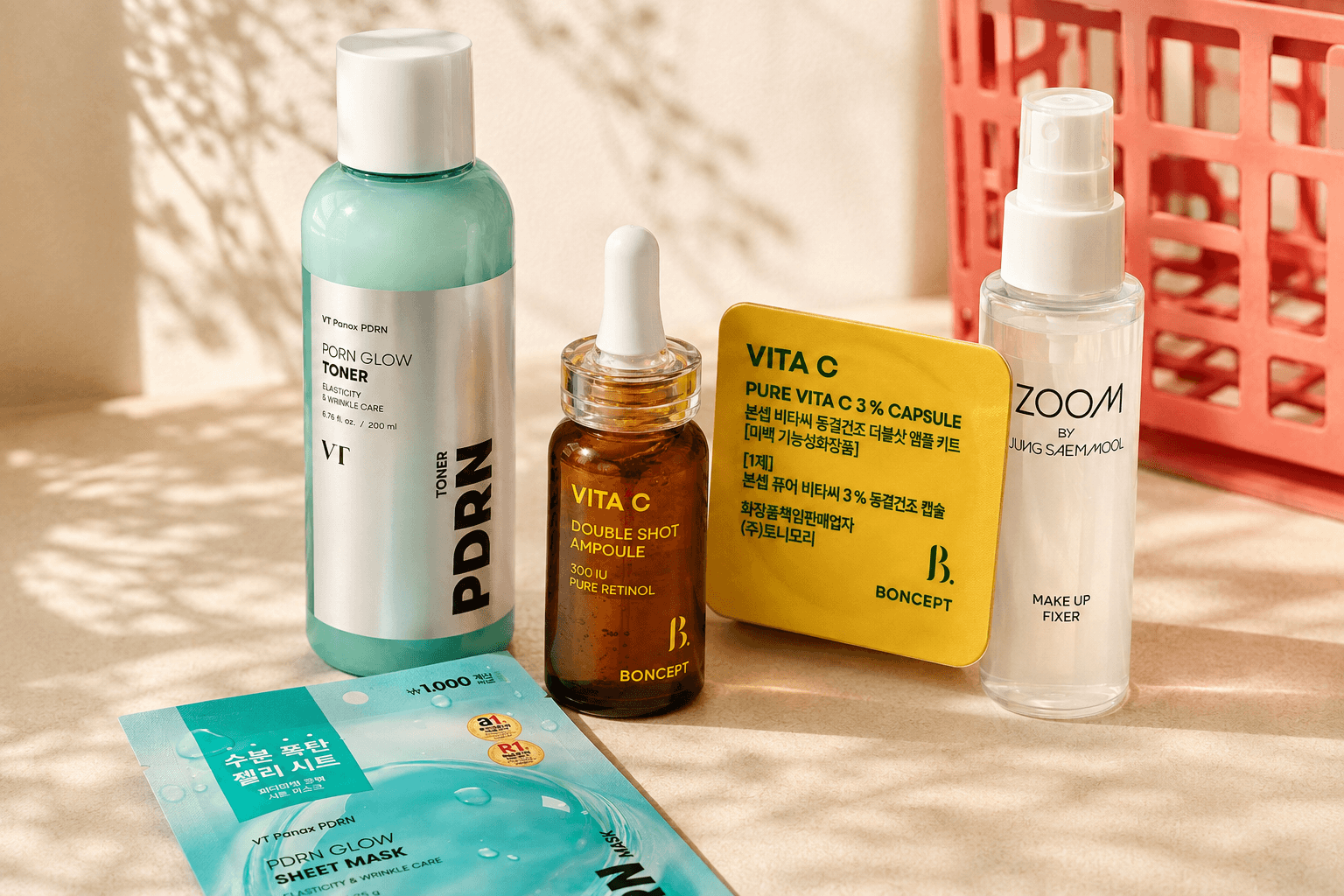
Skincare formats invaded hair. Functional scalp ampoules and serums grew about 52% in a year while ordinary shampoo grew 12%. The industry calls it skinification, and the four-to-one growth gap is the clearest signal in the store.
Wellness got younger. Olive Young's wellness buyers aged 15–24 have grown by double digits every year since 2022. Not forty-somethings managing decline. Teenagers and university students, buying supplements as a normal part of a beauty routine — a pattern the industry here has started calling early wellness.
What the new shelf actually contains
Walk the wellness wall in a large branch now and the ingredient list has changed. Melatonin. GABA. Niacin. Pantothenic acid. Sleep, calm, and nervous-system language, sold in the same aisle as serum.
The framing that goes with it is healthy pleasure — the local term for wellness that isn't punishing. Low-sugar rather than no-sugar. A sachet rather than a regimen. Something that tastes fine and fits in a bag.
That's a meaningful shift in tone. The previous decade of Korean self-care ran on discipline: steps, order, consistency, the ten-step routine everyone abroad still repeats. The current one runs on ease. It's the same instinct behind 저속노화 — a national health idea that spread because it asked people to change what was in the rice, not to change their lives.
Why it happened here first
Three conditions, stacked.
The skin-as-system logic was already in place. Korean skincare has always argued that the surface reflects something underneath — barrier condition, inflammation, sleep. Once that's your premise, the extension to gut and sleep isn't a leap. It's the same sentence, continued.
The clinic and the bathroom were never separate. In Seoul, procedures and home care are treated as one cycle rather than two worlds — you get something done, then you manage the recovery at home, then you go back. That habit of thinking in cycles rather than products makes an expanding perimeter feel natural.
And the retail was ready. A chain that sells sunscreen, shampoo, protein chips, and melatonin under one roof doesn't have to invent a holistic beauty concept. It just has to move shelves.
The part we're skeptical about
Here's the tension. Every one of those expansions is also a new place to sell something, and the vocabulary moves faster than the evidence.
A scalp ampoule has a mechanism: it's a leave-on treatment applied to skin. Fine.
A "barrier-repairing" cushion foundation is a more interesting claim — sometimes real, often a soothing ingredient added at a level that makes for good copy and not much else.
A jelly with a slow-aging label on it is a jelly.
Our test, and it's a simple one: does the thing do something, or does it only say something? Ask what the mechanism is and whether the format supports it. Leave-on beats rinse-off. A stated concentration beats a highlighted ingredient. A cycle you can describe beats an adjective.
Most of what's genuinely good in this expansion passes that test easily. Most of what isn't, fails it immediately.
What it means for a visitor
Practically, it changes what's worth your time here.
The products are increasingly available at home. Korean skincare, hair, and supplements ship everywhere now. Buying them in Seoul is convenience, not access.
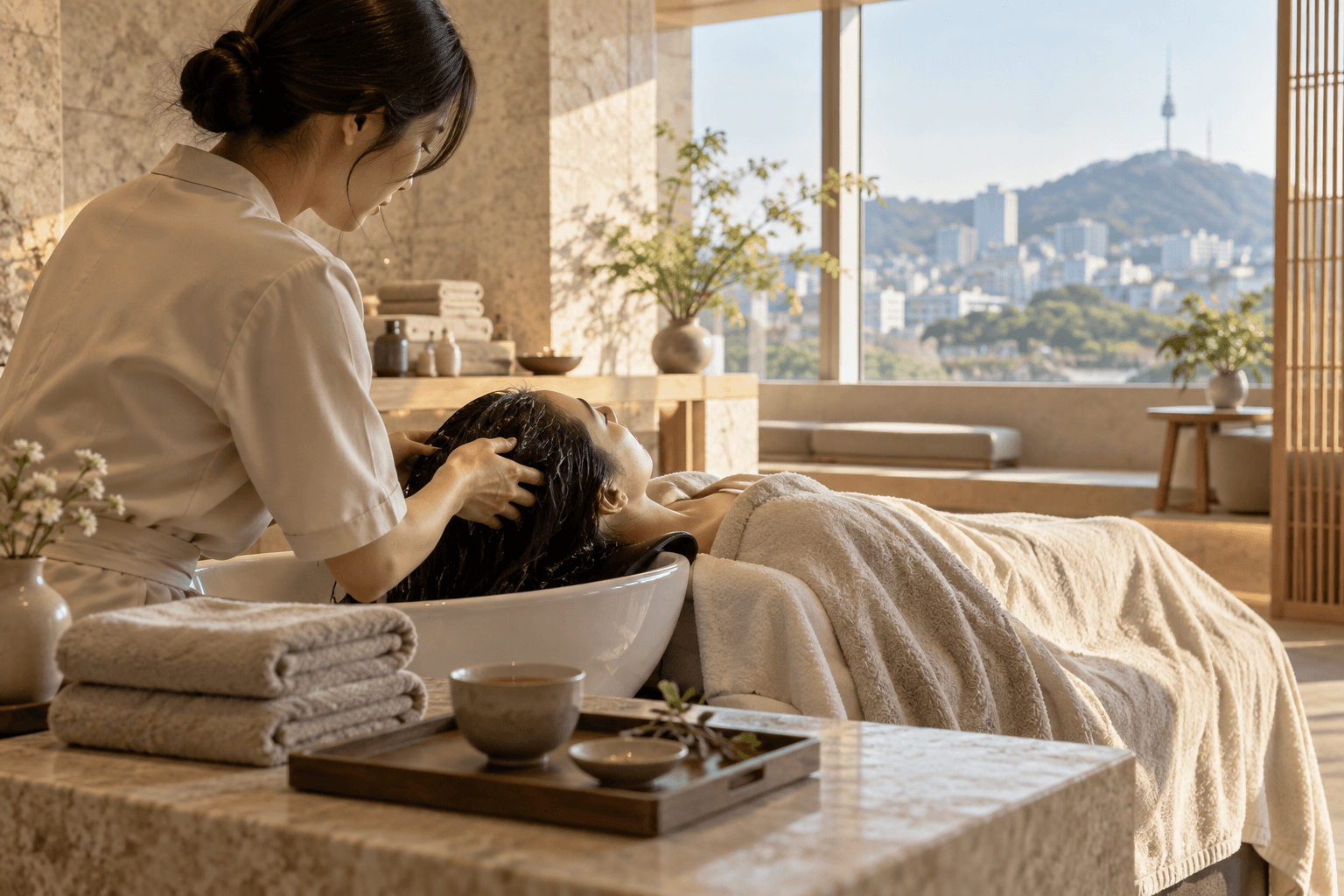
The services are not. An hour of someone examining your scalp and then working on it. A facial that assumes you understand barrier function. A bathhouse. These are the parts of the expanded category that don't fit in a suitcase, and they're what we'd spend a trip on.
That's the practical version of holistic beauty, and it's less about buying a more integrated shelf than about doing a few things you can't do anywhere else. Where we'd shop beyond Olive Young covers the retail side; a beauty lover's day in Gangnam covers the service side.
Where we think this goes
The interesting version of this isn't more categories. It's fewer, better-connected ones.
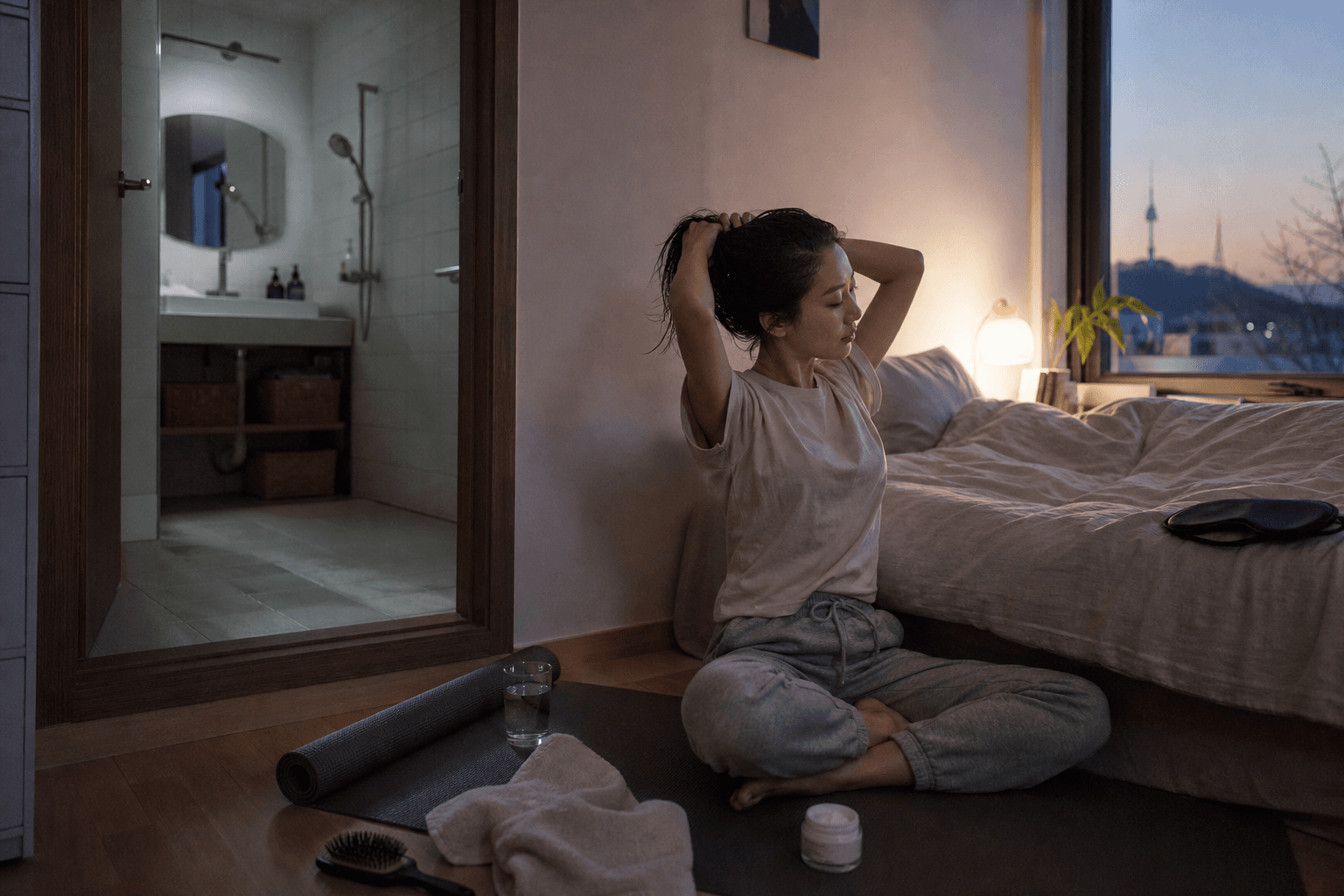
The most convincing thing we've seen recently isn't a new product type — it's people here treating scalp, sleep, food, and skin as one conversation with a single answer, which is roughly: slow down, protect the barrier, be consistent, and stop buying so much.
Which is a slightly awkward conclusion for an industry to arrive at. It's also, we think, the correct one, and it's why this magazine exists in the shape it does. We're not trying to cover everything in Korean beauty. We're trying to tell you which parts are worth knowing.
Read next
The framework underneath it: what "slow aging" means in Korea. The clearest single example: why Seoul takes scalp care seriously. The habits version: Korean wellness habits worth keeping.
FAQ
Is Korean beauty moving beyond skincare?
Yes, measurably. Skincare language has spread into makeup — soothing, barrier, and hydration searches within the makeup category rose more than 150% year on year — and skincare formats have spread into hair, with scalp ampoules growing roughly four times faster than shampoo.
What is "early wellness"?
The Korean industry term for wellness consumption starting in the teens and early twenties rather than middle age. Olive Young's wellness buyers aged 15–24 have grown by double digits annually since 2022.
What is "healthy pleasure"?
The local framing for wellness that's easy and enjoyable rather than restrictive — low-sugar instead of no-sugar, single sachets instead of regimens. It's the tonal shift away from the discipline-heavy self-care of the previous decade.
Are beauty supplements in Korea worth buying?
Some categories have plausible mechanisms; many are packaging exercises. The practical test is whether the product does something specific or only says something — a stated dose and a clear mechanism beat a highlighted ingredient on the front of a sachet.
What should I actually do in Seoul if I'm interested in this?
Book the services rather than buying more products. Scalp treatments, facials, and bathhouses are the parts of the expanded category that genuinely don't travel; the products increasingly ship worldwide.