Skip-Care Explained: The Korean Minimalist Routine That Still Feels Considered
Skip-care is not doing nothing. It is knowing what your skin can skip today.
By A Drop of Seoul Editorial ·
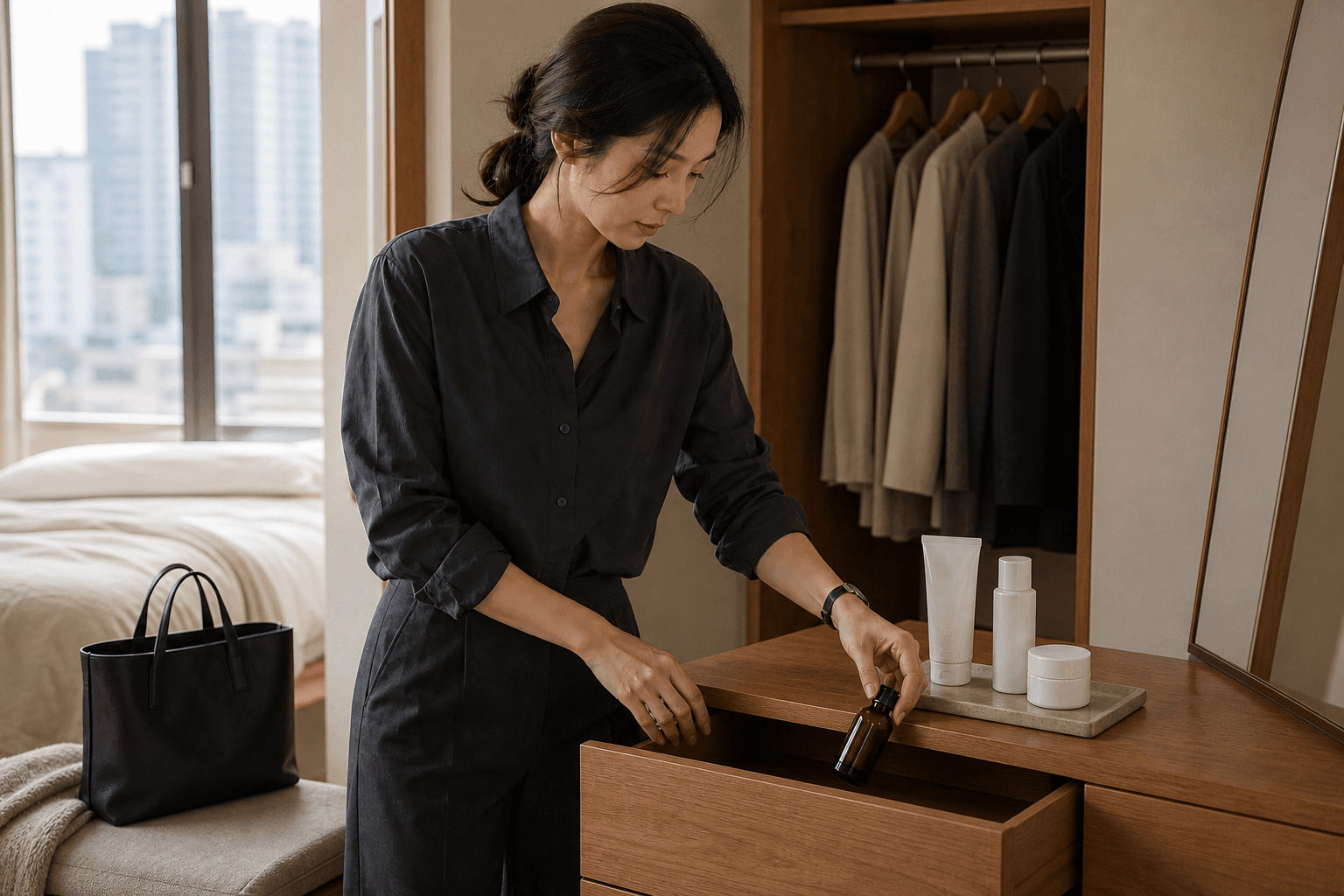
Skip-care became popular because everyone eventually reaches the same private skincare truth: more products do not always mean better skin. Sometimes more products mean more pilling, more redness, more mystery bumps, and more time staring at your face under aggressive bathroom light.
The Korean version of minimalism is not anti-beauty. It is edited beauty.
Quick answer
Skip-care means using fewer products with clearer jobs. A typical skip-care routine keeps cleanser, moisturizer, sunscreen, then adds one flexible layer such as toner, serum, or treatment only when your skin needs it. It works best when your products are multi-purpose and barrier-friendly.
If you want the shortest practical version, start with the Korean 3-step routine.
What skip-care keeps
Skip-care keeps the boring things because boring things work.
It keeps cleansing, but not harsh cleansing. It keeps moisturizer, because the barrier needs support. It keeps sunscreen, because no brightening routine survives daily UV exposure. It keeps one targeted step when there is a real concern: clogged pores, dull tone, dehydration, redness, or early fine lines.
The point is to remove duplicate steps, not useful steps.
What skip-care skips
Skip-care usually skips the second toner, the third serum, the "just in case" ampoule, and the mask you use because you bought it in a set. It also skips the idea that every trend ingredient needs a place in your routine.
If you already use a niacinamide serum, you may not need a niacinamide toner and niacinamide cream. If your moisturizer contains ceramides and panthenol, you may not need a separate barrier ampoule. If your skin is calm, you may not need a calming mask every night.
The best ingredients for skip-care
Look for ingredients that solve common problems without demanding drama:
- Niacinamide for tone, barrier support, and oil balance.
- Panthenol for comfort and barrier support.
- Glycerin for reliable hydration.
- Centella asiatica or madecassoside for visible stress and redness.
- Ceramide NP for dry or compromised skin.
- Squalane for softening without a heavy feel.
Skip-care likes ingredients that behave.
A simple skip-care morning
Rinse or cleanse lightly. Apply a hydrating toner or serum only if your skin feels dry. Use a moisturizer if needed. Finish with sunscreen.
Some oily skin types can use a moisturizing sunscreen as the final two steps in one. Dry skin usually needs a proper moisturizer first.
A simple skip-care night
Cleanse. Apply one flexible layer if needed. Moisturize.
The flexible layer might be a calming toner, hydrating essence, retinol, BHA, or brightening serum. But it should not be all of them. Skip-care is easiest when each night has one intention.
When skip-care is not enough
If you have persistent acne, eczema, rosacea, melasma, or sudden irritation that does not settle, a minimalist routine may reduce noise but it will not replace medical care. Keep the routine simple and speak with a dermatologist.
If your skin is simply bored, skip-care is enough. If your skin is inflamed, get help.
Read next
If you want glow without a product pile-up, read Glass Skin Without 10 Steps. If your barrier already feels damaged, read A Korean Barrier-Repair Routine.
FAQ
What is skip-care in Korean skincare?
Skip-care is a minimalist K-beauty approach that uses fewer products with clearer jobs. It keeps the essentials and removes duplicate layers. The goal is not to do nothing; it is to stop using products your skin does not need today.
Is skip-care better than a 10-step Korean routine?
Skip-care can be better if your skin is irritated, busy, or overwhelmed by too many products. A longer routine can still work when each step has a purpose. Korean skincare is not a contest of step counts; it is a habit of adjusting to your skin.
What products should I keep in a skip-care routine?
Keep cleanser, moisturizer, and sunscreen. Add one flexible product only when needed: a hydrating toner, calming serum, retinol, BHA, or brightening treatment. For a shorter base, use the Korean 3-step routine.
Can skip-care help a damaged skin barrier?
Yes, skip-care can help by reducing irritation and product overload. Pause strong actives and focus on barrier ingredients like ceramide NP, panthenol, and squalane. If irritation persists, get medical advice.
Is skip-care the same as skin fasting?
No. Skin fasting usually means stopping many products temporarily. Skip-care is more deliberate: you still use the essentials, but you remove unnecessary layers.