Why Seoul Is Taking Scalp Care Seriously
A camera goes on your head before the scissors do. Here's how that became normal.
By A Drop of Seoul Editorial ·
The first time it happens, you assume you've been upsold.
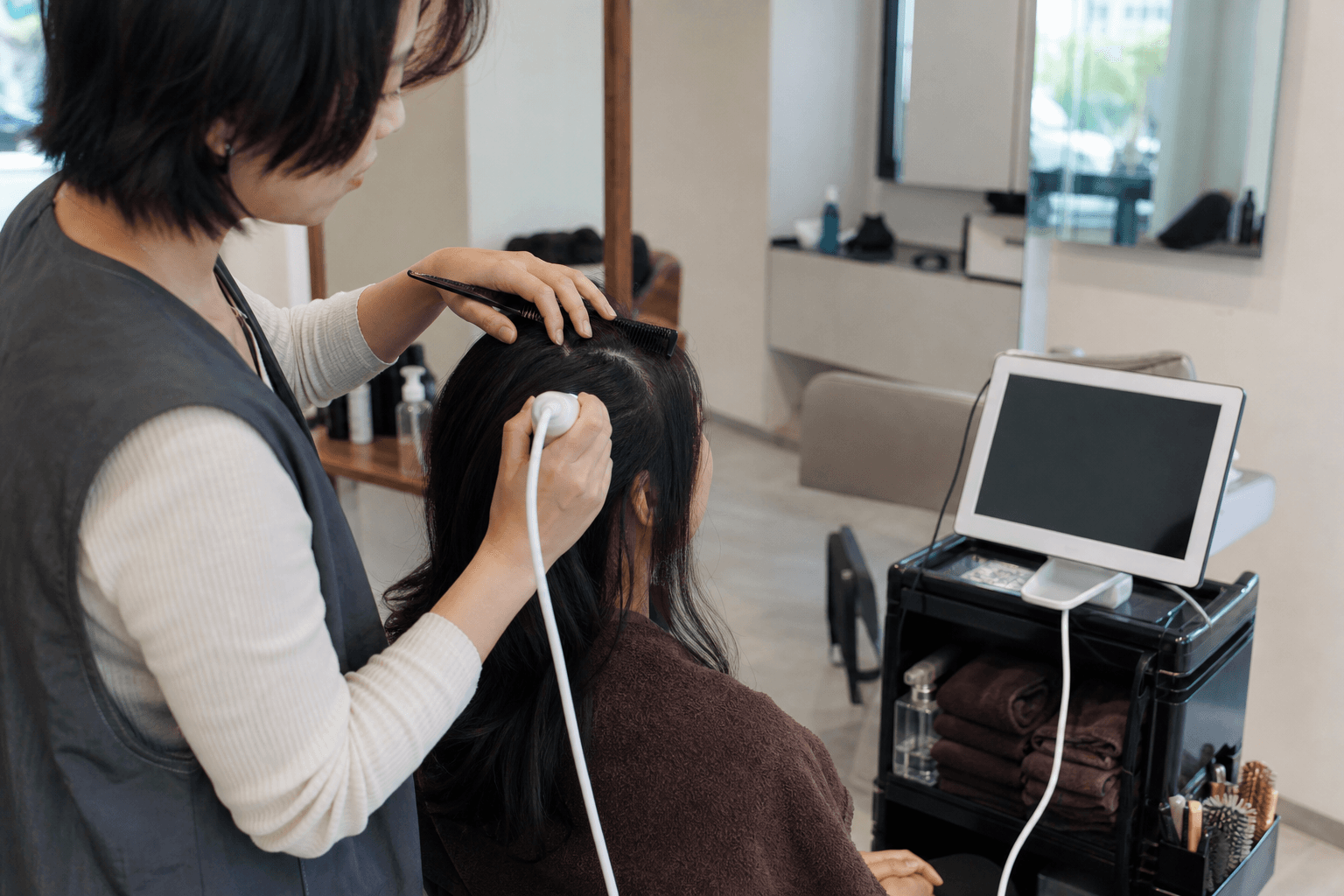
You sat down for a haircut. Before anyone touches the scissors, a stylist parts your hair, presses a small camera against your scalp, and your follicles appear on a monitor at roughly forty times life size. There is a pause. Then a diagnosis, delivered in the flat tone of someone reading a weather report: your scalp is oily, there's buildup here, this area is thinning slightly.
Nobody asked whether you wanted this. It came with the cut.
That moment — routine here, faintly alarming everywhere else — is the visible tip of something that has been building in this city for about a decade. Seoul decided the scalp was skin, and then built an industry on the consequences.
Quick answer
Scalp care in Korea went mainstream because hair loss stopped being a middle-aged problem. Roughly 40% of people here dealing with hair loss are now in their twenties and thirties.
That demographic shift turned a medical category into a beauty one, and beauty categories in Korea grow fast. Scalp care is projected to pass ₩1 trillion, functional scalp ampoules grew about 52% in a year against 12% for ordinary shampoo, and dedicated head spas have multiplied across the city.
Most of it is legitimate. Some of it is theater. We'll tell you which is which.
The number that changed the category
For most of the twentieth century, hair loss in Korea was framed the way it's framed most places: something that happened to men, later in life, that you either accepted or hid.
Then the numbers moved. Around 40% of the hair-loss population here is now under forty. Whatever combination of stress, diet, sleep, water, bleach, and heat tools produced that, the commercial consequence was immediate and enormous: the anxious customer was suddenly 27 years old, on Instagram, and had forty years of purchasing ahead of her.
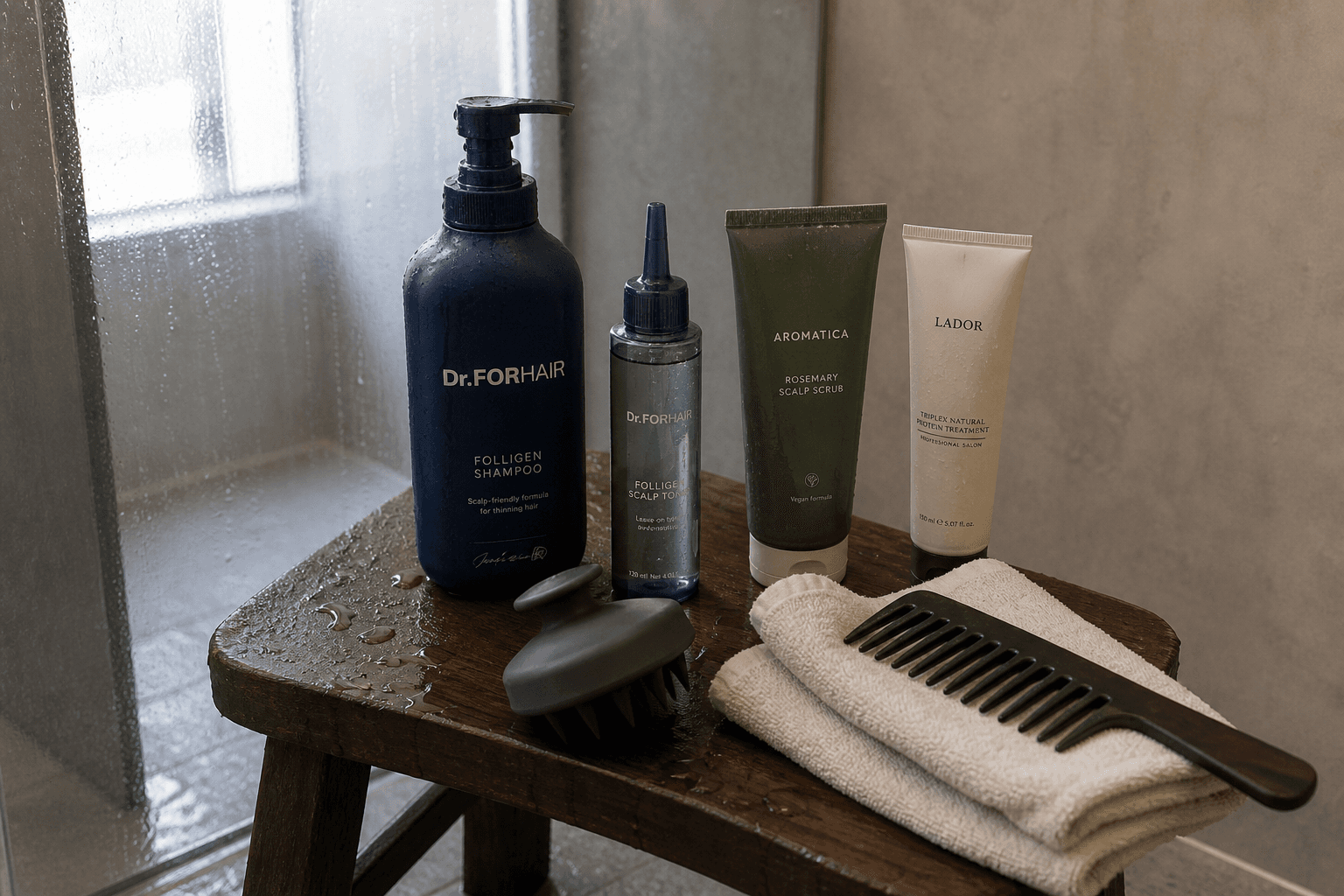
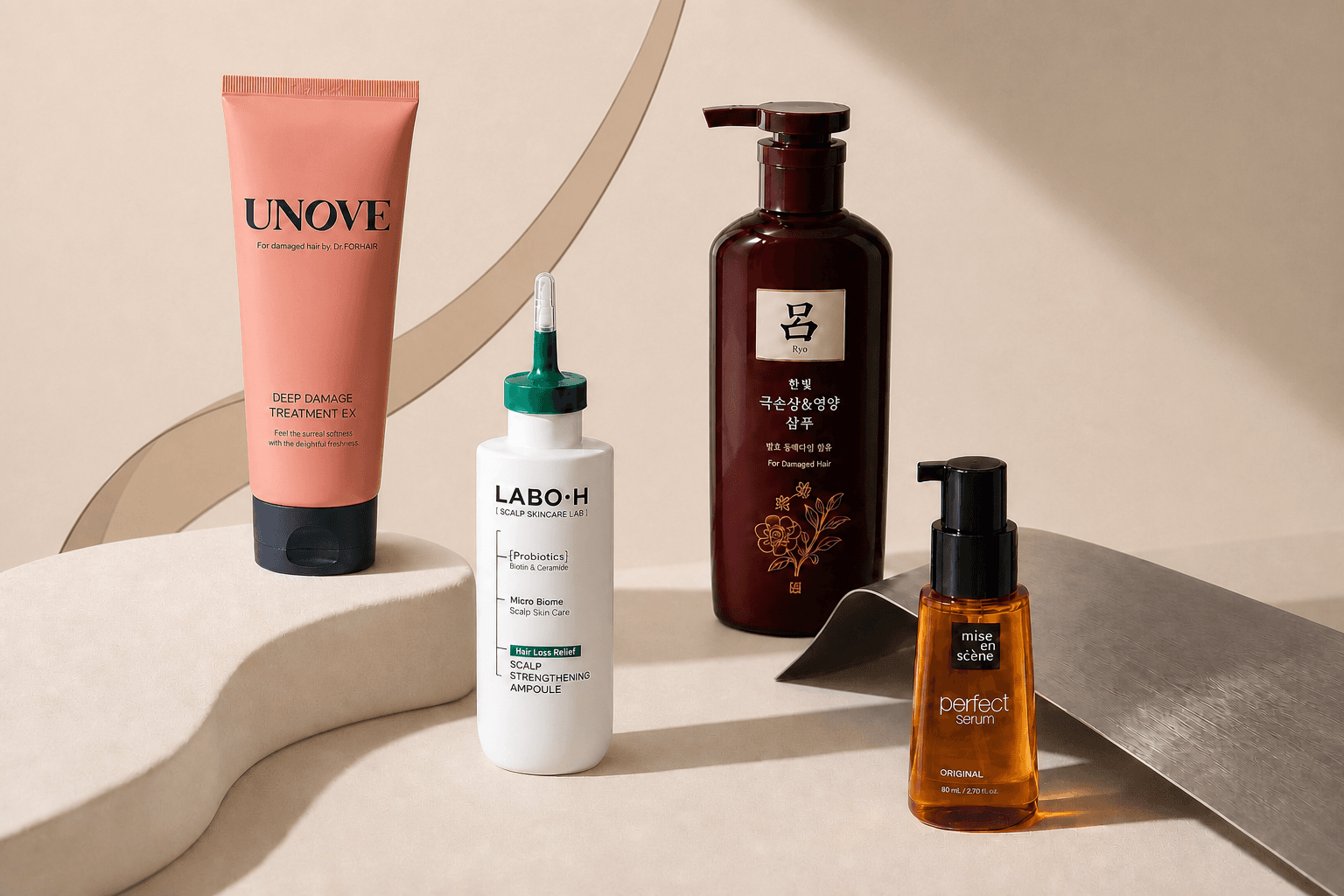
You can see the industry reorient around that in real time. Dr.Groot has held the top share in functional hair-loss shampoo for six straight years and passed 40 million cumulative bottles. LABO-H built a whole brand on the phrase scalp skincare. Neither of those is a product for a sixty-year-old.
Skinification, and why it mattered
The second thing that happened was a format change.
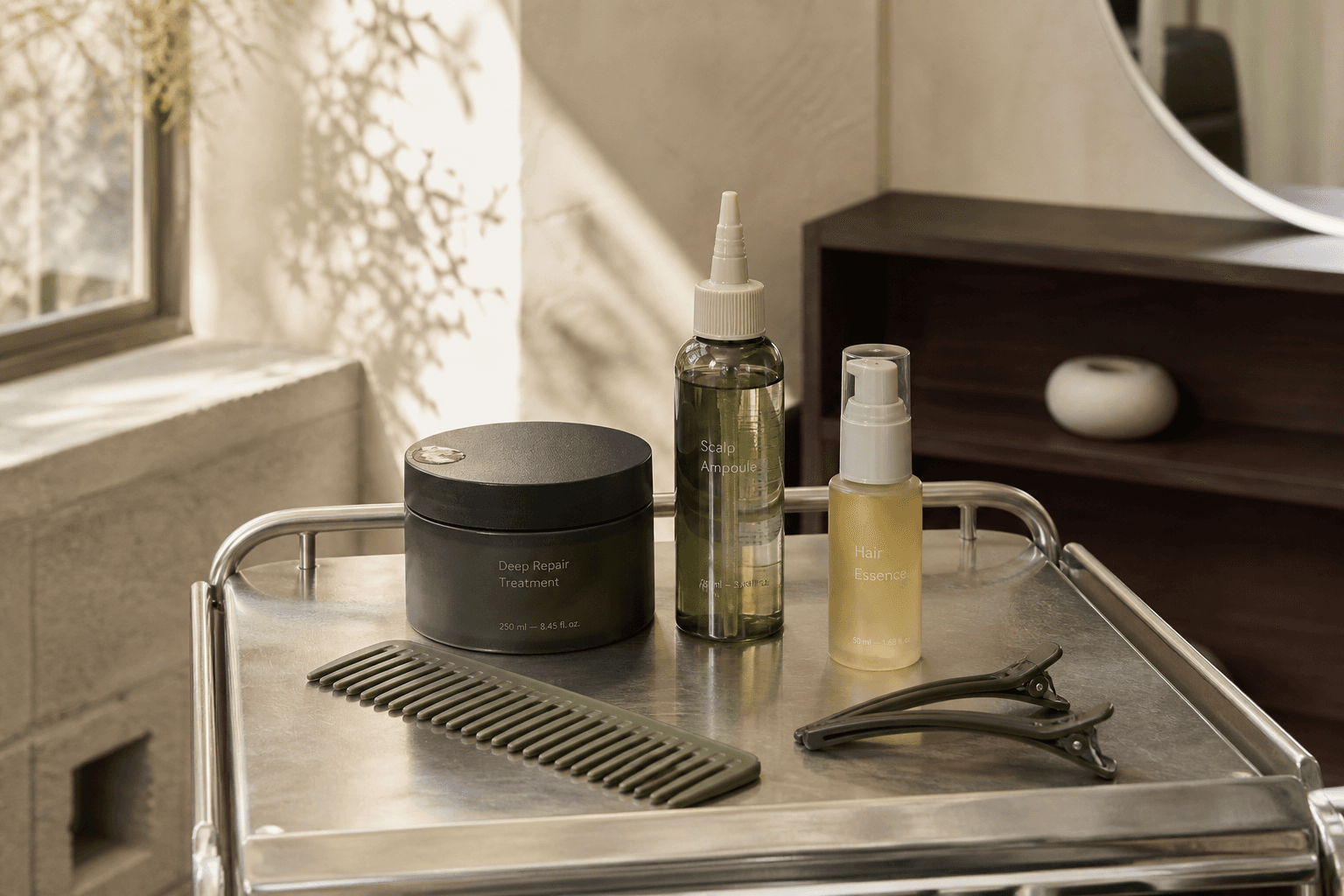
Korean brands stopped selling hair products and started selling skincare products that go on your head. Ampoules. Serums. Essences. Toners. Exfoliants. The industry word for it is skinification, and the sales gap it produced is the clearest signal in the category: functional scalp ampoules and serums grew about 52% in a year while ordinary shampoo grew 12%.
That's not a marketing rebrand. It's a genuinely different product logic. A shampoo is a rinse-off cleanser with about ninety seconds of contact time. An ampoule is a leave-on treatment applied to a parted scalp and left there. One of those can plausibly change something. The other mostly cleans.
How the daily routine actually works covers the practice; what's worth noting here is that the practice only exists because the format changed first.
Where you can actually get it, in three tiers
Tier one: the salon add-on. Almost any decent Seoul salon will do a scalp scaling — a pre-shampoo exfoliation — as an add-on to a cut or color, usually for ₩20,000–40,000. This is the cheapest way to try the whole idea and the one we'd recommend first. YOU Hair Salon in Seongsu runs a fifteen-step head spa alongside standard cut and color, with English service, which makes it an easy first booking.
Tier two: the dedicated head spa. Sixty to ninety minutes, ₩60,000–150,000, built around the massage rather than the hair. Mariem, between Seongsu and Wangsimni, is structured as a full fifteen-step course rather than a quick add-on. Moclock in Gangnam is the version aimed specifically at scalp and shedding concerns rather than relaxation. EcoJardin sits inside Lotte Tower, which makes it the practical choice if you're already spending a day in Jamsil.
What really happens at a Korean head spa is the honest step-by-step if you've never booked one.
Tier three: the clinic. Dermatology, prescriptions, injections. This is a different category with different risks, and it is not something we'd recommend starting on a trip.
What we'd be skeptical about
We like this category. We also think a few things about it deserve a raised eyebrow.
The scope is partly theater. A magnified scalp on a monitor is genuinely useful as a baseline, and it is also an extremely effective sales instrument. Everyone's scalp looks alarming at 40×. Yours probably looks like everyone else's. Treat the image as information, not verdict.
The specialist shops multiplied faster than the expertise. Scalp-care storefronts have opened at a pace that outstrips the number of people who can genuinely read a scalp, and the market rewards equipment you can photograph. A studio with a longer track record and a plainer room is usually the better booking.
Ingredient claims run ahead of the evidence. "Stem cell," "exosome," and similar words appear on menus here in ways that would not survive regulatory scrutiny in some other markets. The massage is real, the cleansing is real, the relaxation is extremely real. Treat the biology claims as marketing until someone shows you a study.
Nothing on a menu regrows hair. Scalp treatments can improve condition, reduce shedding, and make hair look considerably better. Actual regrowth is a medical question with medical answers. Any place blurring that line is telling you something about itself.
What's genuinely good about it
Stripped of the claims, here's what Seoul actually built: a normal, unembarrassing, walk-in way to have someone look at your scalp and then spend an hour on it.
That sounds small. It isn't. In most cities, the options are "ignore it" or "see a doctor about it," with nothing in between, and the gap between those two is where people quietly panic for years. Seoul filled the gap with a chair, a warm towel, and a price list.
If you take one thing home from this category, take that framing rather than a bottle.
Read next
Ready to book one? What really happens at a Korean head spa. Want the products instead? Where we'd start with Korean haircare and the brands worth knowing. Browsing by neighborhood? Head spas and salons in the Seoul directory.
FAQ
Why is scalp care so popular in Korea?
Two reasons stacked. Demographically, around 40% of people experiencing hair loss here are in their twenties and thirties, which turned it into an everyday beauty concern rather than a medical one. Commercially, brands reformatted hair products as skincare — ampoules and serums instead of shampoo — and that category is growing roughly four times faster than shampoo.
Is a Korean head spa worth it?
As an experience, yes — it's one of the few things in Seoul that's genuinely hard to replicate at home, and the massage alone justifies it. As a treatment for hair loss, manage expectations: it improves scalp condition and how hair looks, not follicle count.
How much does scalp care cost in Seoul?
A salon scalp-scaling add-on runs roughly ₩20,000–40,000. A dedicated head spa is typically ₩60,000–150,000 for 60–90 minutes. Clinic treatments are a separate tier entirely.
Do I need to speak Korean to book one?
Not at the visitor-facing studios. Several salons and head spas run English-language service and international booking channels; the smaller neighborhood places are harder, and a translation app plus a phone photo of what you want covers most of it.
Is the scalp camera diagnosis reliable?
It's a real image, and a useful baseline if you go back to the same place later. It is also a sales tool, and magnified scalps look dramatic by default. Use it to track change over time rather than to make a decision in the chair.