How Koreans Actually Care for Their Hair & Scalp
It has less to do with expensive shampoo and more to do with treating your scalp like the skin on your face.
By A Drop of Seoul Editorial ·
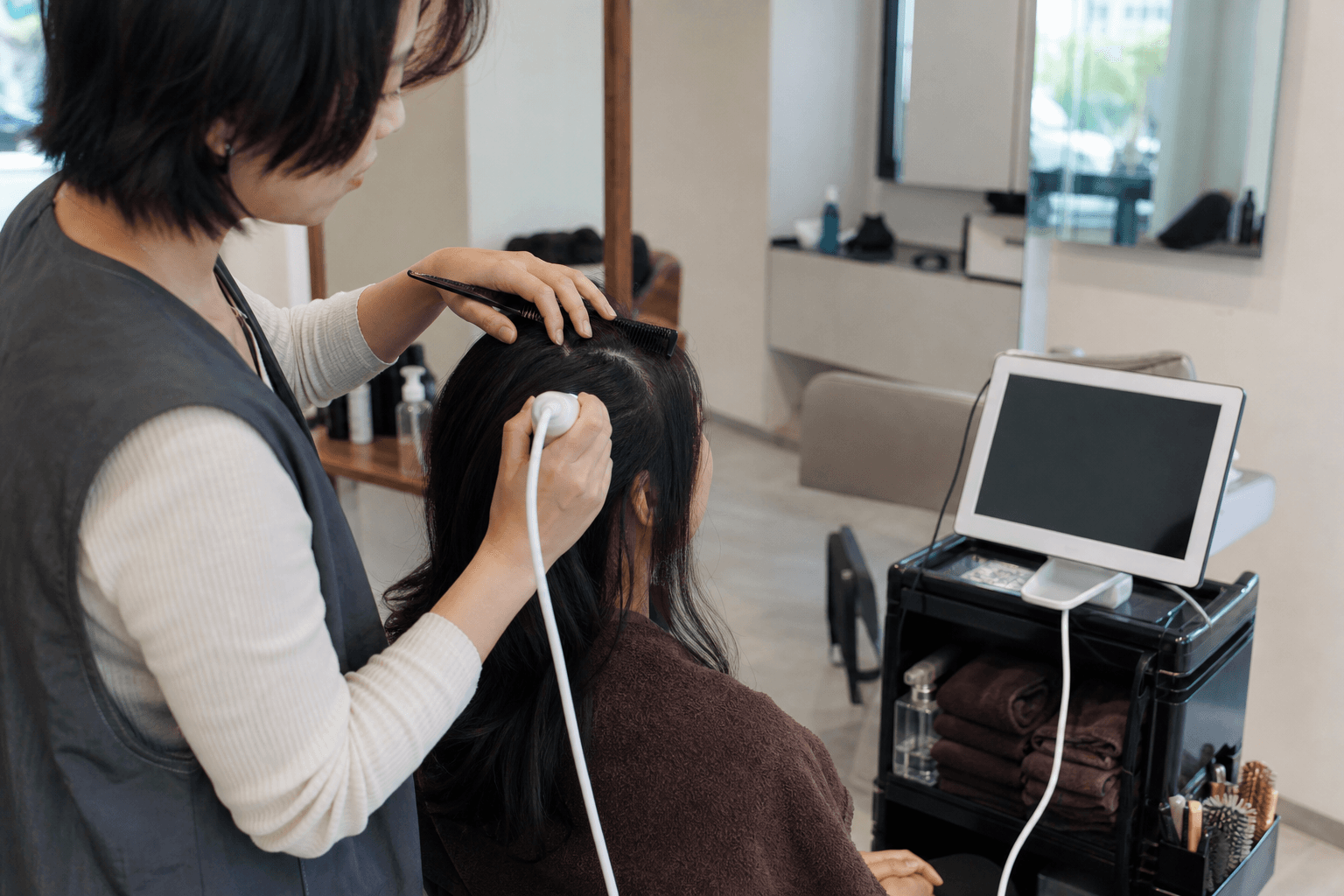
At many Seoul hair salons, even a routine cut (typically ₩30,000–60,000) starts with ten minutes of scalp inspection under a scope, the way a dermatologist checks pores. It's not about split ends — stylists are looking for oil buildup, flaking, and clogged follicles, and they'll point them out on screen without much sympathy.
That's the whole premise of Korean hair care: the scalp is skin, and it gets treated like skin. Cleansed, exfoliated, treated, monitored — not just washed and conditioned and forgotten. Once you see it that way, the "extra step" routine you see online actually makes sense.
The core idea: scalp first, strands second
Western hair care mostly asks "is my hair damaged?" Korean hair care asks "is my scalp healthy?" first, on the logic that hair grown from a clogged, inflamed, or overly oily scalp was never going to look good no matter what you put on the ends.
In practice that means:
- Scalp scaling (a deeper exfoliation, roughly monthly) to remove sebum and product buildup a regular shampoo won't touch.
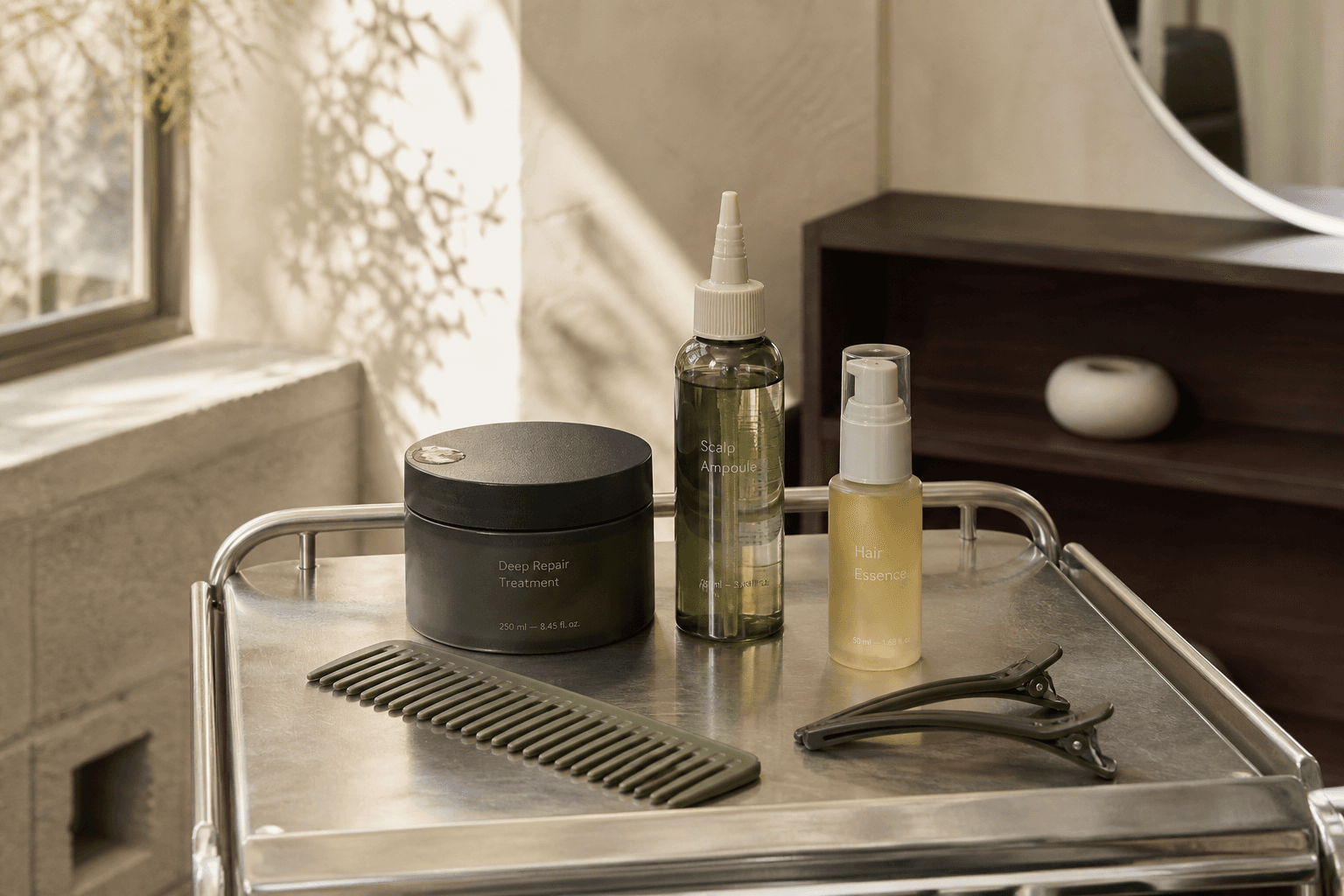
- Scalp tonics and ampoules applied to the roots after washing, not the lengths — similar in spirit to a face serum.
- Wash frequency that's often higher than the "wash less" advice common elsewhere, because a clean scalp is the priority over avoiding water contact with hair.
- Cool or lukewarm rinses, since hot water is treated as scalp-irritating the same way it's treated as skin-irritating.
How often do Koreans actually wash their hair?
Daily, mostly — which surprises people who've absorbed the "don't wash your hair every day" rule from Western forums. Korean dermatology guidance generally treats the scalp as an extension of facial skin that needs regular cleansing, especially given Seoul's humidity and pollution. Skipping washes to "preserve oils" isn't really part of the local logic. That said, this isn't universal medical consensus — some dermatologists elsewhere still recommend less frequent washing for very dry, curly, or chemically treated hair, so it's worth weighing against your own hair type. That doesn't mean stripping shampoo daily — it means a gentler, scalp-focused cleanser used often, paired with a heavier treatment less frequently.
The scalp scaling step, explained
This is the one with no clean Western equivalent. Scalp scaling is a pre-shampoo exfoliation — a gel or peeling treatment massaged into the roots to loosen dead skin, oil, and styling product before the actual wash. Think of it as a chemical-exfoliant night, but for your roots.
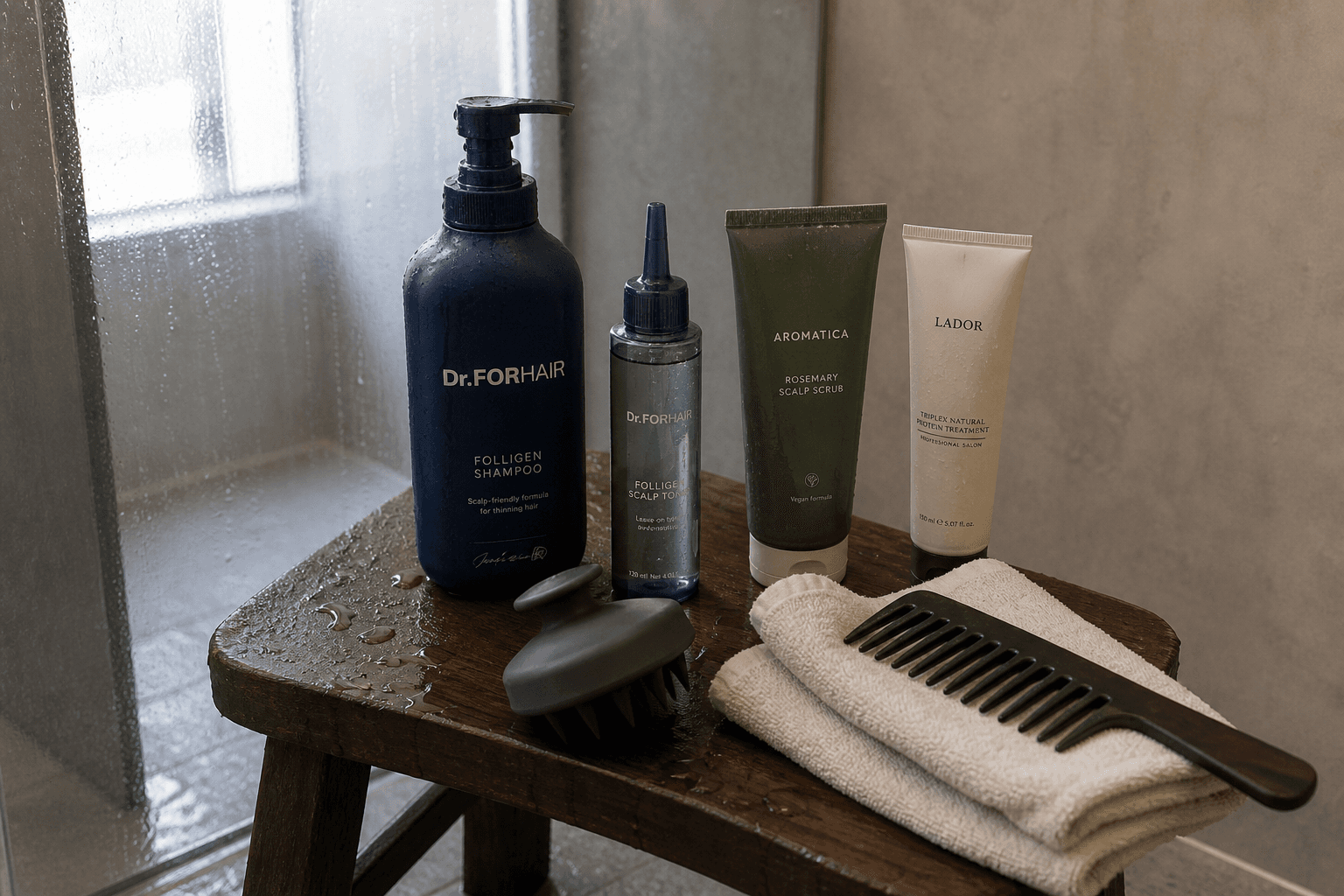
Aromatica's rosemary scalp scrub is one of the most recommended over-the-counter versions for doing this at home — a coarse, herbal-smelling scrub meant to be worked into a dry or damp scalp before shampooing. It's inexpensive, widely available at Korean pharmacies and through international retailers that ship Korean beauty products, and works best as a once-a-week or once-every-two-week step rather than a daily one.
The technique is simple and doesn't require special tools: worked into a dry or towel-dried scalp with fingertips in small circular motions for two to three minutes, focused on the crown and hairline where buildup collects, then rinsed out along with the first shampoo pass.
The routine at a glance
- Daily: gentle scalp-focused shampoo, lukewarm rinse
- 2–3x/week: scalp tonic or ampoule on towel-dried roots
- Weekly: a protein or moisture treatment mask on the lengths
- Monthly-ish: scalp scaling treatment before a wash
- As needed: a wide-tooth comb, never a brush, on wet hair
The products that actually show up in Korean bathrooms
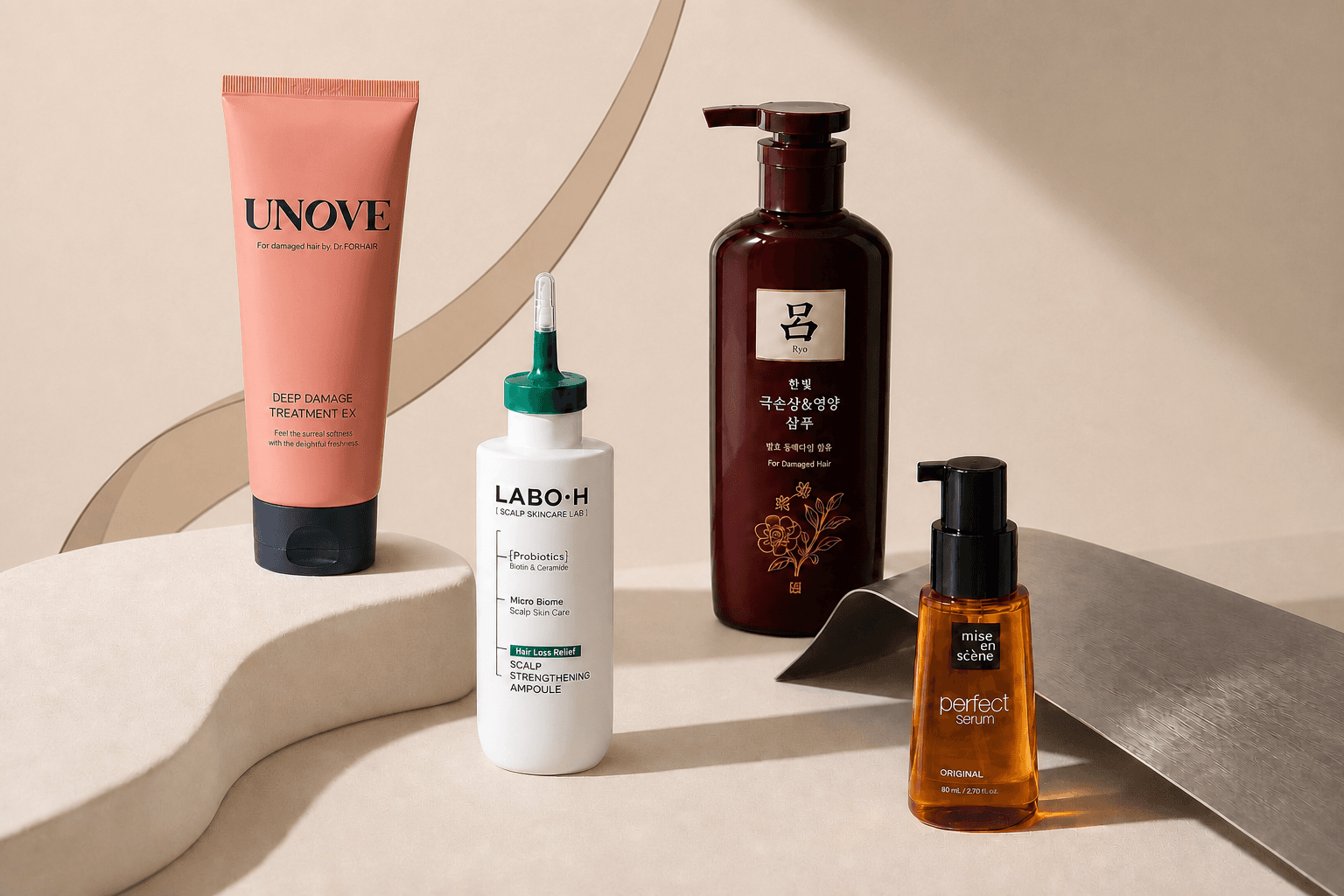
Three names come up constantly, none of them boutique or hard to find:
- Ryo — the herbal, medicinal-smelling shampoo that's been a drugstore staple for decades, often the first "real" shampoo teenagers get handed for an oily scalp.
- Dr.FORHAIR — leans clinical, positioned around folliculitis and thinning, sold through pharmacies as much as beauty stores.
- La'dor — the glossy, damage-repair side, popular for keratin and protein treatments on color-treated or heat-styled hair.
All three are inexpensive by Western drugstore standards — most full-size bottles run roughly ₩8,000–20,000 — and are sold at Olive Young, most Korean pharmacies, and international retailers that carry Korean beauty brands.
Myth vs. reality
Myth: Korean hair care is mostly about "glass hair" shine from fancy oils. Reality: The shine is downstream of scalp health. Most of the actual routine — tonics, scaling, wash frequency — happens at the root and never touches the ends.
Myth: More steps always means better results. Reality: Layering a scalp tonic, a scaling treatment, and a heavy mask all in the same week is more likely to irritate a sensitive scalp than improve it. The routine works because each step targets a specific problem — buildup, dryness, damage — not because stacking more product produces better outcomes.
The honest part: what didn't work
Scalp scaling products can be genuinely uncomfortable if your scalp is already sensitized — the exfoliating particles or menthol-heavy tonics that feel great on an oily scalp can sting on a dry, flaky one. If that happens, the fix is to back off frequency (every six to eight weeks instead of monthly) rather than push through it, and to patch-test any new tonic on a small section before using it on the whole scalp.
Also worth saying plainly: none of this replaces treatment for actual hair loss or a diagnosed scalp condition. If you're dealing with persistent shedding, see a dermatologist — a rosemary scrub won't out-perform minoxidil or a real diagnosis.
If you want the professional version of this whole routine done for you in one sitting, our Korean head spa guide for first-timers walks through exactly what that looks like.
FAQ
How often do Koreans wash their hair? Most people wash daily with a gentle, scalp-targeted shampoo, using lukewarm rather than hot water, then layer heavier treatments in less frequently.
What is scalp scaling and do I need it? It's a pre-shampoo exfoliation for the scalp, usually done about monthly, aimed at removing buildup a regular wash misses. It's most useful if your scalp feels oily, flaky, or itchy despite washing regularly.
Is Korean scalp care just marketing, or is there something to it? There's real substance to the scalp-first framing — treating the scalp as skin that benefits from regular cleansing and occasional exfoliation is dermatologically reasonable. But not every ampoule or tonic on the shelf is essential. The core habits — gentle daily cleansing, occasional scaling, lukewarm water — do more of the work than any single branded product.
What's the easiest way to start this routine? Add one scalp tonic applied after washing and one scaling treatment a month before you touch anything else — the daily-wash habit and product stack can come later once you know your scalp's reaction.