Korean Haircare Is Having a Moment — Here's Where We'd Start
Everyone photographs the skincare aisle. The interesting thing happened one aisle over.
By A Drop of Seoul Editorial ·
You can watch it happen in any large Olive Young. People come in for the skincare wall, photograph it, fill a basket, and walk straight past the aisle where the interesting thing is actually going on.
We did the same for years. Hair was shampoo. Shampoo was the thing you bought without thinking, in whatever scent, on the way to the register.
That's not what that aisle is anymore.
Quick answer
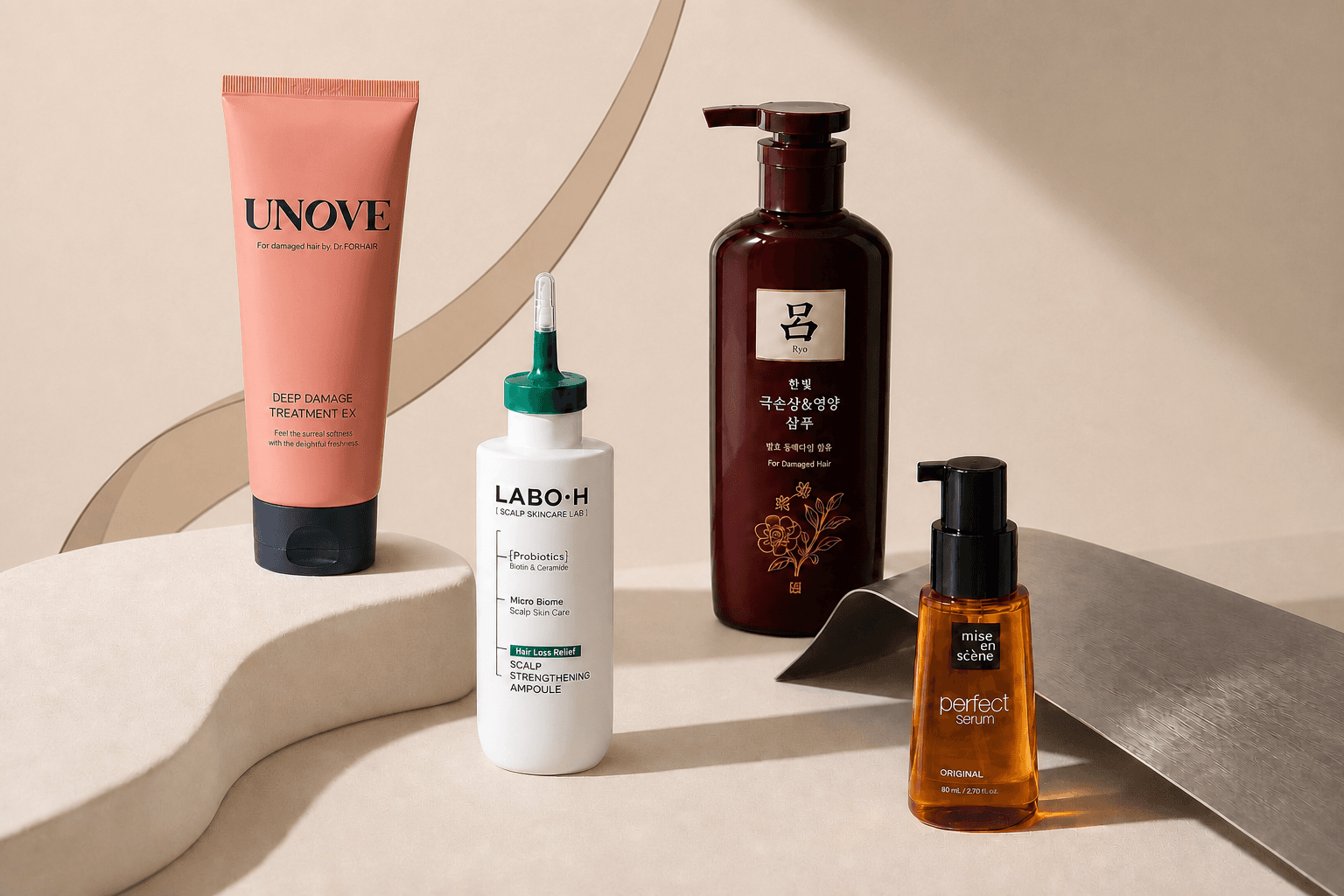
Start with a treatment mask, not a shampoo. If you buy one Korean hair product, make it a deep-repair treatment — UNOVE Deep Damage Treatment EX has taken first place in Olive Young's haircare category four years running, which is not a fluke.
Then add a scalp ampoule if your scalp is oily, itchy, or shedding more than it used to. Then, and only then, worry about shampoo.
What actually changed
Three numbers explain the shift better than any trend piece.
Olive Young's haircare category grew about 200% year on year. Not 20%. The aisle roughly tripled while everyone was looking at serums.
Korean hair product exports rose 30.6%, on track to pass $600 million for the year. Hair is doing now what skincare did in 2016 — quietly becoming an export category before anyone abroad noticed it was one.
Functional scalp ampoules and serums grew 52% while ordinary shampoo grew 12%. That gap is the whole story. Korea didn't start buying more shampoo. It started buying scalp treatments, which is a different product with a different logic.
There's an industry word for this: skinification — taking the format of skincare and applying it to hair. Ampoules. Serums. Essences. Toners for your roots. Once you notice it, you can't stop seeing it on the packaging.
The idea underneath it
The scalp is skin. That's it. That's the premise.
If you accept it, everything else follows — you'd exfoliate it, you'd put a serum on it, you'd check it under a light, you'd treat oiliness and dryness as separate problems. Which is exactly what happens here. How Koreans actually care for hair and scalp walks through the routine itself; we won't repeat it.
What's worth adding is why the timing works. Roughly 40% of people in Korea experiencing hair loss are now in their twenties and thirties. That reframed the entire category. Hair loss stopped being a thing that happened to your father and became a thing a 27-year-old worries about in a bathroom mirror at 1am, which is a much larger and much more anxious market.
The scalp-care market here is projected to cross ₩1 trillion. Dr.Groot, LG's scalp brand, has held the top share in functional hair-loss shampoo for six consecutive years and passed 40 million cumulative bottles — then landed in about 600 Costco stores in North America. That's not a niche anymore.
Where we'd start: three products
1. A deep treatment mask
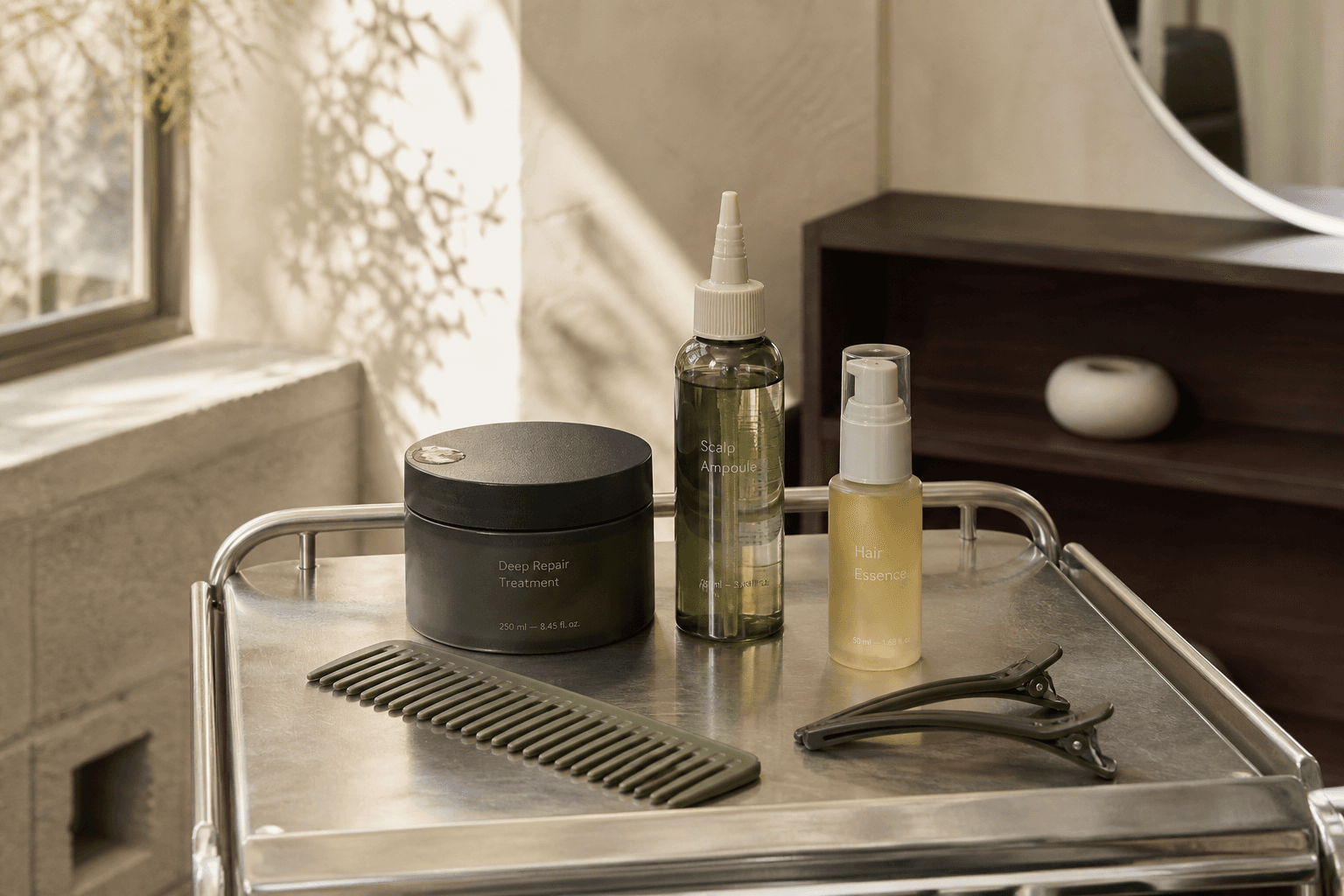
Not a conditioner. A conditioner smooths the cuticle for a day. A treatment mask is a ten-minute repair step you do once or twice a week, and the difference on damaged mid-lengths is not subtle.
This is the category Korea is genuinely best at right now, and it's the one that survives the flight home. Korean hair masks worth bringing home covers which ones and for what hair.
2. A scalp ampoule or tonic
If, and only if, you have a scalp concern. Oily by the second day, itchy, flaking, shedding more in the shower than you'd like.
You part the hair and apply it to the scalp — not the lengths — after washing, the way you'd put a serum on a cheek. It feels strange for about a week and then feels normal.
If your scalp is genuinely fine, skip this. There is no prize for treating a problem you don't have.
3. An oil or essence for the ends
The last two inches of your hair are the oldest and most damaged part of it, and no scalp product will ever reach them. A light oil or essence, applied to damp ends only, is the cheapest visible improvement in this entire category.
This is also where the "glass hair" look everyone's chasing actually comes from — not from a single miracle product, but from repair plus a sealing layer plus not blow-drying it at 200°C.
What we'd skip, at least at first
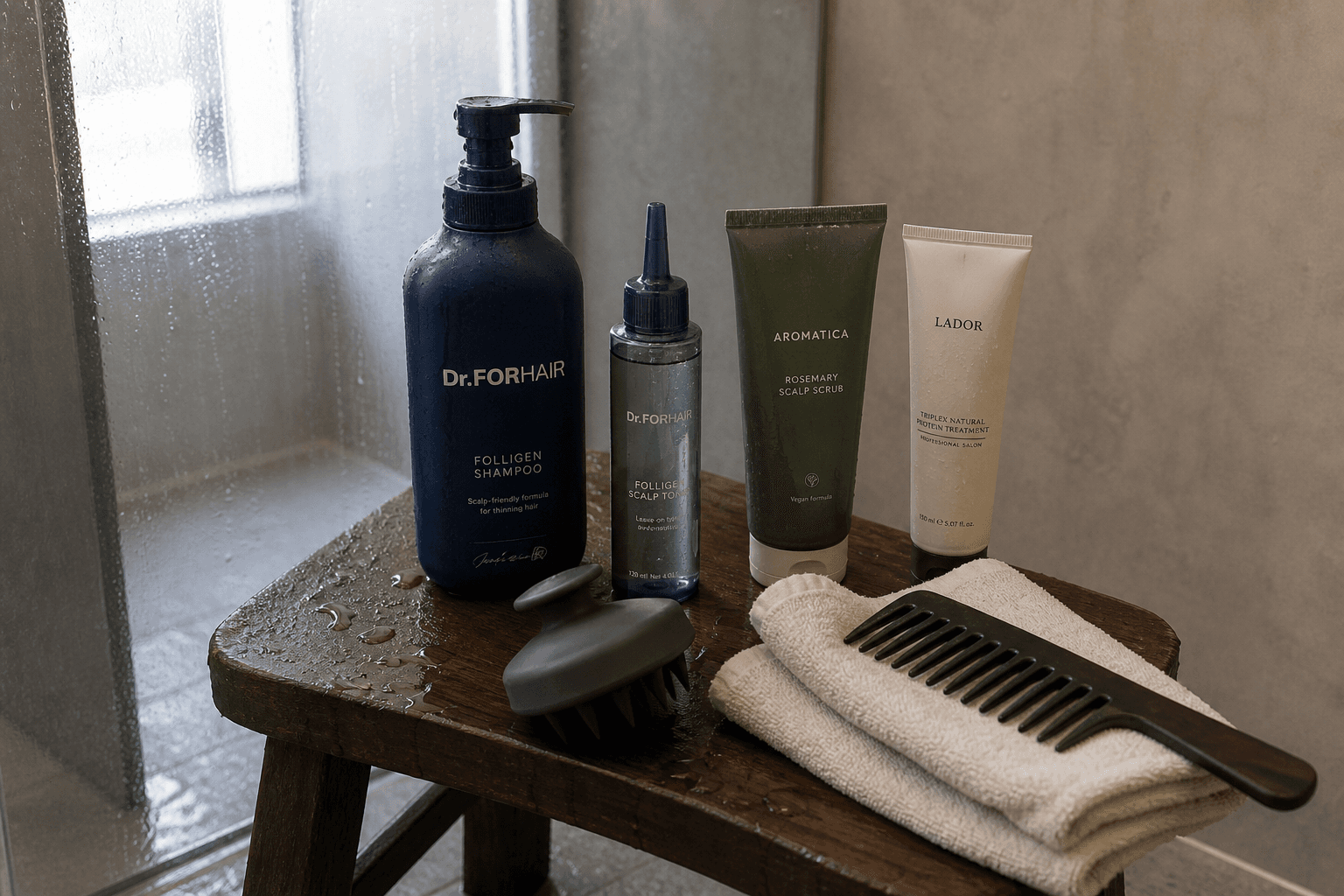
Hair-loss shampoo, if you don't have hair loss. It's the most heavily marketed shelf in the aisle and the most over-bought by visitors. These are formulated around a specific concern. If that isn't yours, you've bought an expensive shampoo that will not make your hair shinier.
Buying shampoo at all, honestly. Shampoo is heavy, it's liquid, airlines have opinions about it, and it's the product in this category where the quality gap with the rest of the world is smallest. Treatments and scalp products are where the actual difference is. Spend the suitcase weight there.
Scent-first brands, if you wanted treatment. Some Korean hair brands are built around fragrance and are very good at it — genuinely lovely to use, and a reasonable gift. Just don't expect them to repair anything. Buy them knowing what they are.
Anything that promises to fix hair loss on its own. Shampoo cannot regrow hair. Korean marketing on this shelf is aggressive, and it's the one place we'd tell you to read the claims skeptically even here.
If you want to go further than a bottle
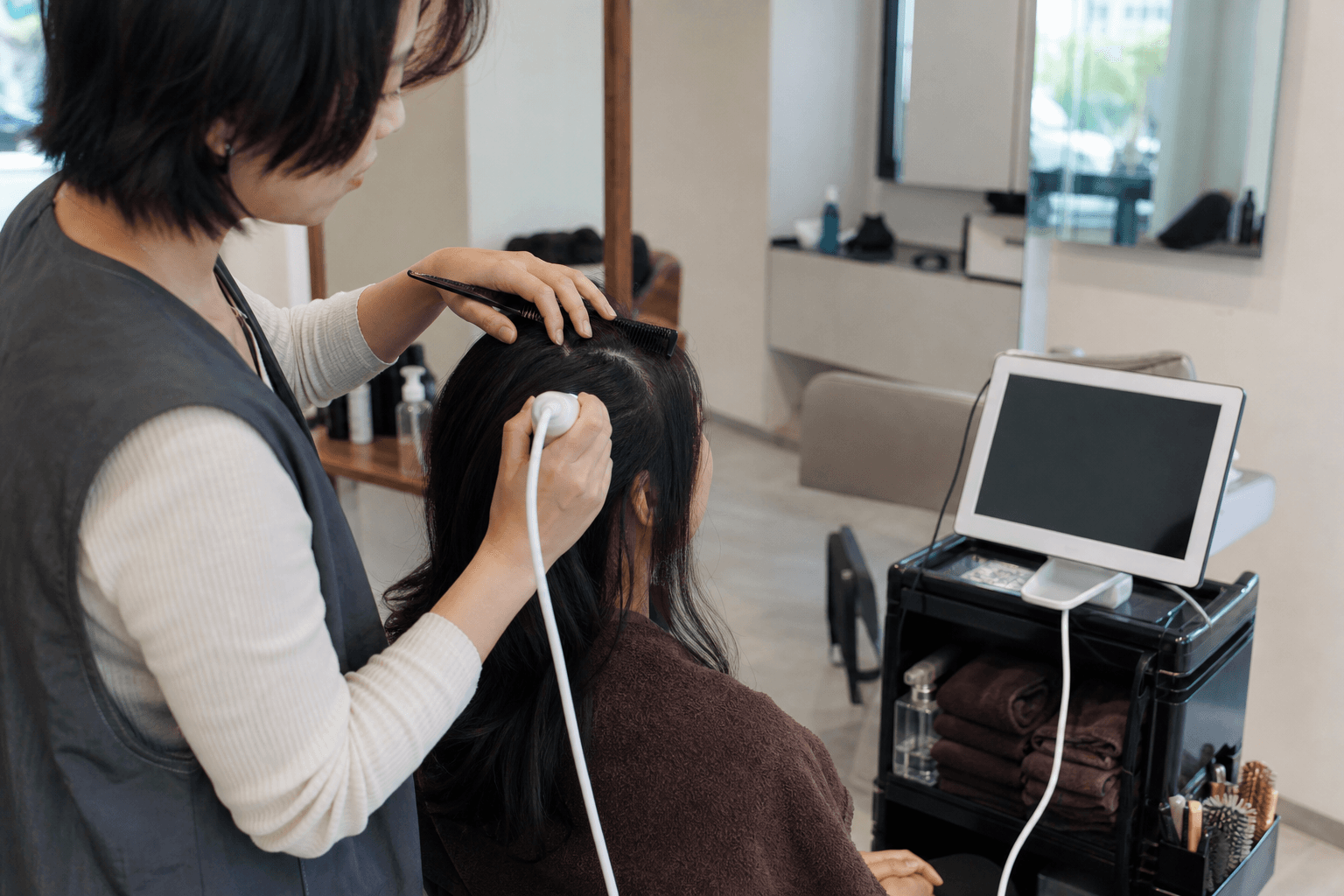
The natural next step isn't another product, it's a chair. Korean salons treat scalp diagnosis as a routine part of a haircut, and dedicated head spas turn it into a 60–90 minute treatment. What really happens at a Korean head spa is the honest walkthrough, and why Seoul takes scalp care seriously covers how the culture around it got built.
If you're travelling, that's the version worth doing. You can buy a treatment mask anywhere. You cannot easily buy an hour of somebody examining your scalp under a scope and then massaging it until you fall asleep.
Read next
Sorting out which brands do what? The Korean hair brands worth knowing. Fine or frizzy hair and unsure whether any of this applies? Korean haircare for fine, frizzy hair. Building the routine itself: how Koreans actually care for hair and scalp.
FAQ
Is Korean haircare actually better, or is it just marketing?
It's genuinely strong in two categories — deep treatment masks and scalp-specific products — and unremarkable in a third, shampoo. The scalp-as-skin framing is a real difference in approach, not just packaging language, and it's produced product formats that don't have clean equivalents elsewhere.
Where should a beginner start with Korean haircare?
One deep treatment mask, used once or twice a week. It's the cheapest, most portable, and most immediately noticeable step. Add a scalp ampoule only if you have a scalp concern.
Why is scalp care such a big deal in Korea?
Partly the underlying logic that the scalp is facial skin that happens to grow hair, and partly demographics — a large share of people dealing with hair loss here are now in their twenties and thirties, which turned scalp care from a medical category into an everyday one.
Is Korean hair care suitable for curly or textured hair?
The scalp products are, since a scalp is a scalp. The treatment masks are formulated mostly around straight-to-wavy Korean hair, so protein-heavy repair products can feel stiff on some textures. Patch-test on a section before committing to a full application.
What is skinification?
The industry term for borrowing skincare formats and ingredients for hair — ampoules, serums, essences applied to the scalp. In Korea it's the fastest-moving part of the category: functional scalp ampoules and serums grew about 52% in a year, against 12% for ordinary shampoo.