Korean Hair Masks Worth Bringing Home
The one hair category where the suitcase weight is genuinely justified.
By A Drop of Seoul Editorial ·
Of everything in a Korean beauty haul, hair masks are the item people are most likely to under-buy and most likely to be glad about later.
They're not glamorous. They photograph badly. But this is the one hair category where Korea is genuinely, measurably ahead — and unlike shampoo, a tub of treatment is worth the space it takes.
There's one thing to sort out before you buy any of them, though, and almost nobody mentions it in a haul video.
Quick answer
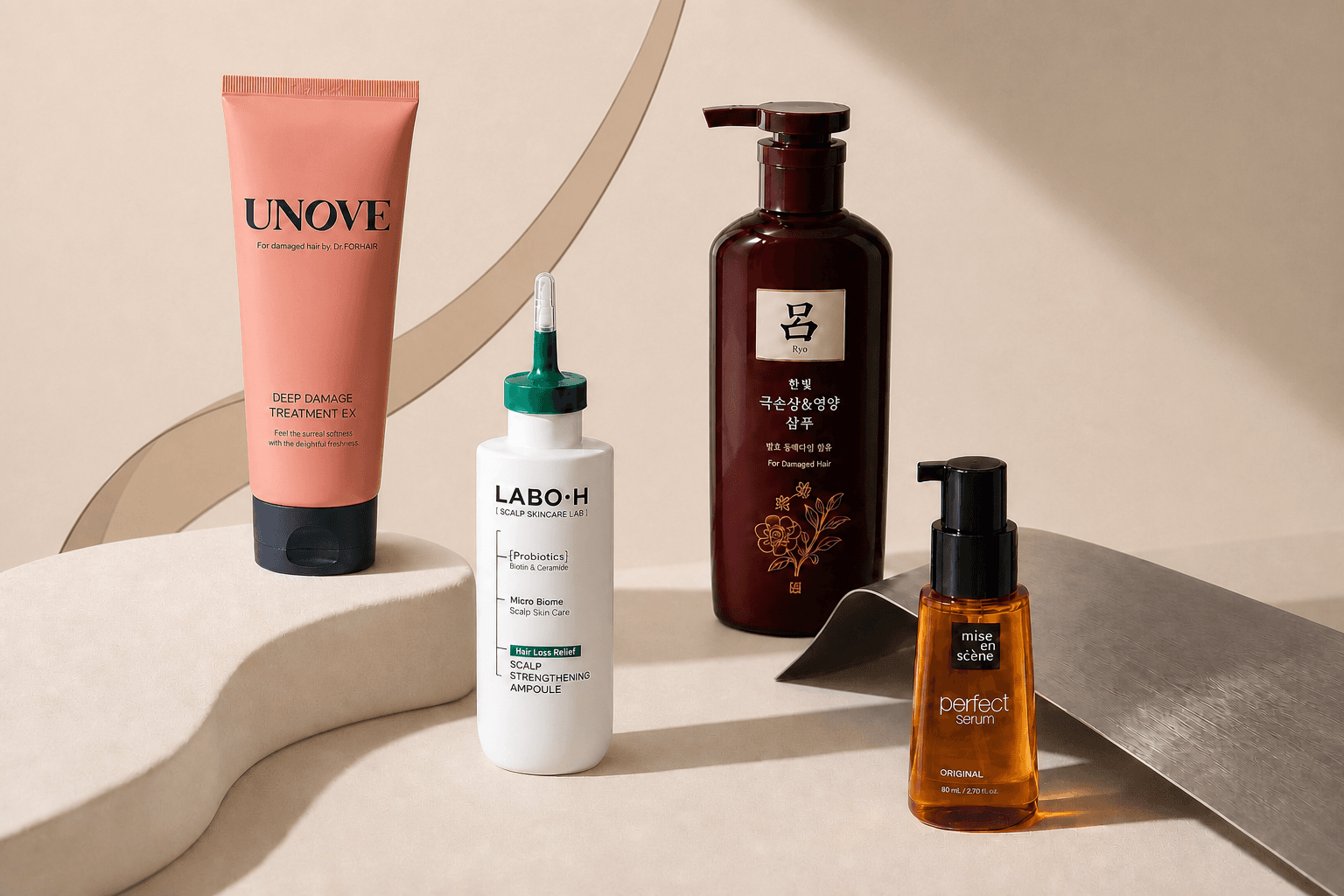
For most people: UNOVE Deep Damage Treatment EX. It has won Olive Young's haircare category four years running, and there's no mystery to why — it's built around bond-repairing proteins and amino acids and it works on the kind of damage most people actually have.
If your hair is very fine, don't start there. Go lighter, and read the section below before you buy anything with "butter" in the description.
If your hair is curly or coily, buy the scalp products and treat the mask aisle with caution.
Why masks, and not shampoo
Shampoo is heavy, liquid, restricted by airlines, and the category where Korea's advantage over everywhere else is thinnest. You can buy a fine shampoo at home.
A treatment mask is the opposite trade. It's the category Korean brands compete hardest in, it lasts months, and a good one visibly changes hair within two or three uses. If you're rationing suitcase space, this is where to spend it. Where we'd start with Korean haircare makes the same argument at more length.
The distinction that actually decides this
Hair masks come in two families, and buying from the wrong one is the single most common way people end up disappointed.
Protein masks rebuild structure. Keratin, hydrolyzed proteins, amino acids, "bond repair." They make hair feel stronger and look smoother, and they are what damaged, bleached, or chemically processed hair is usually missing.
Moisture masks add softness and slip. Oils, butters, humectants, ceramides. They make hair feel pliable rather than strong.
Here's the catch: protein is not a "more is better" ingredient. Stack too much of it and hair goes stiff, dry, and brittle — the thing people call protein overload. It feels exactly like damage, so the instinct is to apply more protein, which makes it worse.
Korean masks skew protein-forward, because Korean hair is often chemically processed and generally benefits from it. If your hair is already protein-sensitive, that default is working against you.
The simple rule: alternate. Protein mask one week, moisture mask the next. If your hair ever feels rough and squeaky rather than soft, stop the protein for a month.
What we'd buy, by hair situation
Bleached, colored, or heat-destroyed
UNOVE Deep Damage Treatment EX is the default, and deservedly. It's formulated around bond-building proteins and amino acids, it's cheap for what it does, and four consecutive category wins on Olive Young's purchase data means an enormous number of people bought it twice.
Mise en Scène's Salon 10 protein masks are the heavier option — a dense, buttery texture that delivers dramatic softness on badly damaged hair. It's a common recommendation from Korean stylists for hair that's genuinely been through it. The trade-off is weight, which brings us to the next section.
Fine hair
This is where the standard recommendations turn on you.
Fine hair is easy to overwhelm. A rich, buttery mask that transforms thick bleached hair can leave fine hair limp by the third day, and no amount of rinsing fixes it retroactively. We've watched it happen to friends who followed a haul video exactly.
What we'd do instead: choose lighter textures over butters, apply to the last two-thirds of the hair only, never near the roots, and rinse more thoroughly than feels necessary. A silicone-free option like Aromatica's quinoa protein mask is a sensible starting point if buildup is your usual problem.
Also worth knowing: for fine hair, a leave-in essence on damp ends often outperforms a heavy rinse-out mask entirely. Cheaper, lighter, and no risk of weighing anything down.
Frizzy or wavy
Frizz is usually a moisture problem wearing a texture costume. Protein-heavy masks can smooth it temporarily and then make it worse over a few weeks.
Lead with moisture, use protein occasionally, and pair either one with an oil or essence on the ends to seal. Korean haircare for fine, frizzy hair goes into this properly.
Curly and coily
Honest answer: this market doesn't formulate for you.
Korean hair products are developed around straight-to-wavy hair of moderate density, and the mask aisle reflects that. The scalp side of Korean haircare transfers fine — a scalp is a scalp. The strand side often doesn't.
If you want to try one, choose a moisture mask, patch-test on one section, and give it two weeks before deciding. Don't buy four.
Overnight and no-rinse
The category worth knowing about even if you buy nothing else. Leave-in and no-wash treatments — UNOVE's heating-guard no-wash treatment is the well-known one — are designed to be applied and left, which is a genuinely useful format on a trip when you don't want a ten-minute shower step.
How to actually use one
Most masks underperform because of application, not formula.
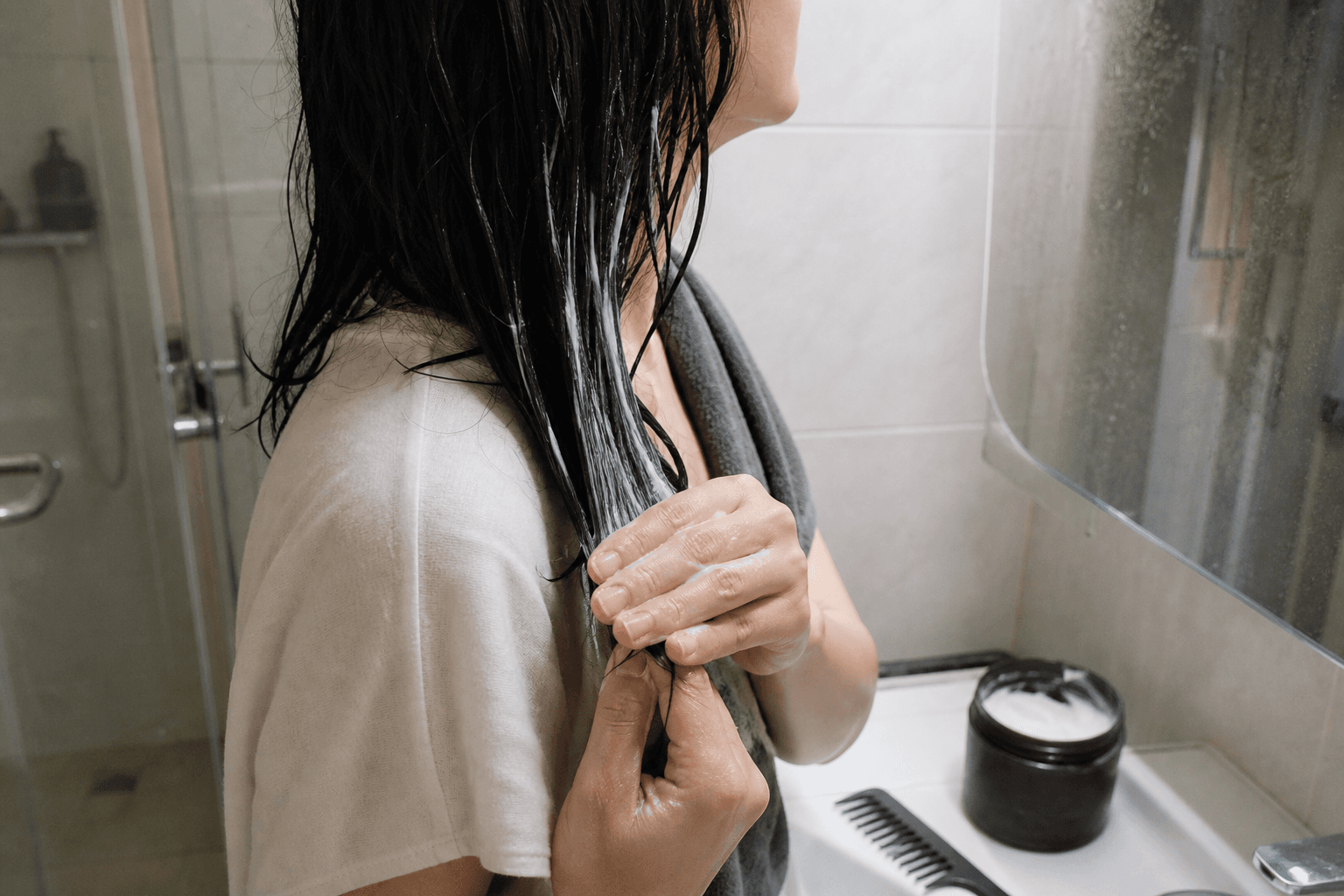
- Damp, not soaking. Squeeze the water out first. A mask applied to dripping hair is a mask diluted to nothing.
- Mid-lengths and ends only. The scalp has its own products. Putting a repair mask on your roots is how fine hair goes flat and oily scalps get worse.
- Ten minutes is enough. Twenty is not twice as good.
- Heat helps. Wrap it in a warm towel, or just put your hair up in the shower while you do everything else. This is the free upgrade nobody uses.
- Once or twice a week. Not daily. This is where protein overload comes from.
What we'd skip
Buying four masks in one trip. You cannot evaluate four things at once, and hair takes weeks to respond. Buy one, or one protein and one moisture. Come back for more.
Sachet multipacks as your main purchase. Fine as a way to sample, but the per-use cost is poor and it's a lot of packaging to carry.
Anything promising a salon treatment result at home. In-salon bond treatments involve different concentrations and processes. A ₩12,000 tub is very good value; it is not a ₩150,000 salon service.
Masks, if what you actually have is a scalp problem. Greasy roots and dry ends is one situation, not two, and a mask only addresses half of it. Start with why Seoul takes scalp care seriously instead.
Read next
Working out which brand does what? The Korean hair brands worth knowing. Building the whole routine? How Koreans actually care for hair and scalp. Shopping trip coming up? What we'd actually buy at Olive Young.
FAQ
What is the best Korean hair mask?
For general damage, UNOVE's Deep Damage Treatment EX has the strongest track record — four straight years at the top of Olive Young's haircare category, which is calculated from real purchase data. For very damaged or bleached hair, Mise en Scène's Salon 10 line is the heavier alternative. For fine hair, neither is the obvious first choice.
How often should I use a Korean hair mask?
Once or twice a week. More than that with a protein-heavy formula risks protein overload, which makes hair feel dry and brittle — the opposite of what you were going for.
Do Korean hair masks work on curly hair?
Variably. They're formulated around straight-to-wavy hair, and protein-forward masks in particular can leave curls stiff. If you try one, pick a moisture-led formula, test on a section first, and give it a fortnight.
What's the difference between a hair mask and a treatment?
In Korean product naming, almost nothing — both usually mean a rinse-out, high-concentration step used weekly. The more useful distinction is protein versus moisture, which tells you what it does rather than what it's called.
Can I bring hair masks in hand luggage?
They count as liquids or gels under the usual cabin rules, so full-size tubs need to be checked. Sachets and small tubes are the workaround if you're travelling carry-on only.