The ₩2,000 Coffee That Powers Seoul
Giant iced Americanos, budget coffee chains on every block, and why coffee is simply part of everyday life in Korea.
By A Drop of Seoul Editorial ·
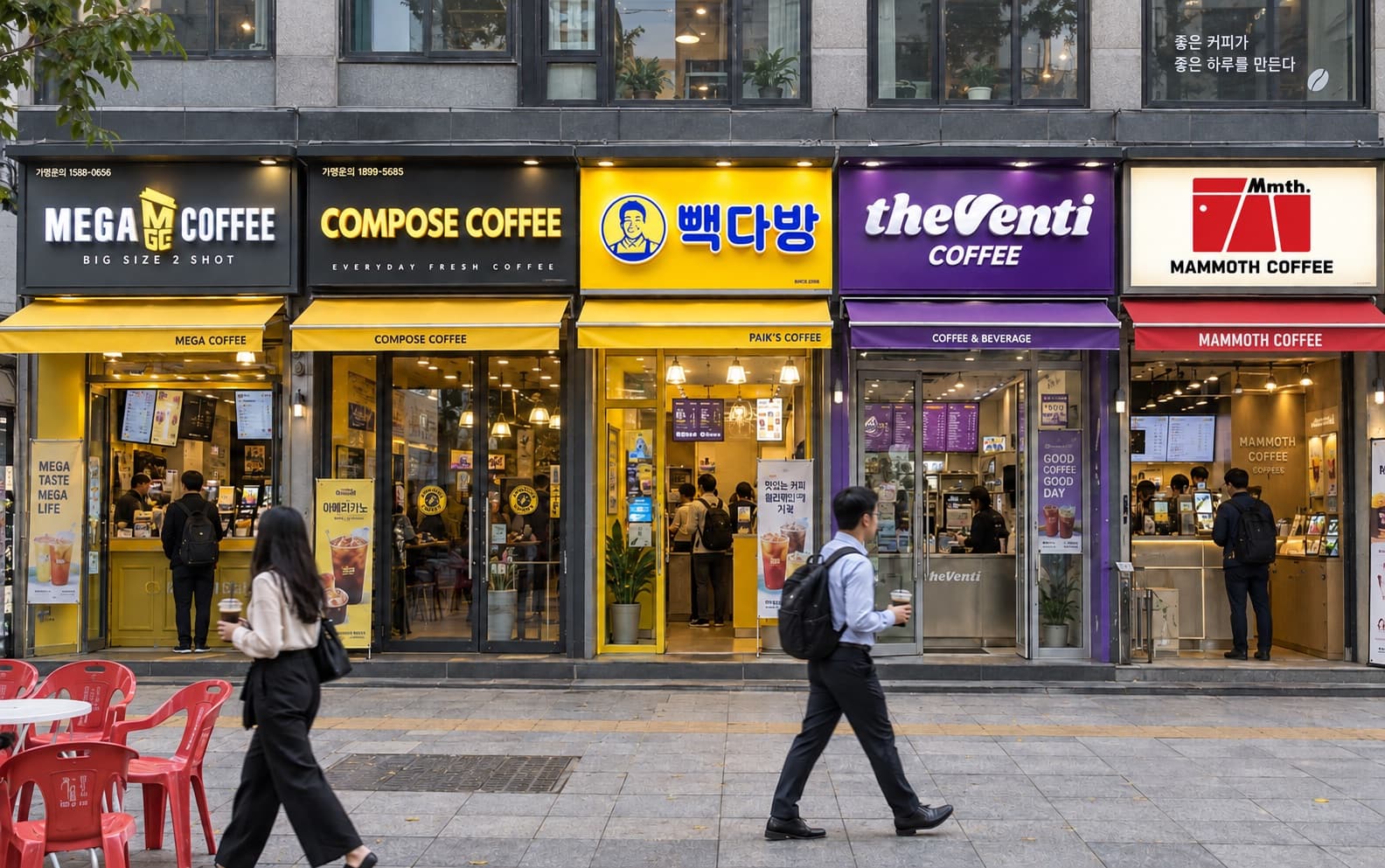
Walk through Seoul around 1 p.m. on a weekday and you'll notice something. Office workers heading back from lunch. Students on their way to class. People crossing the street with laptops and tote bags. And in so many of their hands: a giant plastic cup of iced Americano.
The cup is big. Almost comically big. The price? Around ₩2,000.
Think of ₩2,000 as a ballpark for a basic takeaway Americano: prices vary by chain, size, hot or iced option, and location. This isn't a happy-hour deal or some hidden local bargain.
Walk down an ordinary street in Seoul and you might pass a MEGA MGC COFFEE, then a COMPOSE COFFEE a few steps later, with a Paik's Coffee across the road. Sometimes, they're practically next door to each other. In Seoul, there's a coffee shop next to a coffee shop next to another coffee shop. At lunchtime, they can all have a line.
The ₩2,000 coffee isn't just cheap coffee anymore. It's part of how Seoul gets through the day.
Koreans really, really love coffee
One on the way to work. Another after lunch. Maybe one more when the afternoon slump hits. Even a casual "Want to talk for a bit?" often becomes "Want to grab a coffee?"
Around office districts, you can watch the ritual happen every weekday. Lunch ends, people stream toward nearby cafés, and minutes later they return to their desks carrying enormous iced Americanos.
Coffee in Korea isn't always about going to a café. Sometimes, it's simply part of the rhythm of the day. And that everyday demand has created a distinctly Korean category: Budget coffee. Cheap. Big. Fast. Everywhere.
How can coffee be this cheap?
Korea's budget coffee chains tend to follow a simple formula: Low prices + large sizes + fast takeaway + locations everywhere.
Stores are often small, takeaway volume is high, and drinks are standardized for speed. Instead of making a large margin on every cup, the model is built around selling a lot of them.
For customers, the price also makes ordering a second coffee feel like no big deal. For a visitor, the appeal is easy to understand: Cheap. Fast. Convenient. At this price, budget coffee isn't really an occasional café purchase anymore. It's an everyday drink.
Meet Korea's ₩2,000 Coffee Chains
Spend a few days in Seoul and you'll start recognizing these names everywhere. For a basic Americano, choosing between them can be as simple as checking what's nearby and which queue is shortest. The names below are useful signs to recognize on your walk.
01 · MEGA MGC COFFEE
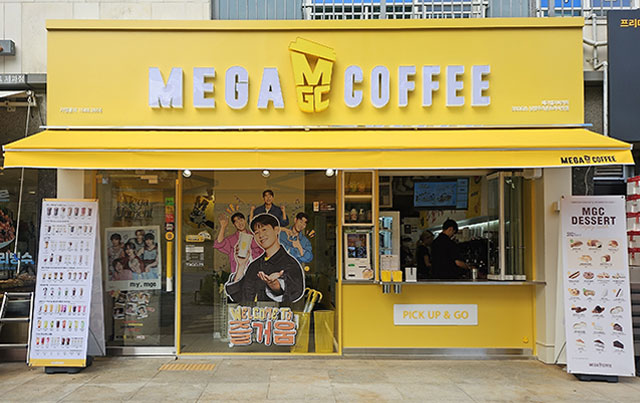
Storefront photo: MEGA MGC COFFEE (official brand materials). Signage varies by location.
Look for the bright yellow sign — and the very large cups. As the name suggests, Mega is all about size. But the enormous menu is part of the fun too: Americanos, lattes, ades, frappes, seasonal drinks, and seemingly everything in between.
02 · COMPOSE COFFEE
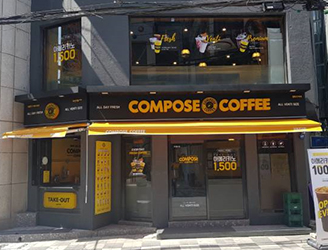
Storefront photo: COMPOSE COFFEE (official brand materials). Signage varies by location.
Another yellow-and-black sign you'll see all over Seoul. Compose offers the same everyday appeal: affordable drinks, quick takeaway, and a coffee stop that fits easily into your day.
03 · MAMMOTH COFFEE
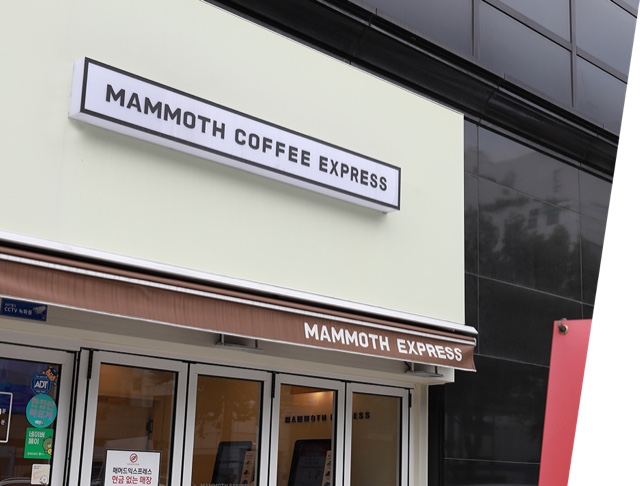
Storefront photo: Mammoth Coffee (official brand materials). Mammoth Express signage. Signage varies by location.
Look for Mammoth Coffee or Mammoth Express on the sign — both names belong to the same coffee family. The Express storefront pictured here is one version you may encounter. Spot a Mammoth near an office district and you have a good place to watch the Korean weekday coffee run in action.
04 · PAIK’S COFFEE | 빽다방
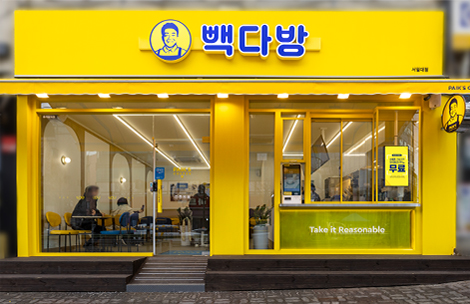
Storefront photo: Paik’s Coffee (official brand materials). Signage varies by location.
The bright yellow sign may say PAIK’S COFFEE or 빽다방, its Korean name. Paik's is another familiar name in the big-drink-for-a-small-price category. Like its neighbors, it offers plenty beyond Americanos — think iced teas, creamy lattes and colorful fruit-based drinks.
05 · THE VENTI
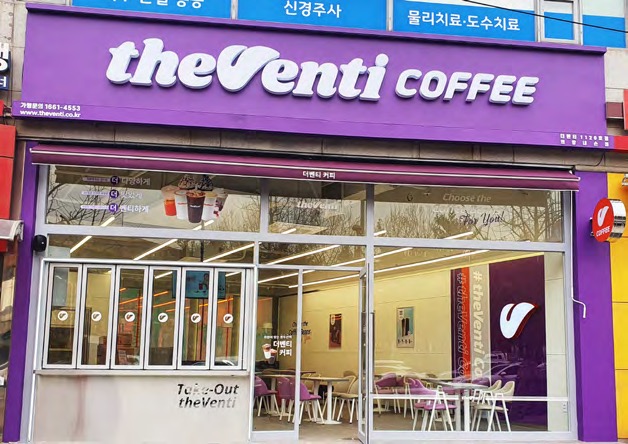
Storefront photo: theVenti (official brand materials). Signage varies by location.
The purple theVenti sign is another familiar stop for a large takeaway drink. For an everyday coffee, it fills much the same role as the other chains here.
Different signs, the same everyday coffee
And these five are only the beginning. Walk around Seoul long enough and you'll keep discovering budget coffee chains you've never heard of. That's the point. Budget, oversized coffee has become a category of its own in Korea.
The brands may look different and launch different seasonal menus, but for everyday coffee, the basic promise is remarkably similar: a lot of drink for not much money, served fast and close to wherever you already are.
Preferences exist, of course. But an everyday Americano doesn't have to be a declaration of brand loyalty. The shop on your route can be reason enough.
ADoS verdictStart with whichever is nearby
The menu keeps moving
The everyday Americano is only part of the appeal. These chains keep developing new drinks and desserts, giving you something new to try at an everyday price. Seasonal launches turn familiar storefronts into places where the menu is worth another look.
The combinations can get playful: chocolate gelato piled onto a matcha latte with espresso, apple jelly layered into a lychee smoothie, or pineapple juice topped with a coffee shot. These are actual menu items from the same chains you pass on an everyday coffee run. Alongside them are familiar vanilla lattes and decaf options for a different kind of coffee break.
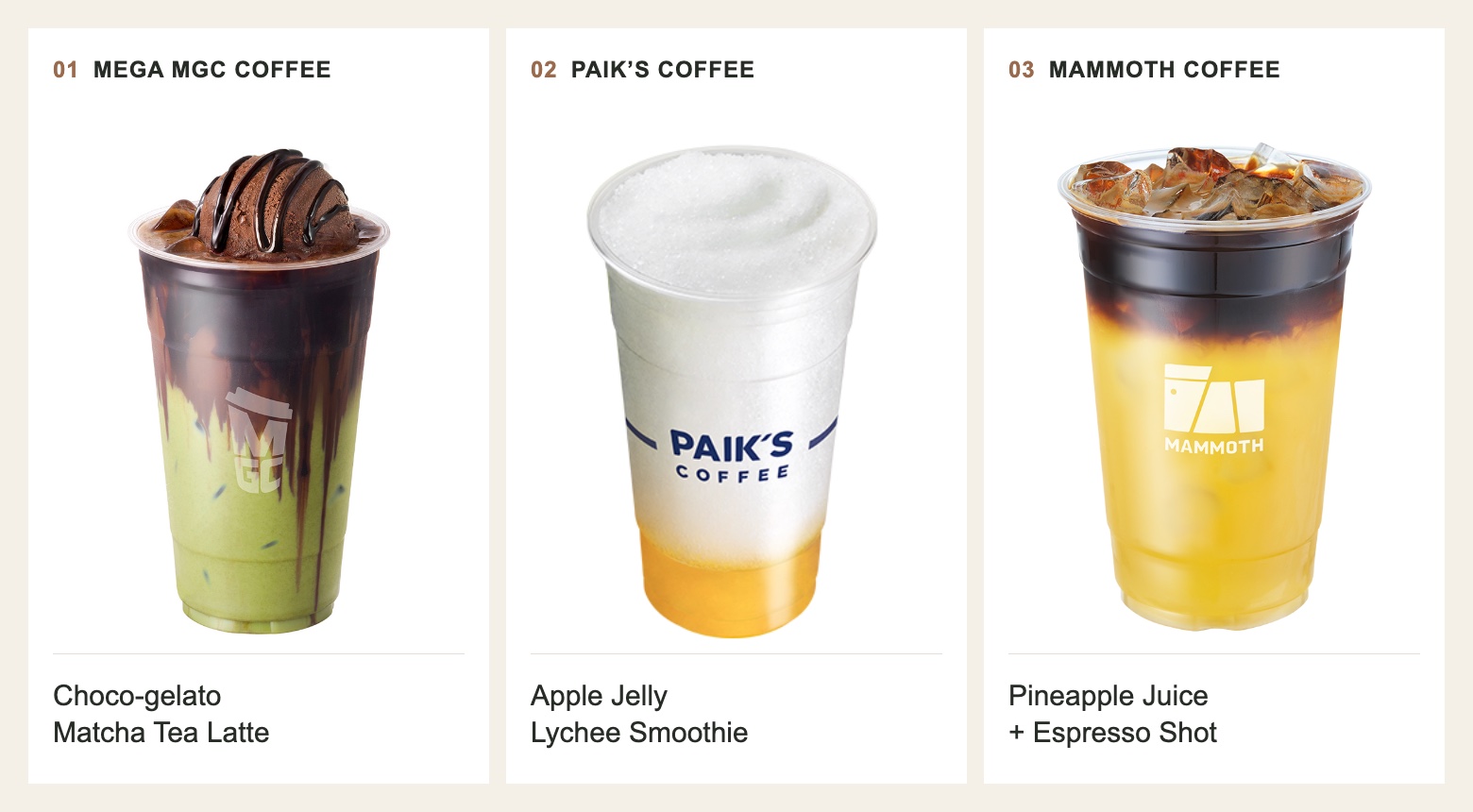
From left: MEGA MGC COFFEE’s Choco-gelato Matcha Tea Latte; Paik’s Coffee’s Apple Jelly Lychee Smoothie; Mammoth Coffee’s Pineapple Juice with an Espresso Shot. Official product photos from each brand; layout by A Drop of Seoul. Availability varies by store and season.
That constant menu development is part of the value. You can pick up your usual Americano one day and try a seasonal fruit drink or a dessert the next. A particular new menu item might bring you through the door even if you have no strong attachment to the brand.
These drinks and desserts generally cost more than the basic Americano, and the selection changes by chain, store and season. The appeal is still plenty of choice, frequent new flavors and prices that make a small treat feel easy to fit into the day.
Now they're selling more than coffee
There's another interesting shift happening inside Korea's budget coffee shops. They're becoming places to grab a quick meal, too.
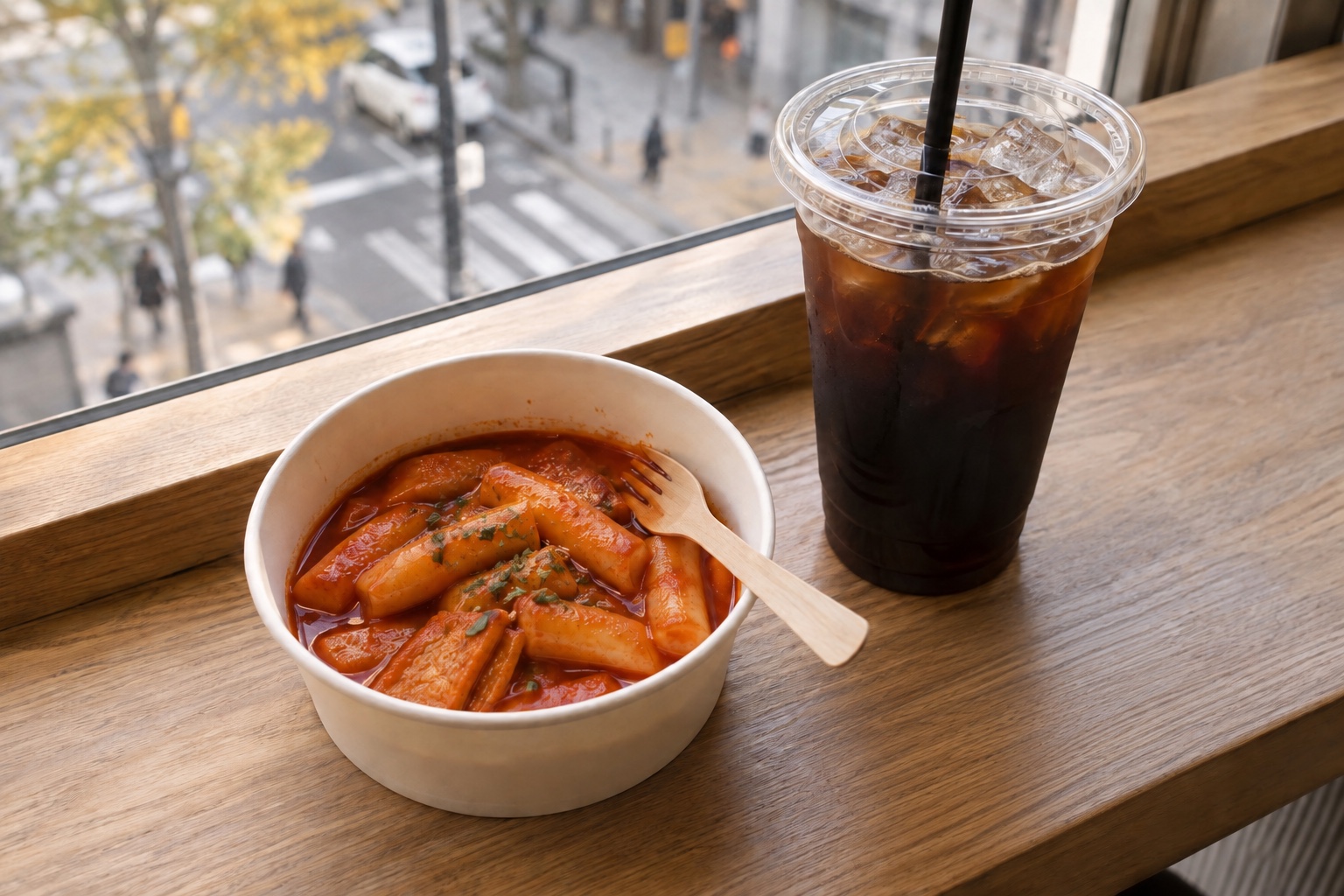
Coffee and a quick bite: the everyday cafe stop is becoming a small meal, too. AI-generated editorial illustration; not a specific chain’s menu item.
Café food used to mean cookies, cake or maybe a sandwich. Now, alongside bagels and salt bread, you might find something rather unexpected. Tteokbokki. Chicken in a cup. Even kimchi fried rice.
Wait — kimchi fried rice at a coffee shop? Yes.
Mega has expanded into items such as chicken in a cup and kimchi fried rice, while Compose has added tteokbokki to its quick-meal lineup. Menus and availability vary by store and season.
And it makes sense. As eating out in Seoul gets more expensive, a roughly ₩2,000 coffee plus a few-thousand-won snack can become an inexpensive breakfast, light lunch or afternoon meal.
Coffee and bread on the way to work. Coffee and something small instead of a full lunch. An iced Americano and a snack in the afternoon.
What began as a place for cheap, oversized coffee is gradually becoming something between a café and a convenience store. A small piece of everyday urban infrastructure.
This isn't Seoul's "best" coffee — and that's the point
None of this means you should come to Seoul and drink nothing but ₩2,000 Americanos. Quite the opposite.
Seoul has an exceptional independent and specialty coffee scene. Neighborhoods like Seongsu, Yeonnam, Hannam and Seochon are filled with cafés roasting their own beans, obsessing over brewing methods and turning coffee into an experience worth traveling across town for.
Budget coffee doesn't replace that culture. It serves a completely different purpose.
On the way to work? A ₩2,000 Americano. Business meeting? Maybe Starbucks. Catching up with a friend? A beautiful independent café. Saturday afternoon? Specialty coffee in Seongsu.
Koreans don't necessarily choose between cheap coffee and good coffee. They drink different coffee for different moments.
One is coffee you seek out.
The other is coffee you live with.
Both are part of Seoul.
And yes, Koreans drink it iced in winter

Puffer coat, scarf, iced Americano. A very Seoul combination. AI-generated editorial illustration.
You can't talk about Korean coffee culture without talking about the iced Americano. In Korean, it's shortened to "아아" (ah-ah) — the first syllables of iced Americano in Korean.
And yes, people drink it in winter. You can be walking through Seoul in a padded coat and scarf, in below-freezing weather, and still see someone carrying a giant cup filled with ice.
There's even a Korean expression for these people: 얼죽아 (eol-juk-ah). Short for: "얼어 죽어도 아이스 아메리카노."
Or, roughly: "Iced Americano, even if I freeze to death."
It sounds like an exaggeration. Spend a few winter days in Seoul and it won't anymore.
Try it like a local
One day in Seoul, skip the famous café you've saved on Instagram. Just walk into whichever budget coffee shop happens to be in front of you. Mega. Compose. Mammoth. It doesn't really matter.
Order an iced Americano. Maybe pick a snack you've never seen at a coffee shop before. Look at the price, take your enormous cup, and walk through Seoul around lunchtime.
Within a few minutes, you'll probably notice dozens of people carrying a cup that looks remarkably similar to yours. That's a very ordinary afternoon in Seoul.
The ₩2,000 coffee has a particular job. The coffee you grab on the way to work. The second coffee after lunch. The giant iced Americano that sits beside your laptop all afternoon. And increasingly, the place where you can grab a quick bite on a busy day.
In Seoul, coffee doesn't always have to be an occasion. Sometimes, it's simply part of the day.
And maybe that's why the ₩2,000 coffee keeps Seoul running.
Images: The cover, coffee-and-tteokbokki scene and winter scene are AI-generated editorial illustrations created for A Drop of Seoul; they do not document particular stores or products. The five storefront photos are actual photographs from the brands’ official materials. The three product photos in “The menu keeps moving” are official menu images from MEGA MGC COFFEE, Paik’s Coffee and Mammoth Coffee. Menu references checked September 18, 2026. For price context, see Maeil Business News on budget-coffee pricing and snack menus; check the store menu when ordering.