In Seoul, Your Phone Is Saving Your Seat
Why a wallet on a café table can mean “someone’s sitting here,” and what visitors should know about the habit.
By A Drop of Seoul Editorial Team ·
Seoul-based reporting and human editorial review · How we work
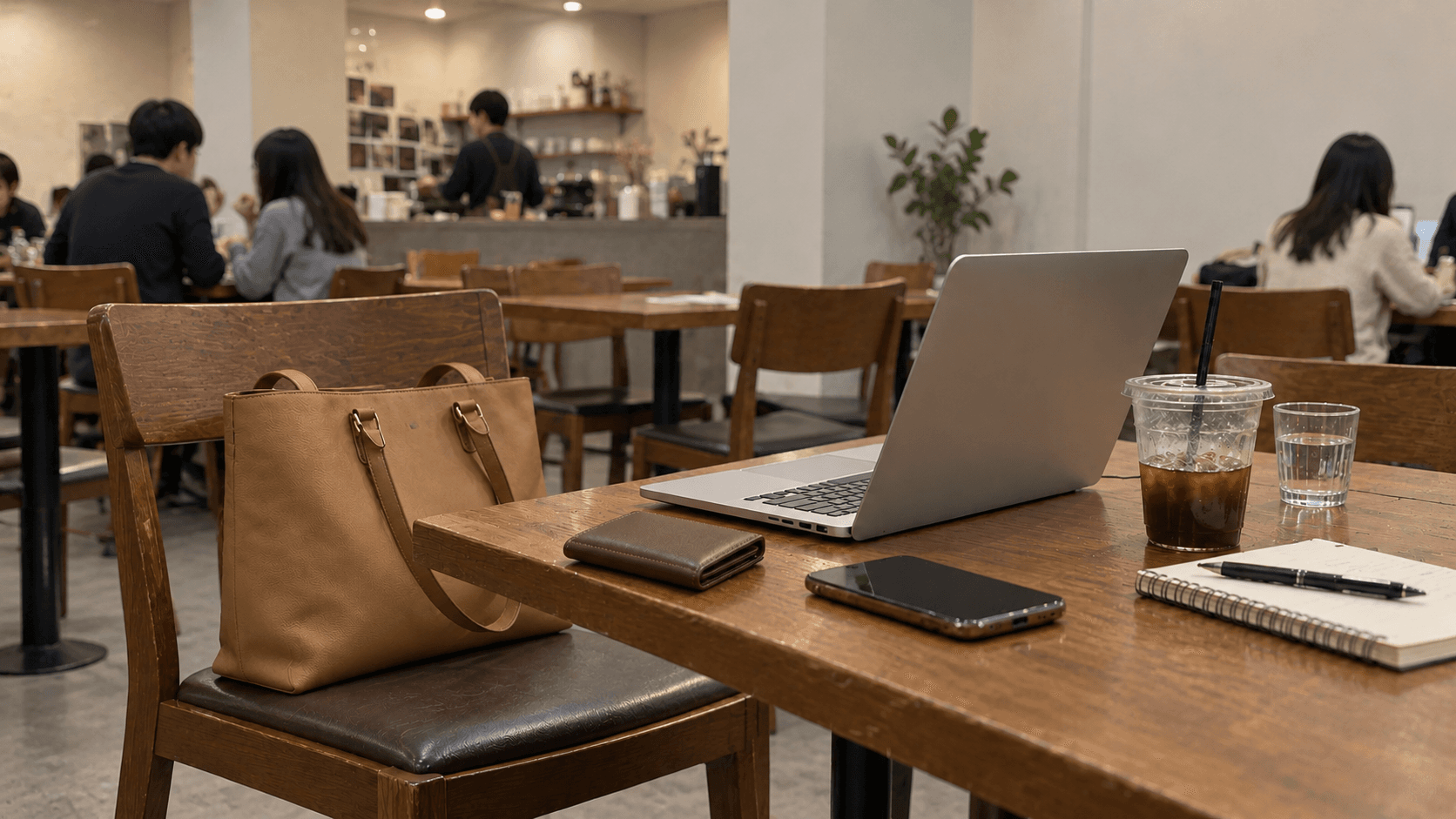
An empty chair in a Seoul café does not always mean an available seat. If there is a phone or wallet on the table, someone may already have claimed it. The owner has gone to order coffee. Their phone is holding the spot.
For a visitor seeing this for the first time, the surprising part is the valuables left behind. For someone familiar with the habit, the message is simple: “This seat’s taken.”
The unspoken rule of saving a seat
Leaving belongings at a table is one way people save seats in Korean cafés. A bag on a chair or a phone beside a notebook signals that the person intends to return. In traveler discussions, visitors describe putting their things down before ordering and recognizing a laptop as a sign that a table is occupied. Source 1
Still choosing a café? Our guide to using Naver Map can help you find your way there.
It is an informal convention, so the café’s own seating arrangements still come first. If you are unsure whether a table is available, ask the staff before moving anything.
Once you know what to look for, the room becomes easier to read. That table by the window may be occupied even if its only visible customer is a phone.
Why visitors notice
If you are used to packing up your laptop whenever you step away, seeing one left open on a café table can make you pause. You might glance toward the counter, trying to work out whether its owner is nearby.
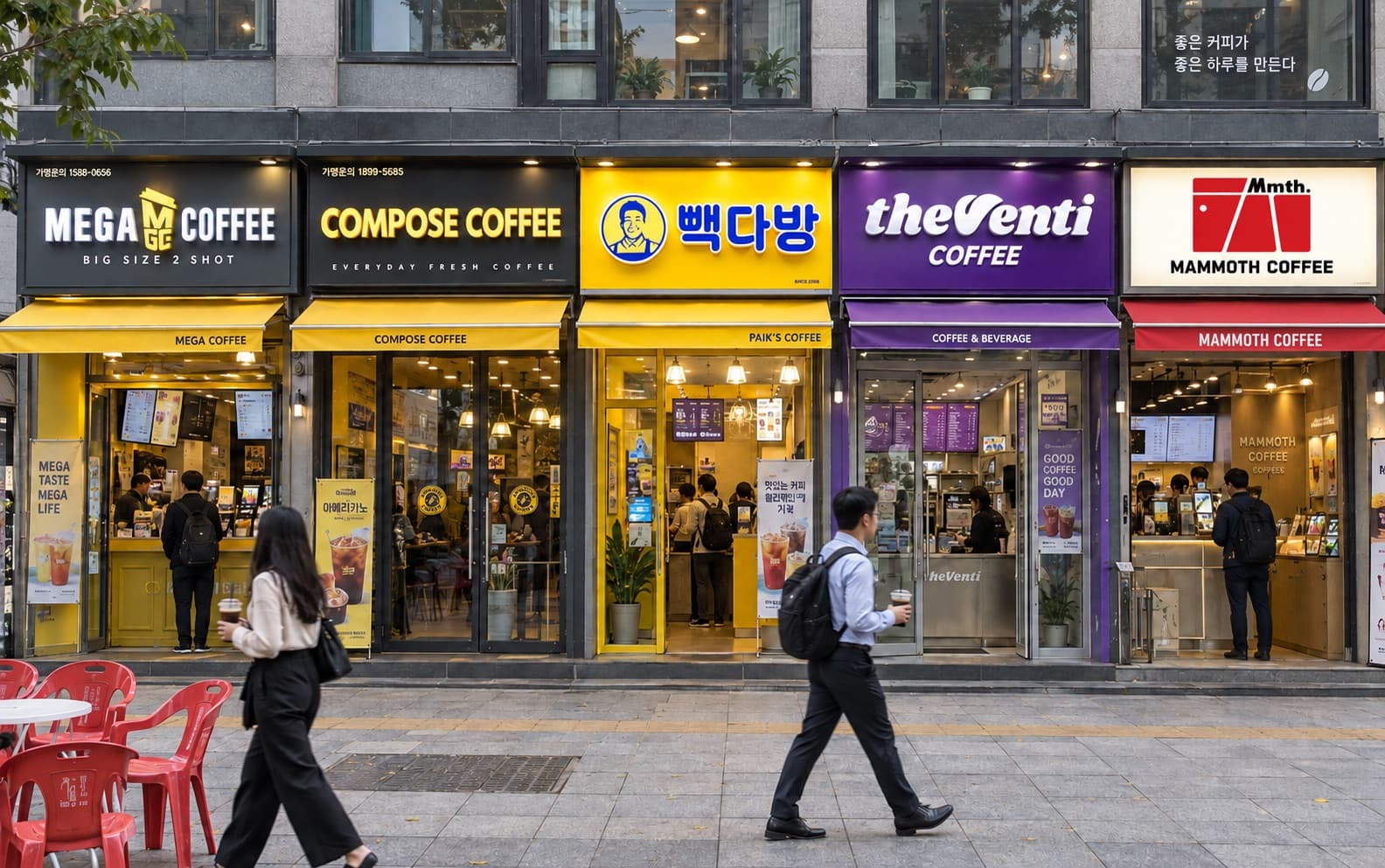
Meanwhile, the owner may simply be waiting for a drink. Coffee fits into the day in all sorts of ways here, from a long café break to the quick ₩2,000 Americano on the way to work.
The same contrast appears beyond cafés. In one r/koreatravel discussion, visitors described seeing phones left on dining tables while their owners went to collect food. Another recalled gradually feeling more relaxed about leaving a backpack while ordering. These are personal accounts, but they capture a recognizable part of the experience: adjusting to what the people around you consider ordinary. Source 1
A little everyday trust
“High-trust society” is an appealing description for this feeling. At the café-table level, the expectation is quite specific: other people will recognize your belongings as yours and leave them alone.
That expectation can make a coffee break feel easier. A quick trip to the counter does not have to become a full packing operation, complete with charger, notebook and the cable that has somehow wrapped itself around everything.
It is a habit worth noticing, though it does not guarantee the safety of unattended valuables. Keep your passport, cash and other essentials with you.
Saving a seat has its limits
Stepping away briefly and leaving a table occupied while you go elsewhere for lunch are different things. Someone waiting for a seat may be less impressed by the untouched laptop than by how long its owner has been gone.
In August 2025, The Korea Times reported that Starbucks Korea asked customers to take their belongings when leaving their seats for extended periods, as part of its response to prolonged table occupation. Source 3
Follow the café’s posted rules, keep brief absences brief, and take your things when heading elsewhere.
And sometimes, someone really did forget their bag
Of course, belongings left behind are not always saving a seat. Sometimes, someone has simply forgotten them.
One of our editors once found a Chanel mini bag in a Starbucks restroom. There was a Japanese passport inside. They handed the bag to the store staff, hoping its owner would come back for it. A coffee stop had briefly become a small part of someone else’s trip.
If you do lose something, start by asking the staff where you last had it. Someone may have handed it in. For other places to contact, Visit Seoul’s lost-and-found guide lists useful services and directs travelers to the police lost-property portal, LOST112. Source 4
Once you understand the custom, the scene loses a little of its mystery. The empty chair, the half-finished coffee, the phone on the table: someone is coming back.
Until then, their phone is saving the seat.
Read next
Explore The ₩2,000 Coffee That Powers Seoul and How to Use Naver Map.
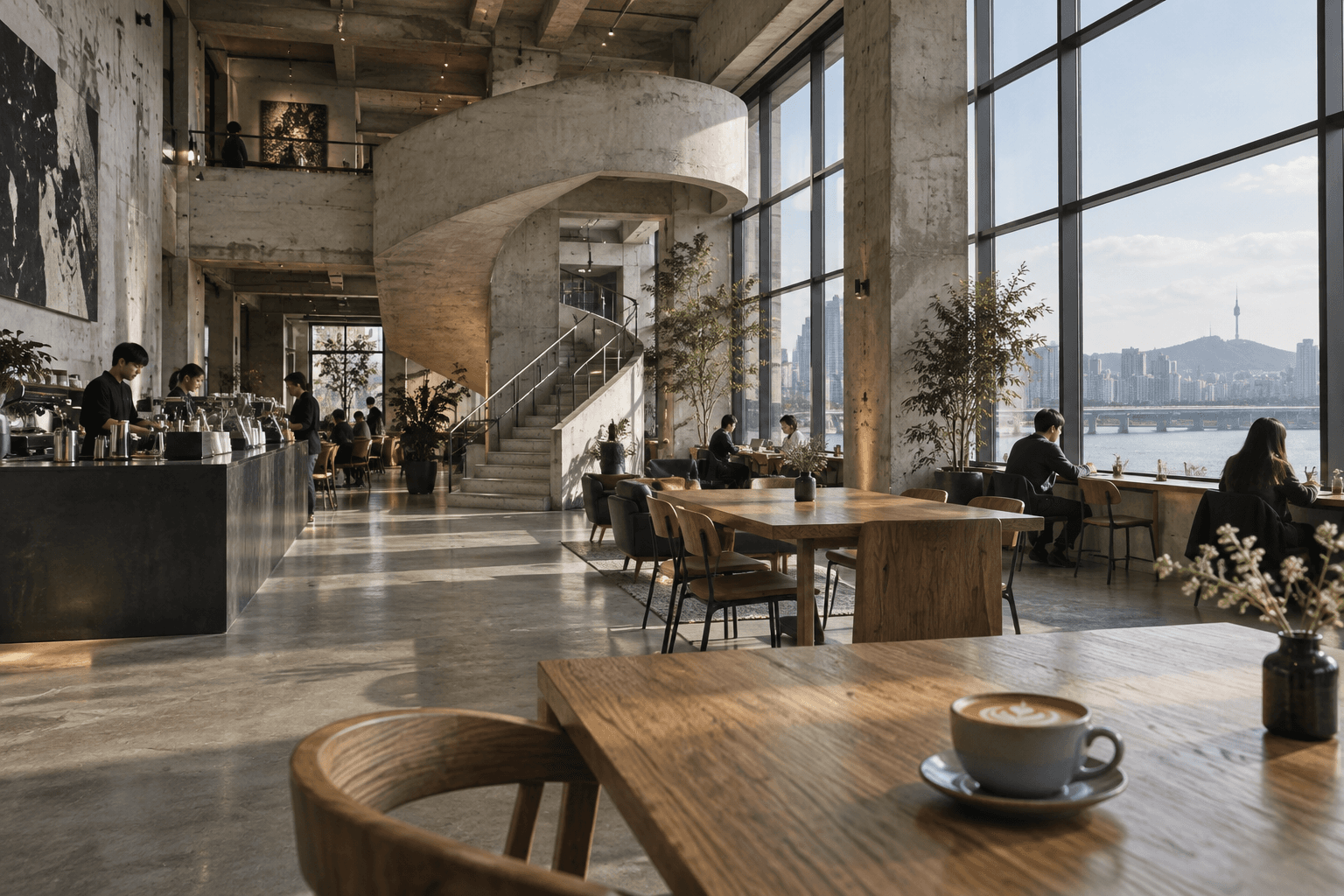
Cover: AI-generated editorial illustration for A Drop of Seoul; it does not document a specific café.