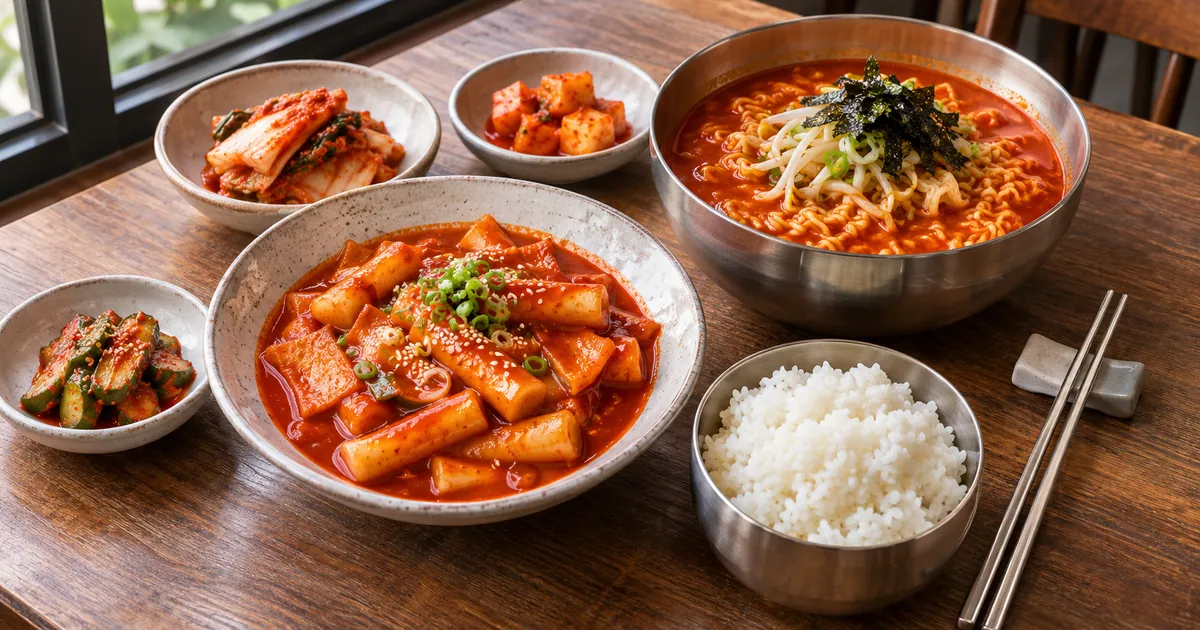
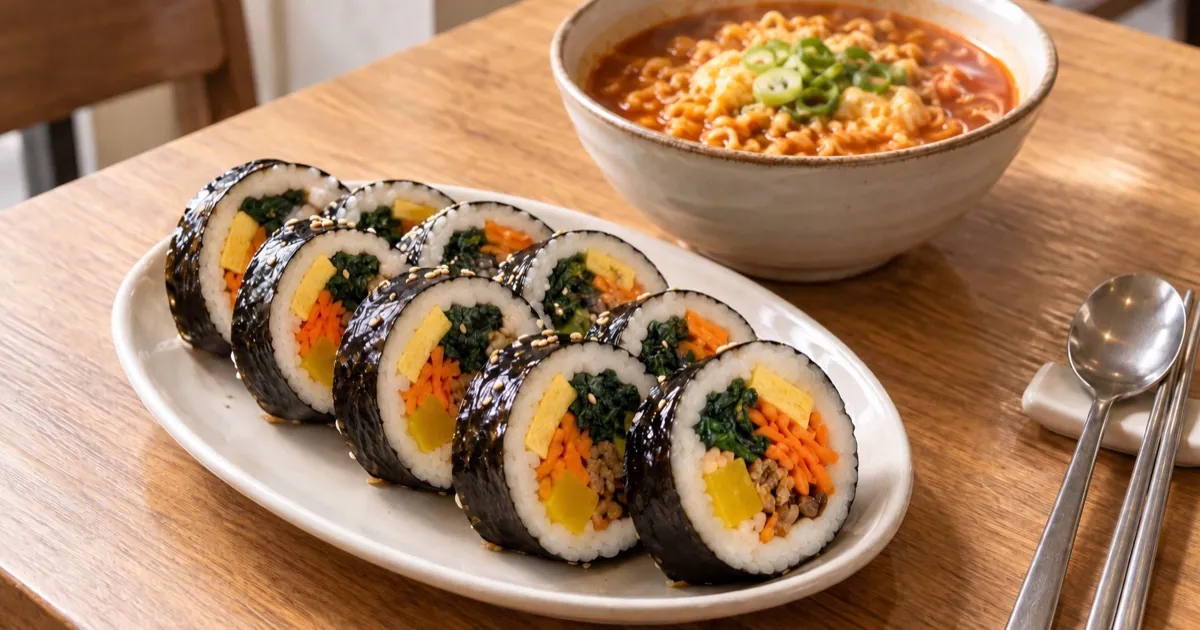
Where to Eat Breakfast in Seoul (Even Before 9 AM)
A Seoul editor’s guide to everyday breakfasts, from sweet-savory toast to kimbap and convenience-store snacks.
By A Drop of Seoul Editorial Team ·
Seoul-based reporting and human editorial review · How we work
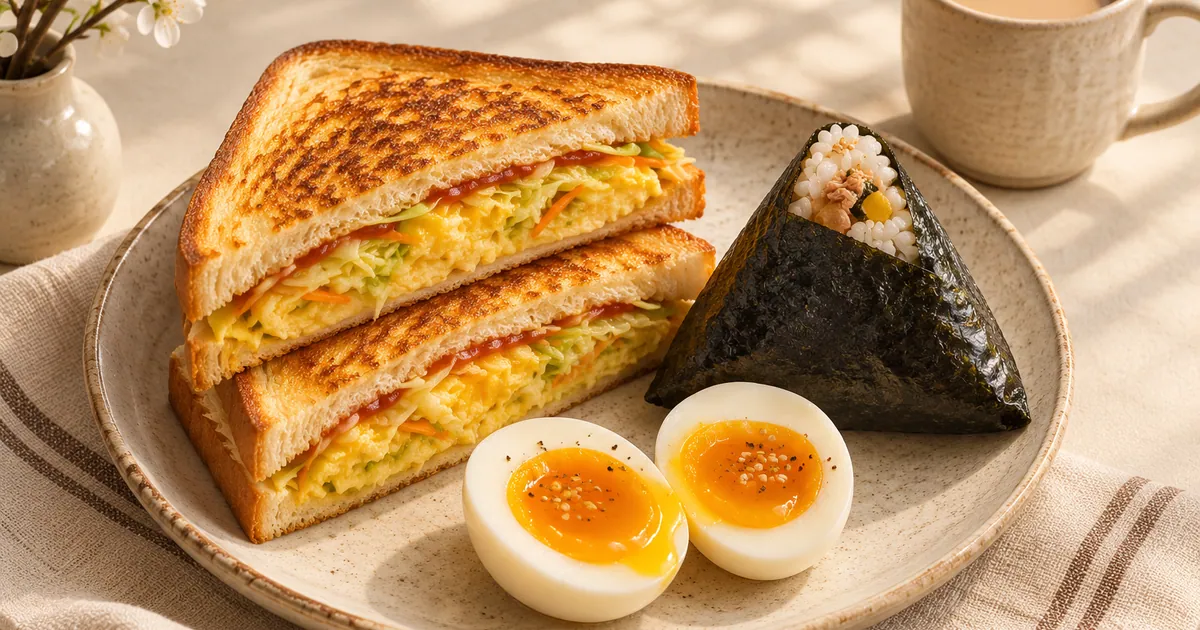
Cover image: AI-generated editorial illustration.
You’ve woken up early in Seoul. The streets are already moving, the subway is filling up, and you’re ready for breakfast. There’s just one small problem: the café you bookmarked doesn’t open until 10.
Breakfast in Seoul doesn’t always look like the hotel buffet or all-day brunch you might expect. Some people grab a triangle kimbap on their commute. Others stop for toast or sit down to rice and soup. And plenty of Seoulites simply have coffee, something small, or breakfast at home. There isn’t one universal “Korean breakfast.”
The trick is choosing the right kind of place for your morning, rather than looking for a restaurant labeled “breakfast.”
THE QUICK ANSWER
For a quick breakfast in Seoul, look for an Isaac Toast or Egg Drop branch, a neighborhood kimbap shop, or a CU or GS25 convenience store. For something warm and more traditional, try a seolleongtang or gukbap restaurant. Some options open very early, but hours vary by branch—check the exact location before leaving.
1. ISAAC TOAST: THE SWEET-SAVORY KOREAN TOAST

If you want something portable, filling, and unmistakably Korean in flavor, start with toast.
Isaac Toast sandwiches combine toasted bread and egg with vegetables or meat, depending on your order, and a sweet-savory sauce. It’s a satisfying choice when you have a train to catch or a full morning of sightseeing ahead.
What to order: Try the Fried Egg Ham Cheese for an egg, ham and cheese combination. French brioche varieties are another option; menus and customization vary by branch.
Editor’s pick: What keeps me coming back to Isaac Toast is the sweet-savory sauce. Lately, I’ve enjoyed ham, cheese and vegetables with the French brioche option. It’s easily a full meal, at breakfast or any other time. Ask the branch whether that combination is available.
Best for: A quick takeaway breakfast; travelers who prefer bread to rice.
Local note: “Toast” in Korea can mean a griddled sandwich, not just a slice of bread with butter.
2. EGG DROP: A SOFTER, RICHER EGG SANDWICH

Egg Drop is another easy introduction to Seoul’s sandwich culture, but don’t expect the same bite as Isaac Toast.
Egg Drop’s signature sandwiches pair fluffy scrambled eggs with thick brioche and creamy sauces. Its menu also includes street toast, so the two brands’ offerings overlap.
What to order: Try Mr. Egg for soft scrambled eggs, brioche and the house sauce. Isaac’s sweet-savory sauce and Egg Drop’s fluffy eggs offer different starting points, even though both menus have more to explore.
Best for: Egg lovers and anyone after a familiar breakfast with a different twist.
3. THE NEIGHBORHOOD KIMBAP SHOP: SEOUL’S EVERYDAY DINER
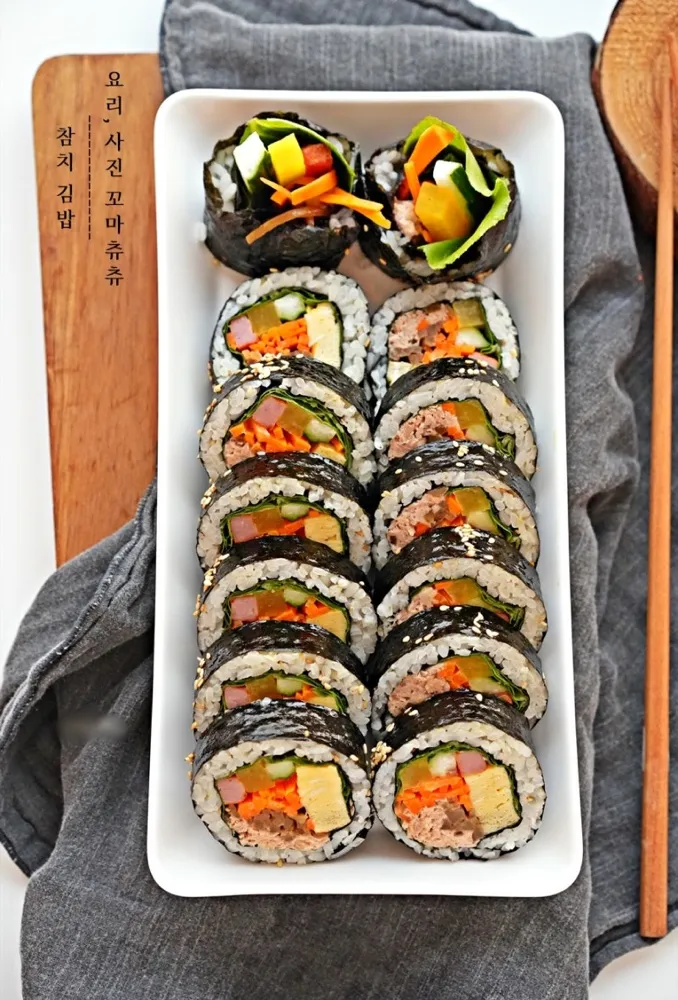
An example of tuna kimbap; fillings and presentation vary by shop.
For a different kind of breakfast, look for a small neighborhood shop with 김밥 on its sign.
Think of kimbap and bunsik shops as practical neighborhood diners: places to order a roll of kimbap, noodles, rice dishes, or a hot bowl of something comforting without making a big occasion of it.
Where to find kimbap: Look for these familiar names:
- Gimgane (김가네)
- Yumsem Gimbap (얌샘김밥)
- Kobongmin Gimbap (고봉민김밥인)
- Barda Kimseonsaeng (바르다 김선생)
- Kimbap Cheonguk (김밥천국) — shops using this name are not necessarily run by the same operator.
Search the Korean names on Naver Map or KakaoMap to find a nearby shop, and check its hours before heading out.
A few useful menu words:
- 김밥 (gimbap or kimbap): Rice and fillings rolled in seaweed.
- 참치김밥 (chamchi gimbap): Tuna kimbap, often with mayonnaise.
- 라면 (ramyeon): Korean instant noodles prepared and served hot.
- 비빔밥 (bibimbap): Rice mixed with vegetables and other toppings; ingredients vary.
- 계란말이 (gyeran-mari): Rolled omelet.
Kimbap is particularly good for a morning when you want something easy to carry. If you’d rather sit down, order a rice dish or soup and take a moment before heading out.
At a bunsik shop, kimbap with a bowl of freshly cooked ramyeon is a familiar combination, even in the morning. Read more about gimbap and ramyeon.
Editor’s pick: My go-to is tuna or beef kimbap. When I pick up kimbap to eat at home or on the go, I often pair it with a small cup of instant ramyeon. It’s a combination I never seem to get tired of.
Best for: Solo diners, a budget-conscious meal, and anyone curious about everyday Korean food.
Local note: Menus and opening hours vary widely. A familiar sign is not a guarantee of a 24-hour shop.
Dietary note: Vegetable-looking kimbap may still contain fish cake, egg or meat. Ask about ingredients if you have dietary restrictions.
4. CU OR GS25: THE FIVE-MINUTE BREAKFAST
Here’s one of the most practical breakfast stops in Seoul: the convenience store.
CU and GS25 are easy to spot around the city, and many locations operate around the clock. Inside, breakfast can be as simple as a triangle kimbap and a drink, a packaged sandwich, or a couple of boiled eggs. It isn’t a consolation prize for missing brunch. It’s part of the everyday rhythm of the city.
Four combinations to try:
Triangle kimbap + banana milk: A fun, very Korean grab-and-go pairing.
Packaged sandwich + iced Americano: Familiar, quick, and easy to eat on the move.
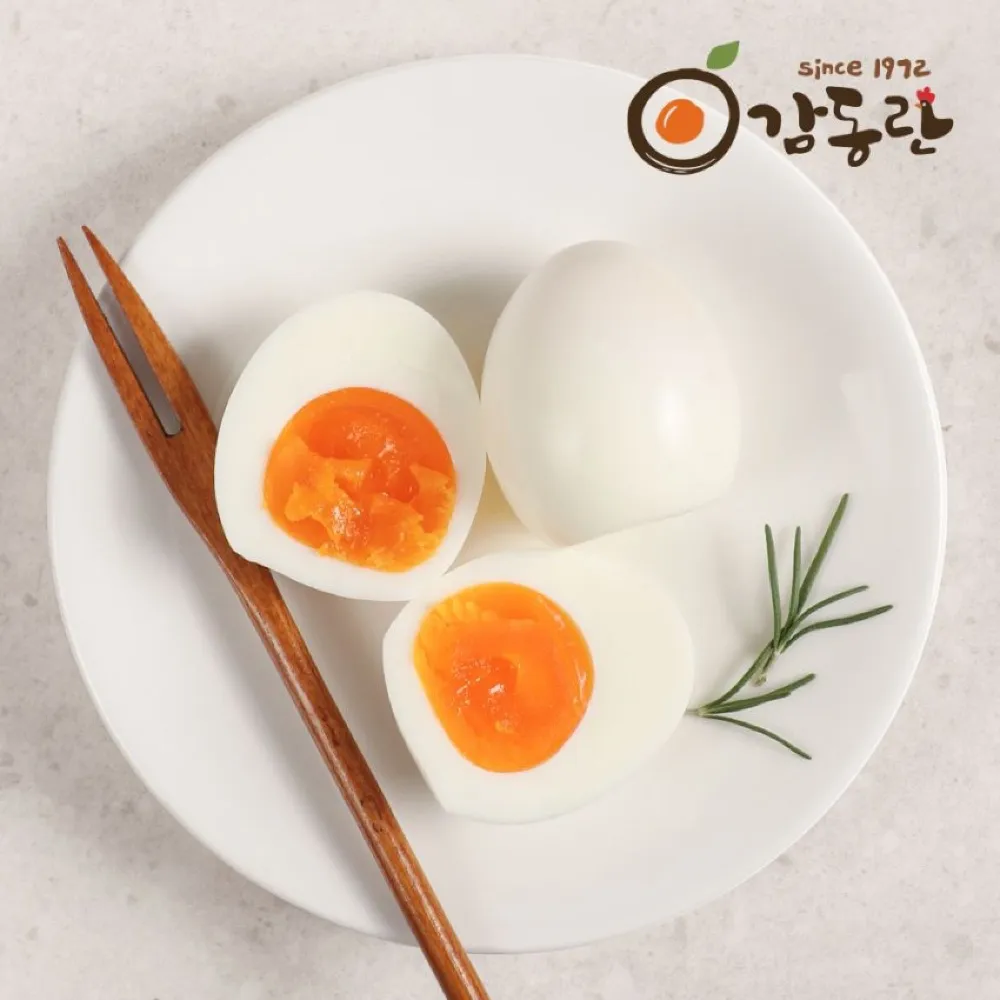
Seasoned soft-boiled eggs + soy milk: A simple option if you don’t want a heavy meal.
Packaged kimbap + cup noodles: A more filling choice when you have time to sit.
Editor’s pick: My current convenience-store favorite is Gamdongran (감동란), lightly seasoned soft-boiled eggs with a creamy yolk, paired with soy milk. It’s simple and satisfying. Triangle kimbap takes me back to high school, when I used to pick one up.
Look for a microwave or hot-water station if your food needs heating. Follow the packaging directions and store signage; facilities vary. Many stores accept cards, but it’s sensible to have a backup payment method.
Best for: Very early departures, late arrivals, and breakfast on a tight schedule.
Local note: Not every convenience store has seating, and not every branch is open 24 hours.
5. SOUP AND RICE: A WARMER START TO THE DAY
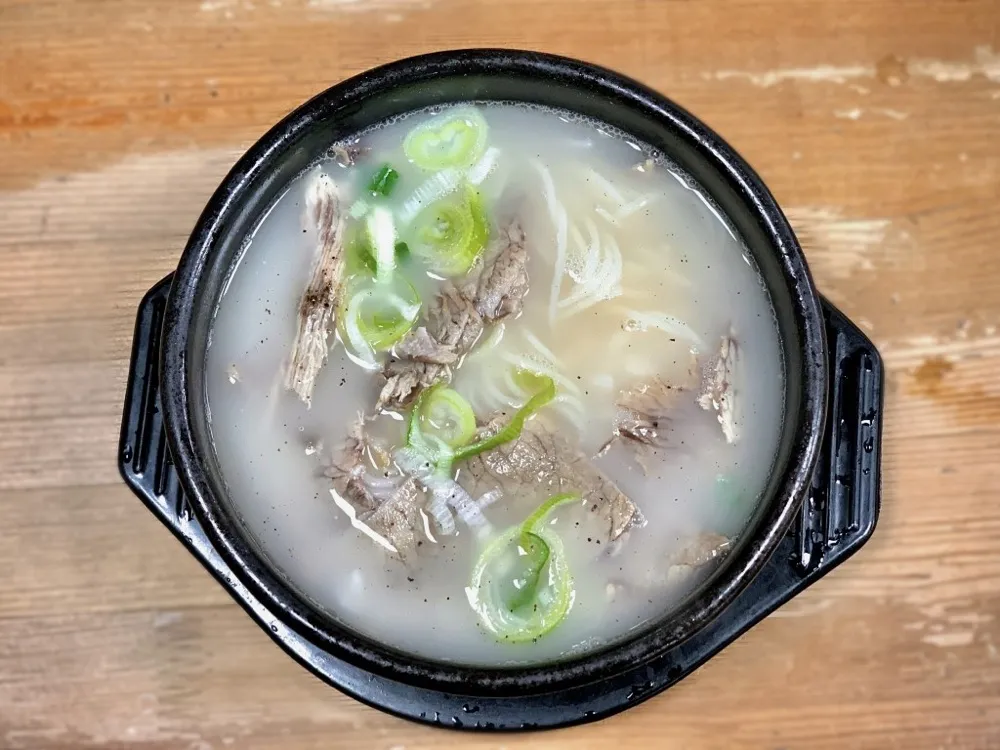
If bread isn’t your idea of breakfast, Seoul has another answer: rice and a hot bowl of soup.
Seolleongtang (설렁탕) is a mild, milky-looking beef-bone soup, commonly served with rice and seasonings you adjust yourself. Gukbap (국밥) brings soup and rice together; one variety, sundae-guk (순대국), contains Korean blood sausage and often pork. Haejangguk (해장국), or hangover soup, comes in several styles, some with more intense flavors.
Rice and soup have long been a substantial way to start the day in Korea. After drinking, some people seek a hot bowl of haejangguk for comfort. It’s eaten at other meals, too; the name reflects a tradition, not a proven cure.
Not everyone starts the day with a full meal: some have coffee or skip breakfast. For others, rice and soup remain a familiar comfort.
Best for: Cold mornings, substantial appetites, and travelers who want to try a Korean-style sit-down meal.
Dietary note: Soup recipes may contain beef, pork, seafood or other ingredients; check if necessary.
6. PORRIDGE OR A BAKERY: WHEN YOU WANT SOMETHING GENTLE
Not every morning calls for a large meal.
Juk (죽), Korean rice porridge, is warm and soft, and comes in different savory and sometimes sweet varieties. It can be a welcome option if you’ve had a long flight or simply want a slower start. A neighborhood bakery is another straightforward choice, especially if you’re traveling with someone who prefers coffee and bread.
At a bakery, look for a savory sandwich or a small pastry with coffee if you want something easy to take away.
Best for: A light or gentle breakfast, mixed-preference groups, and slower mornings.
7. STREET TOAST: A SMALL MORNING RITUAL
You may spot a street-toast stand near a station or on a busy neighborhood street: bread sizzling on a griddle, an egg mixture cooking, and someone wrapping a warm sandwich to go.
Street toast is a familiar everyday breakfast scene in Seoul. It often features egg and vegetables, with sweet or savory condiments depending on the vendor. Part of its appeal is how quickly the warm sandwich is made and handed over.
But street vendors move, close, and change their schedules. Treat a good toast stand as a discovery, not a guaranteed stop.
Best for: A spontaneous breakfast and a glimpse of a working Seoul morning.
THREE EARLY STOPS TO START WITH
These examples cover an egg sandwich, kimbap and soup. The Gimgane listing below is for weekdays; check current hours before visiting.
-
Egg Drop — Gangnam Main (에그드랍 강남본점): 7 AM–10 PM; 1321-9 Seocho-dong, Seocho-gu, Punglim I-One Magic, first floor, unit 102. Phone: 02-598-8833.
-
Gimgane — Seoul Station KDB Tower (김가네 서울역KDB타워점): Opens at 7 AM on weekdays. 372 Hangang-daero, Yongsan-gu, B2, unit B211. Phone: 010-3340-1554. Check weekend hours separately. https://gimgane.co.kr/m/board/index.php?board=map_01&idx=625&sca=all&type=view
-
Imun Seollongtang (이문설농탕), Jongno: Seoul’s official tourism guide lists an 8 AM opening; 38-13 Ujeongguk-ro, Jongno-gu. Phone: 02-733-6526. Order seolleongtang. The guide lists a 3–4:30 PM break and Seollal and Chuseok closures. https://english.visitseoul.net/eat/Imun-Seollongtang/ENP012846
Store finder: https://eggdrop.com/store/map.php
WHAT SHOULD YOU EAT IF YOU’RE OUT BEFORE 9 AM?
Before 7 AM: A verified 24-hour convenience store or an early-opening soup restaurant is often the safest starting point.
7–8 AM: Check individual toast, kimbap and soup shops; availability depends heavily on the neighborhood.
8–9 AM: More sandwich shops, bakeries and cafés may become options.
After 9 AM: You’ll generally have a wider choice, although many brunch cafés still open later.
The easiest rule: Check the branch, not just the brand. Search the Korean name on a map app and confirm today’s opening hours, particularly on weekends and holidays.
A QUICK CHOICE GUIDE
Only ten minutes? Convenience store or takeaway toast.
Want something filling and warm? Seolleongtang or gukbap.
Traveling alone? A kimbap shop is an approachable place to start.
Prefer eggs and bread? Compare Isaac Toast with Egg Drop.
Want a quiet morning? Look for a bakery or porridge shop that is already open.
FREQUENTLY ASKED QUESTIONS
Can I eat breakfast in Seoul at 7 AM?
Yes, but your choices may be more limited than later in the morning. Check convenience stores, selected soup restaurants and individually verified early-opening shops.
Do Koreans eat kimbap for breakfast?
Some do, especially when convenience matters. Others eat rice and soup, toast, cereal, or nothing at all. There is no single breakfast routine.
Is it okay to eat alone?
Yes. Kimbap shops, soup restaurants and convenience stores can be practical solo options. Seating rules and minimum orders can differ.
Is Korean breakfast vegetarian?
Not necessarily. Broths, sauces, fish cake, ham and other fillings can be easy to overlook. Confirm ingredients rather than relying on the dish’s appearance.
Can I pay with a foreign card?
Cards are widely used in Seoul, but acceptance can vary by merchant and card issuer. Carry a backup payment option.
THE MORNING IS PART OF THE CITY
Seoul’s mornings aren’t always photogenic in the way a brunch guide might suggest. Sometimes they’re a sandwich eaten before catching the subway, a quiet bowl of soup before the shops open, or a triangle kimbap picked up under fluorescent convenience-store lights.
And that’s exactly why they’re worth experiencing. Breakfast is one of the simplest ways to see how the city actually lives.
These are just a few places and ideas to get you started. There are plenty more breakfasts to discover across Seoul, so explore your neighborhood, try whatever catches your eye, and enjoy finding your own favorites.
Seen from here.
Still wondering where to eat? Explore places around Seoul, from food and drink to neighborhood stops → A Drop of Seoul Places