How Many Days Do You Need in Busan?
A realistic way to choose between a day trip, one night and a longer first visit
By A Drop of Seoul Editorial Team · · Updated
Seoul-based reporting and human editorial review · How we work
Two nights is a comfortable starting point for many first-time visitors. It gives you an evening by the water and time to see a different side of the city. But a good plan depends on when you arrive, where you sleep and what you are willing to leave for another trip.
A day trip can work if you are already nearby or are happy to make an early start from Seoul. One night adds an evening and a second morning. Three nights create more room for weather, an unhurried meal and an area you did not plan to love.
| Stay | Best for | What you can realistically do |
|---|---|---|
| A day trip | Travelers short on time | Focus on one area, such as a beach or the markets. |
| One night | An evening by the sea | Explore a coastal area and, if time allows, one contrasting neighborhood. |
| Two nights | A first visit with breathing room | Spend time by the sea and explore a market or another neighborhood. |
| Three nights | A slower trip | Add another area, a café break or time to linger. |
The time you actually have depends on arrival and departure times, your base and how much time you spend getting around.
First, count useful hours—not calendar squares
A “two-day” trip that starts after dinner and ends before breakfast is not two full sightseeing days. Mark your arrival station, check-in or luggage drop, departure time and the journey to your accommodation. Then choose one main area for each half-day. Busan is spread out, and the sea does not magically make transfers shorter.
One day: choose a direction
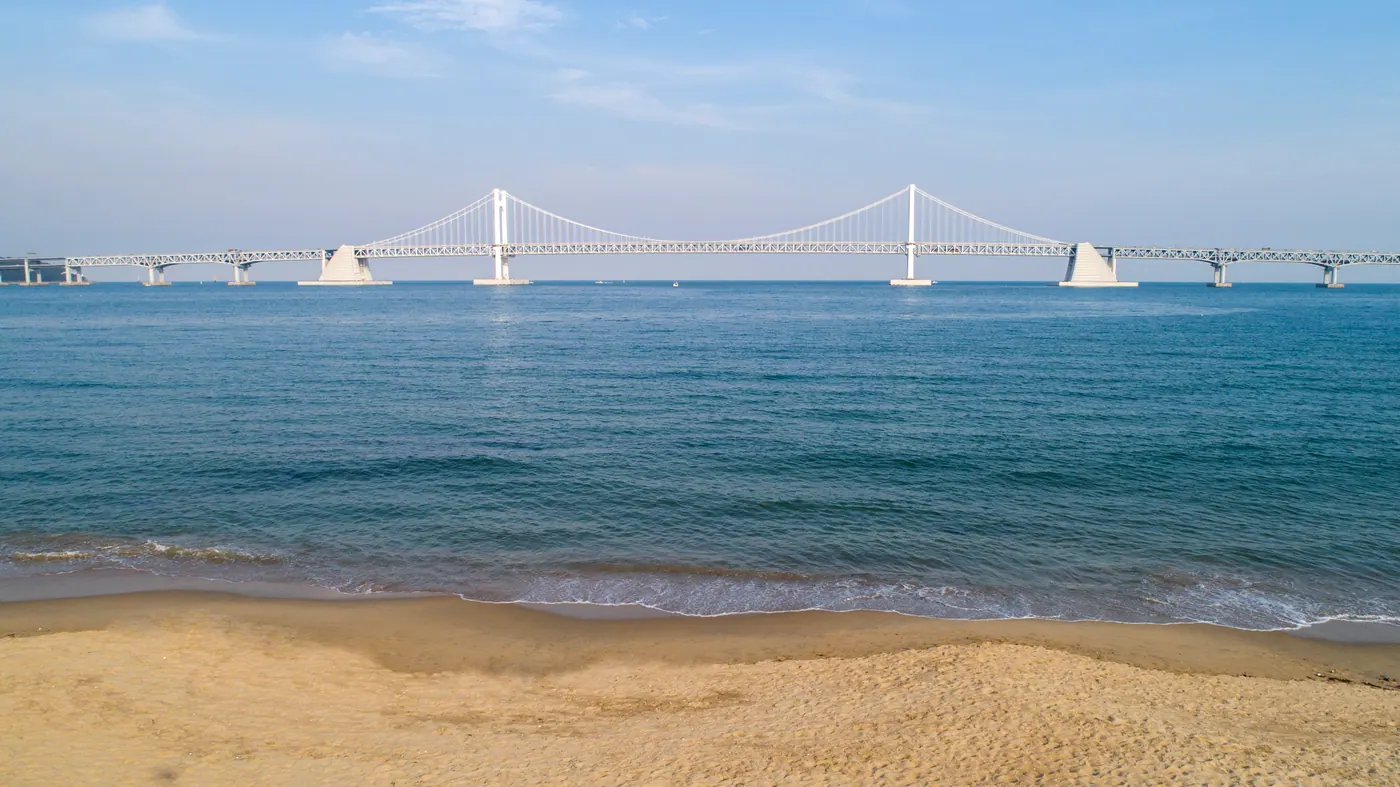
If you arrive at Busan Station in the morning, the port and market area around Nampo and Jagalchi makes a manageable starting direction. Browse the streets, sit down for lunch and leave time to return for your train. Alternatively, make the beach your priority and spend the day around Haeundae or Gwangalli. Do not try to combine every beach, Gamcheon and a market before a fixed evening train.

Jagalchi Market, 2019 · Photo: Busan Design Center, via Busan Tourism Archive · KOGL Type 1.
Best for: a first taste or a visit from nearby. Tradeoff: limited time and, from Seoul, a substantial share of the day spent traveling.
One night: give yourself an evening
Day one: arrive, leave your bag and choose one neighborhood. Spend the late afternoon and evening by the sea, with dinner near the area you choose.
Day two: explore one contrasting area—perhaps the markets near Nampo and Jagalchi—before collecting your bag and returning to your departure station.
Best for: an evening view without moving hotels twice. Tradeoff: an early departure on day two can make the second day much shorter.
Two nights: our first-visit recommendation
Day one: arrive and settle in. Take an easy walk and have dinner near your base.
Day two: choose a coastal area for the morning and afternoon. Haeundae and Gwangalli can fit into the same day, but allow time for the journey, walking and spontaneous stops along the way. Check your route on a map before you set off.
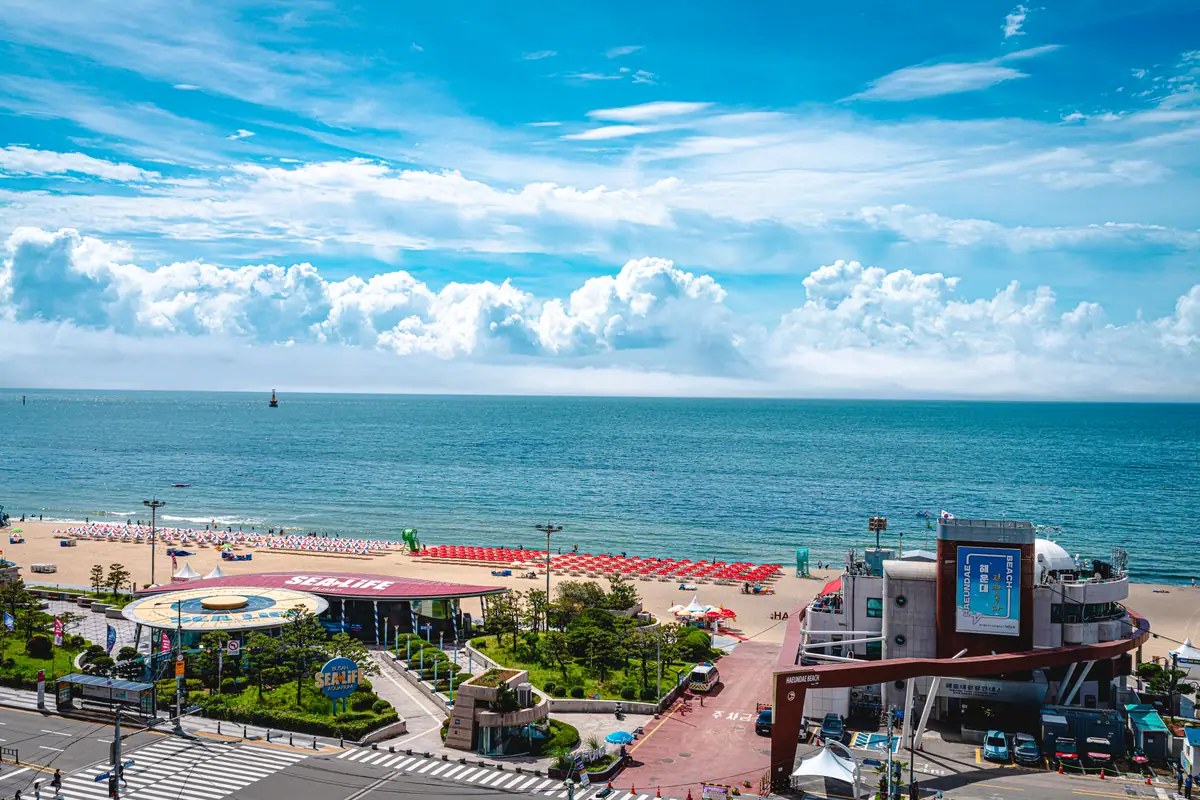
Haeundae Beach, 2024 · Photo: Hyphen Group / Busan Tourism Organization Global Marketing Team, via Busan Tourism Archive · KOGL Type 1.
Day three: let your base and departure time guide the morning. Staying near Haeundae? If you are leaving early, keep the morning close to your accommodation and leave time to collect your luggage. Staying near Busan Station or Nampo? The markets around Nampo and Jagalchi may be a convenient final stop, depending on where your bags are and how you are leaving. Check the route and leave a buffer before departure.
Best for: seeing the sea and a different side of Busan without treating every hour as a booking. Tradeoff: you will still need to choose; a late arrival and early departure reduce the time available.
Three nights: make room to linger
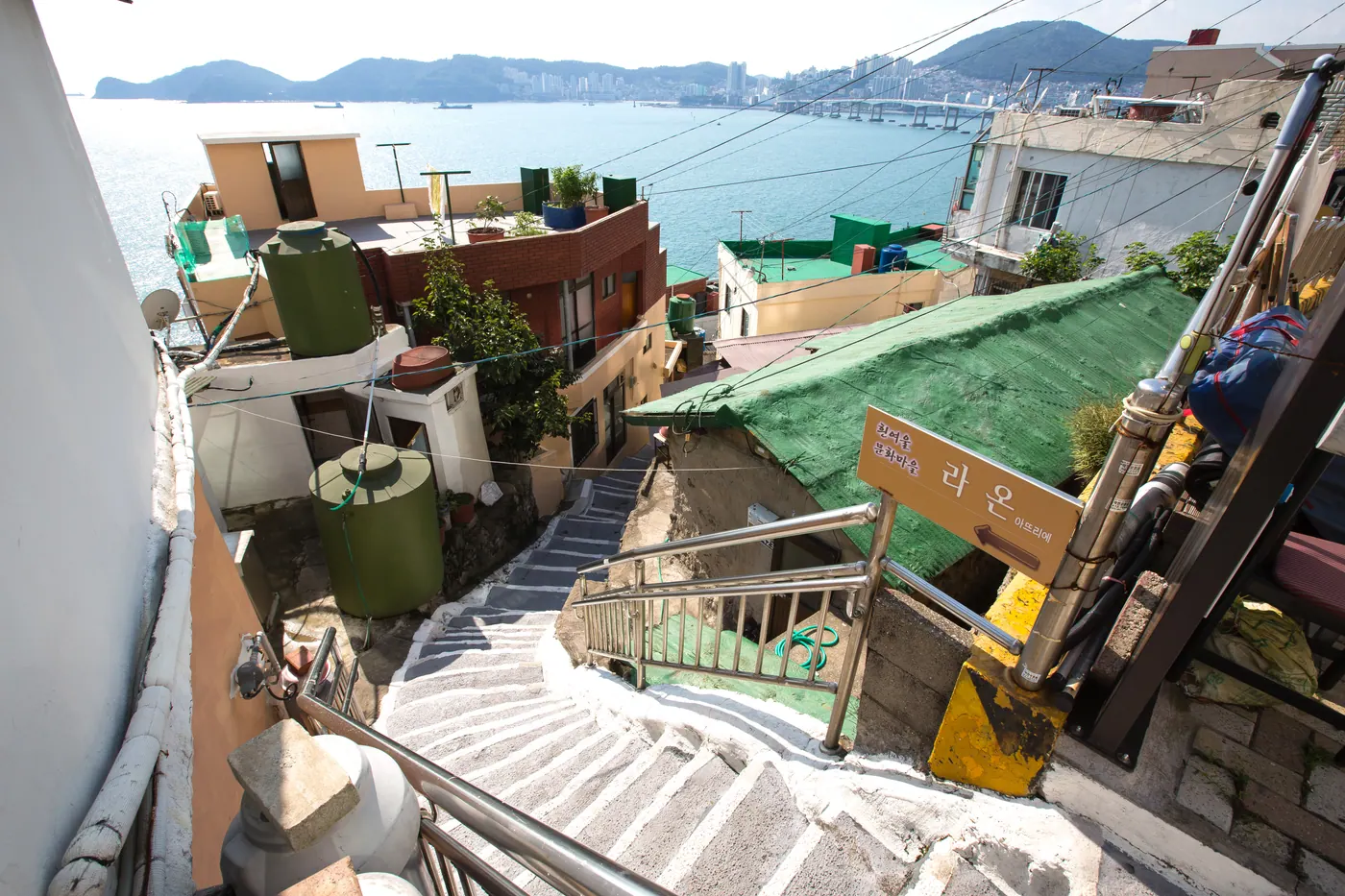
Follow the two-night outline, then use the extra day for a slower Yeongdo visit, another neighborhood, a café break or a weather-dependent beach walk. You might devote a half-day to Huinnyeoul Culture Village and its coastal views; the area has slopes and steps and is also a residential neighborhood. Leave a blank stretch rather than filling every hour. More time is not an instruction to add more pins.
Where should you stay?
If the beach is your priority, compare Haeundae and Gwangalli. For metro connections and an inland base, consider Seomyeon. Nampo is useful for the market and harbor side; Busan Station is convenient for a train-focused stay. The right choice depends on your actual property and itinerary, not the label on a booking page.
For a closer look at the areas, read Where to Stay in Busan for Your First Trip.
A practical decision
Choose one day if that is all you have and one area is enough. Choose one night for an evening and a morning. Choose two nights for a balanced first visit, or three if a slower pace is part of the point. A little time by the water and a meal without watching the clock can be as memorable as another stop on the map.
Planning your first trip? Explore where to stay in Busan, or start with Is Busan Worth Visiting?.