Is Busan Worth Visiting? What to Know Before Your First Trip
A first look at Korea’s coastal city, from how long to stay to where to begin
By A Drop of Seoul Editorial Team ·
Seoul-based reporting and human editorial review · How we work
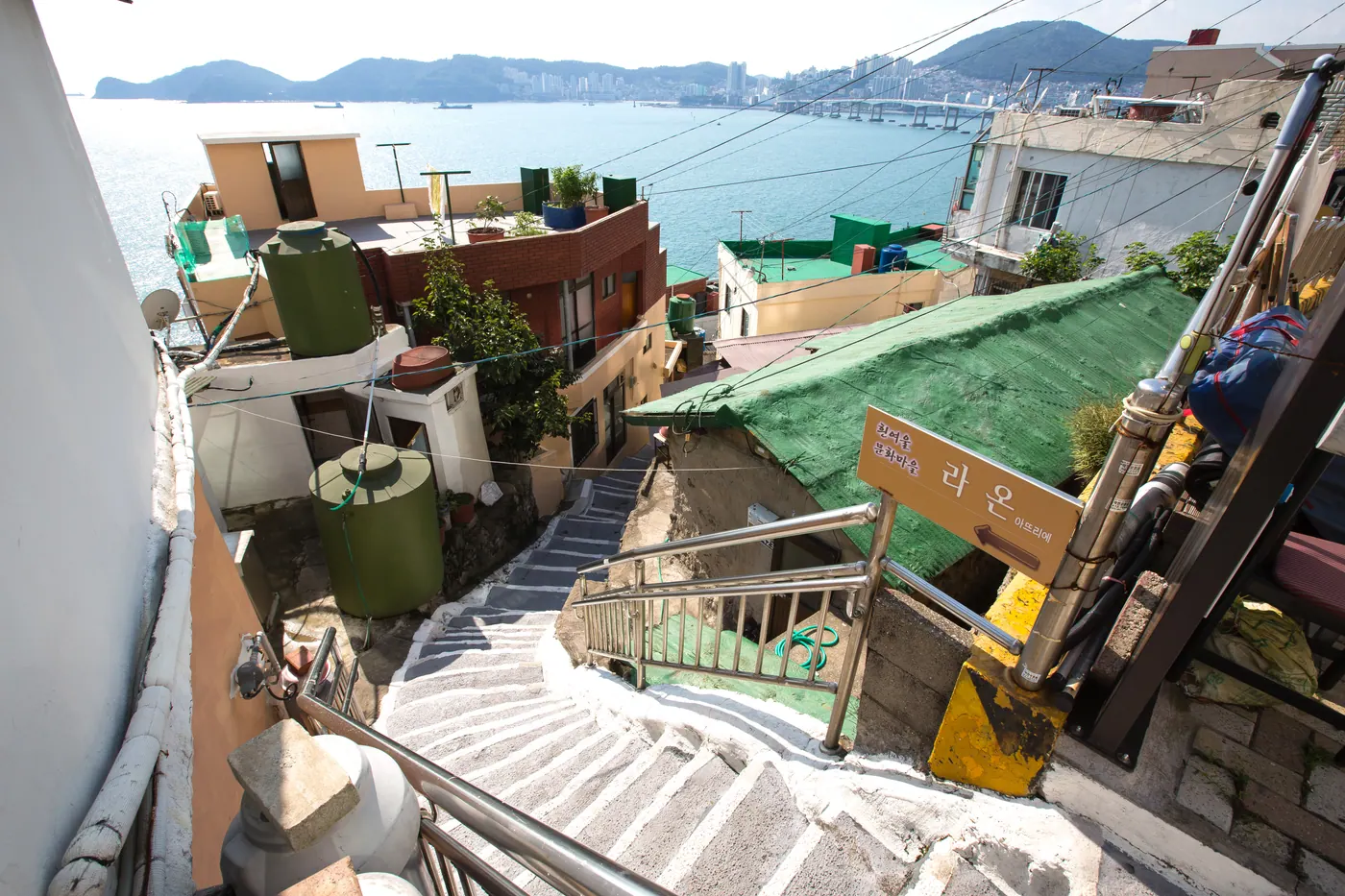
In Seoul, a day might lead you from a subway exit into a maze of cafés and side streets. In Busan, the street may climb a hill, pass a market and open suddenly onto the sea. The city is shaped by its port and its neighborhoods as much as its beaches.
You can be in Seoul in the morning and arrive in Busan later that day. But deciding to go is a little different from deciding how to get there. If your Korea itinerary is already crowded, is another city worth the time?
For many first-time visitors, yes—especially if you can give Busan more than a hurried afternoon. Busan is more than a seaside stop. It is a city of distinct neighborhoods, shaped by the rhythms of its port, its hills and its everyday life.
The honest answer is that Busan is not essential for every trip. If you have only a few days in Korea, staying in Seoul may make more sense. But if you want to see another side of everyday urban life—and have time to settle into it—Busan is an excellent place to start.
What makes Busan different from Seoul?
Seoul is a city of neighborhoods too, but Busan’s geography changes the way a day feels. Mountains rise behind built-up streets; the water appears between buildings or at the end of a road. A day can begin at a market, continue over coffee and end beside the sea.
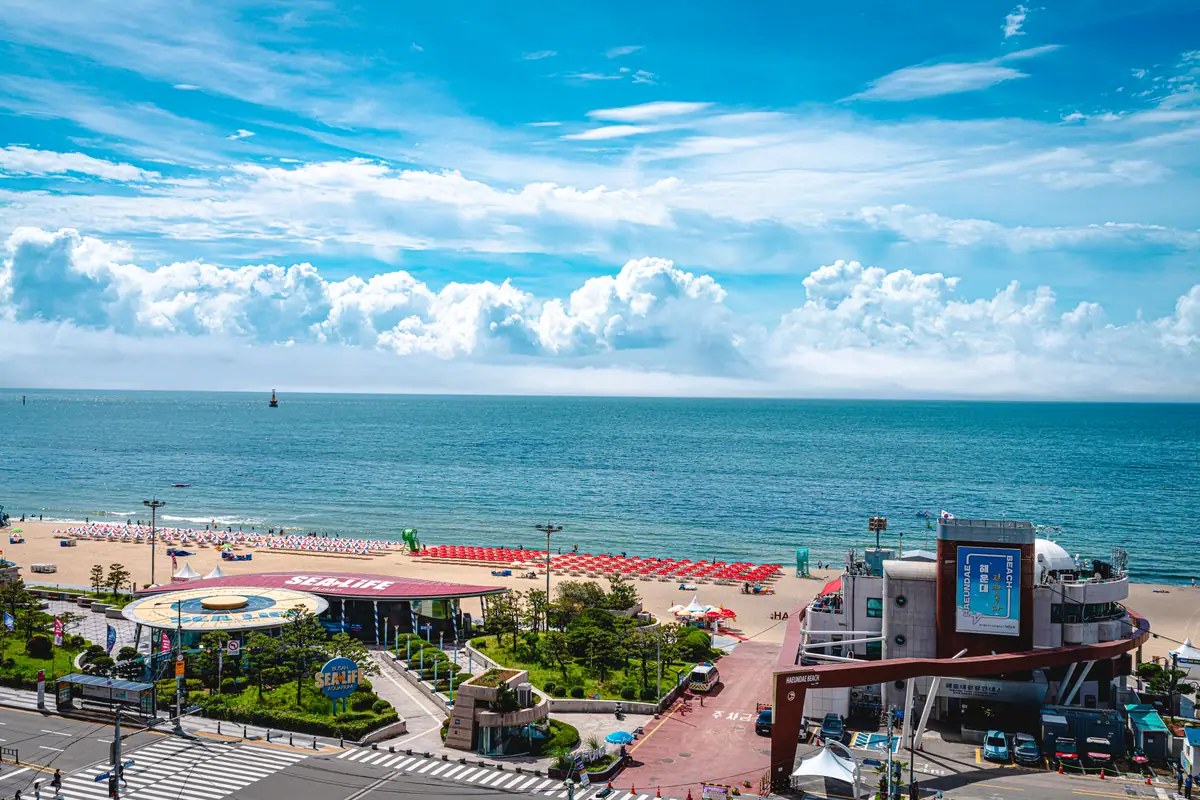
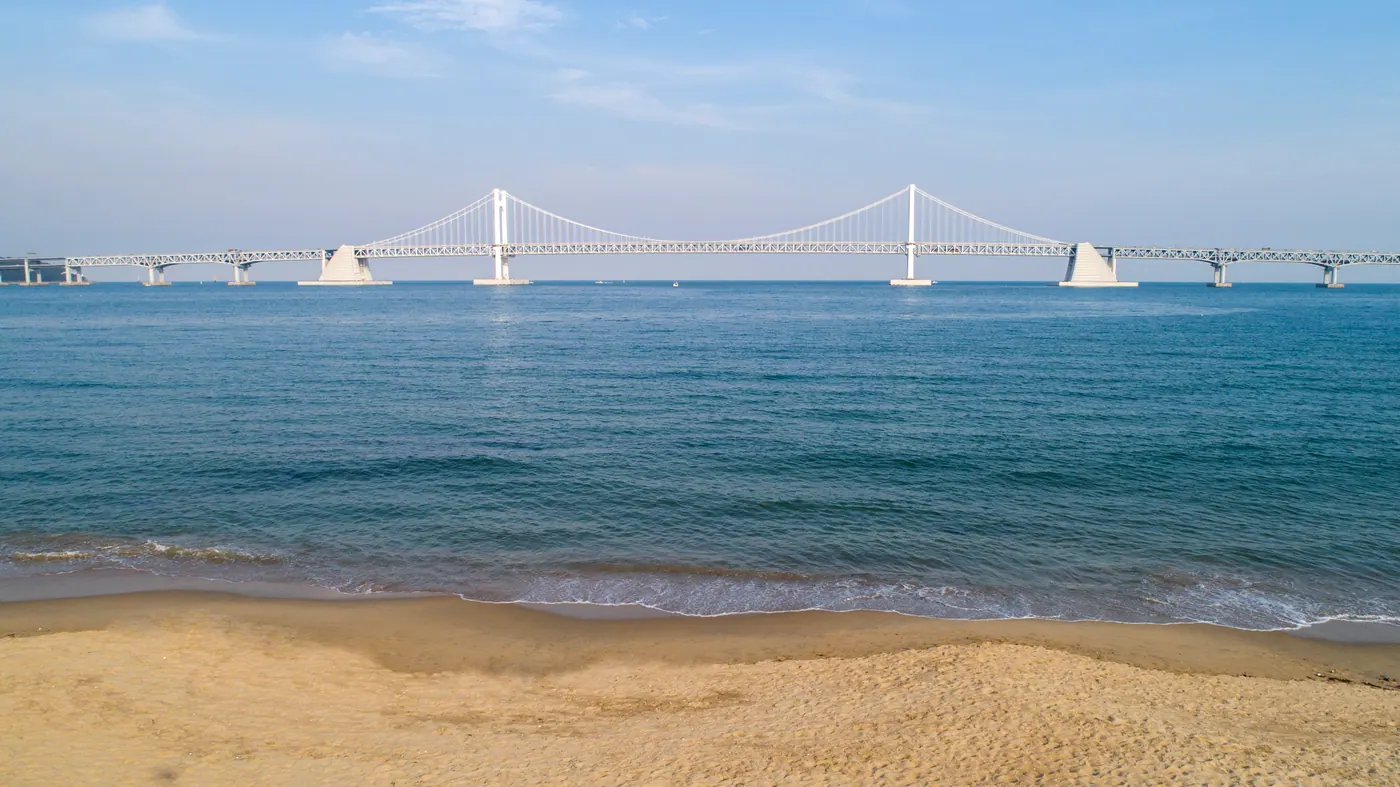
Busan is a working port as well as a holiday destination. Around Nampo and Jagalchi, markets and harbor streets offer a different introduction from the broad beachfront at Haeundae. At Gwangalli, the bridge becomes part of the view; inland, Seomyeon has shopping, restaurants and a busy city-center feel.
None of these neighborhoods can stand in for the whole city. That is why a first visit works best when you choose a few areas and give them room, rather than trying to collect every view in one day.
Who will enjoy Busan?
Busan is a good fit if you want city life with access to the sea, enjoy exploring markets and local food, or are curious about Korea beyond the capital. It also suits travelers who like mixing one planned stop with time to wander, eat and watch the city go by.
If your priority is a compact itinerary with short transfers between every attraction, take a closer look at the map first. Busan is spread out, and some of its most appealing places involve hills, stairs or a bus connection. The coast is beautiful, but it does not make every journey a beach stroll.
If your entire Korea trip is only three or four days and this is your first visit, keeping Seoul as your base can be a sensible choice. Save Busan for a longer trip rather than spending a large share of a short visit packing and changing cities.
How many days should you spend in Busan?
A day trip: possible, but selective
A day trip from Seoul is possible with an early start, but much of the day goes to travel. Choose one or two nearby areas and leave time for a meal.
One night: a useful first taste
One night lets you enjoy the evening and explore again the next morning. It is a useful compromise when time is tight.
Two nights or more: our recommendation
Two nights give most first-time visitors a more comfortable introduction, with time for different neighborhoods. Three nights or more allow extra room for weather, exploration or simply lingering.
These are recommendations, not rules. Your arrival and departure times, pace and interests all affect how much you can fit in.
Where should you begin?
Start by choosing the atmosphere you want at the beginning or end of your day. These are introductions to areas, not a promise that every stop is a short walk from every other one.
Haeundae: the classic beach introduction
Haeundae is the familiar image of Busan for many visitors: a wide beach, high-rise buildings and plenty of places to eat and stay. Gunam-ro connects the area around Haeundae Station with the beach, making it a straightforward place to begin if you want a beach-centered stay. It is popular, so expect a busier atmosphere at peak times.
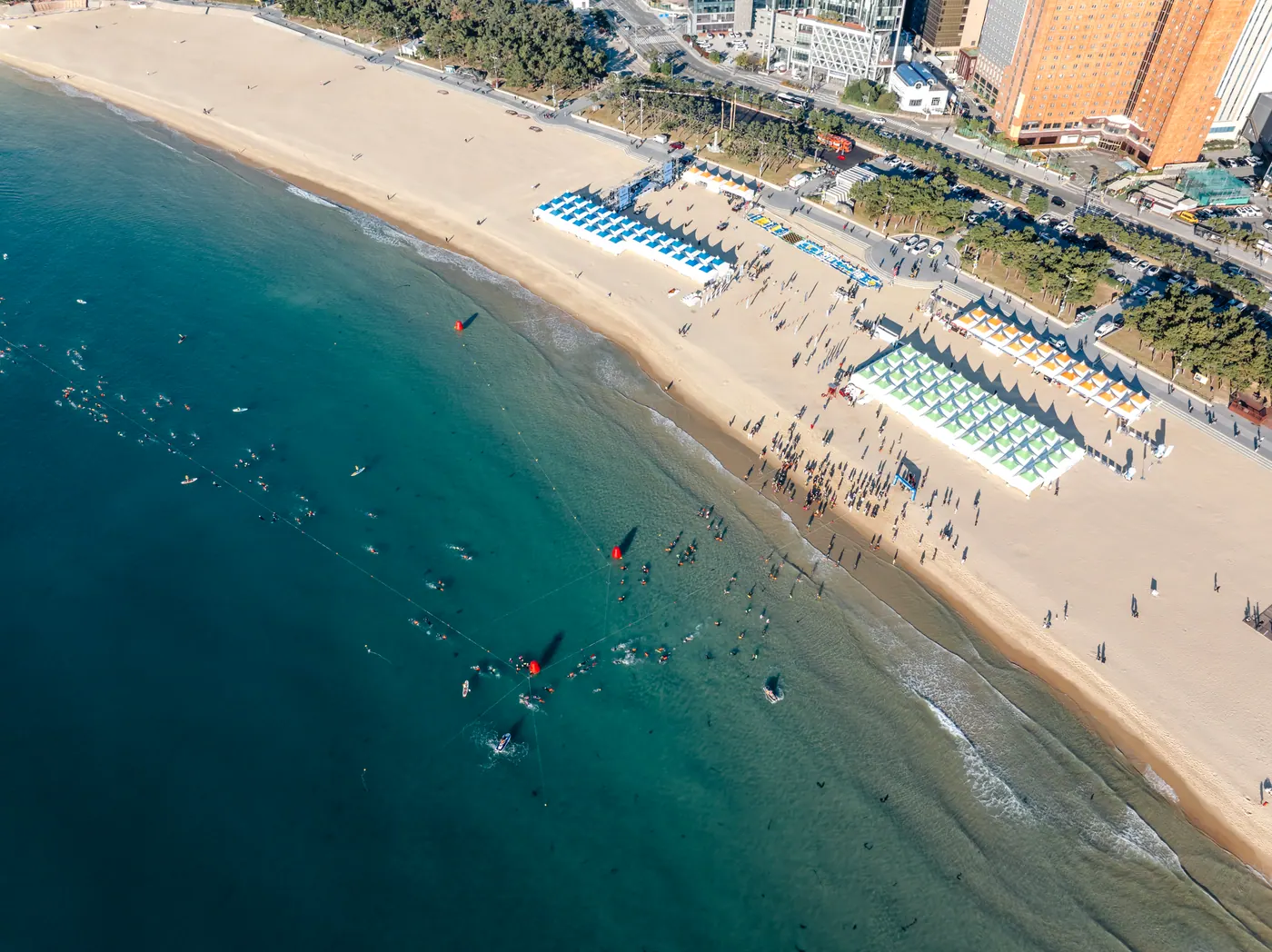
Haeundae Beach · Photo: 써머트리, 임성환 / Busan Metropolitan City Tourism Policy Division, via Busan Tourism Archive · KOGL Type 1.
Gwangalli: a beach with a bridge view
Gwangalli has a long beachfront and a view of Gwangandaegyo Bridge. It is an appealing choice if you like the idea of walking by the water and stopping for coffee or dinner nearby. The view changes after dark, so an evening visit offers a different sense of the area.
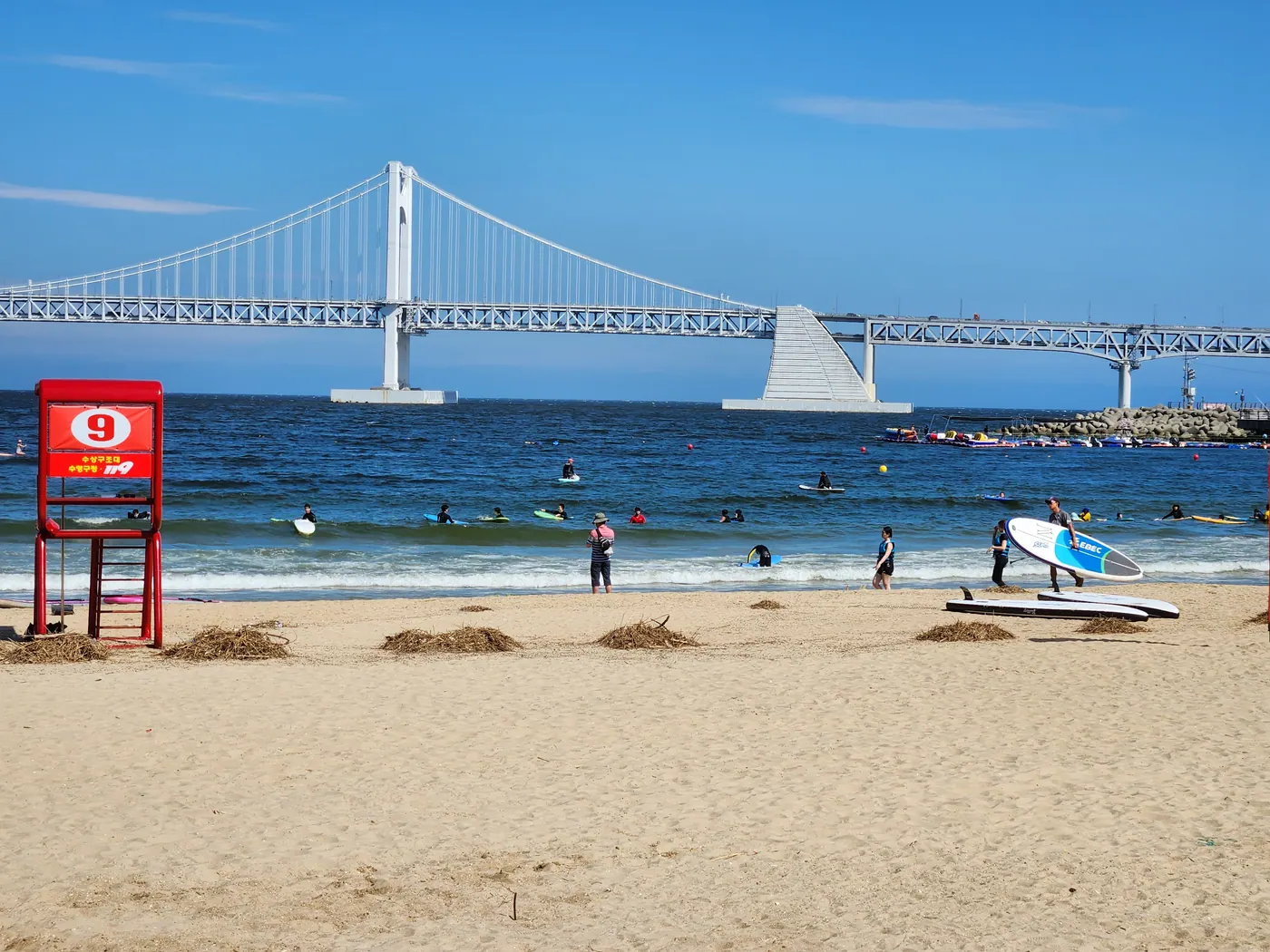
Gwangalli Beach · Photo: 이무곤 / Busan Metropolitan City and Busan Tourism Organization, via Busan Tourism Archive · KOGL Type 1.
Seomyeon: a lively inland base
Seomyeon is a busy commercial area with restaurants, shopping and convenient metro connections. You will not wake up beside the sea, but an inland base can be practical if your plans take you to different parts of the city. Jeonpo’s café streets are another reason to explore the wider area on foot.
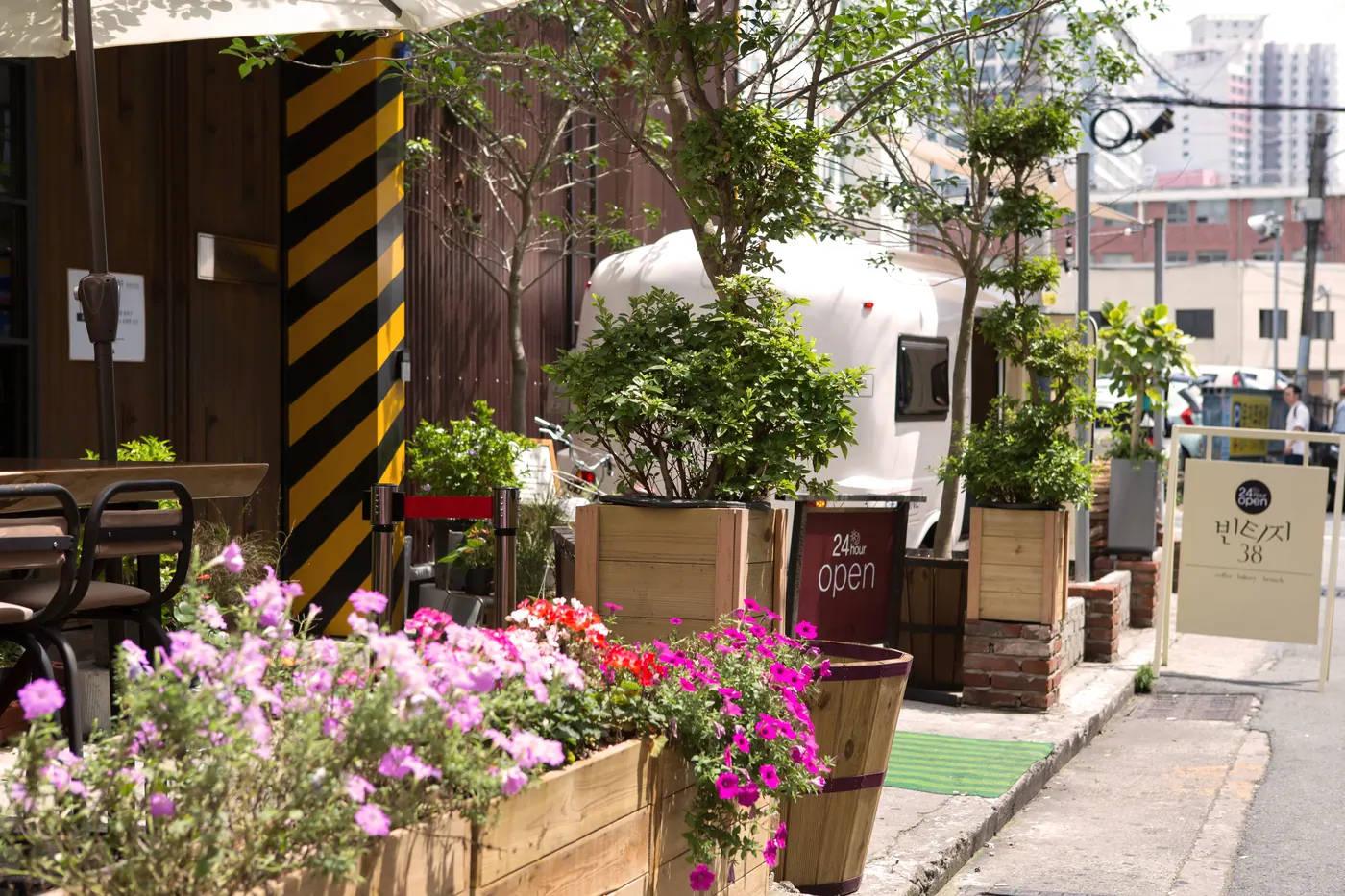
Jeonpo Café Street, 2017 · Photo: Busan Metropolitan City, via Busan Tourism Archive · KOGL Type 1.
Nampo and Jagalchi: markets and the harbor
For a first look at Busan’s market and port character, head toward Nampo and Jagalchi. Browse the market streets, consider a seafood meal if that appeals to you, and leave time to walk rather than rushing between pins. Check individual vendors’ prices and opening hours before ordering or making a special trip.
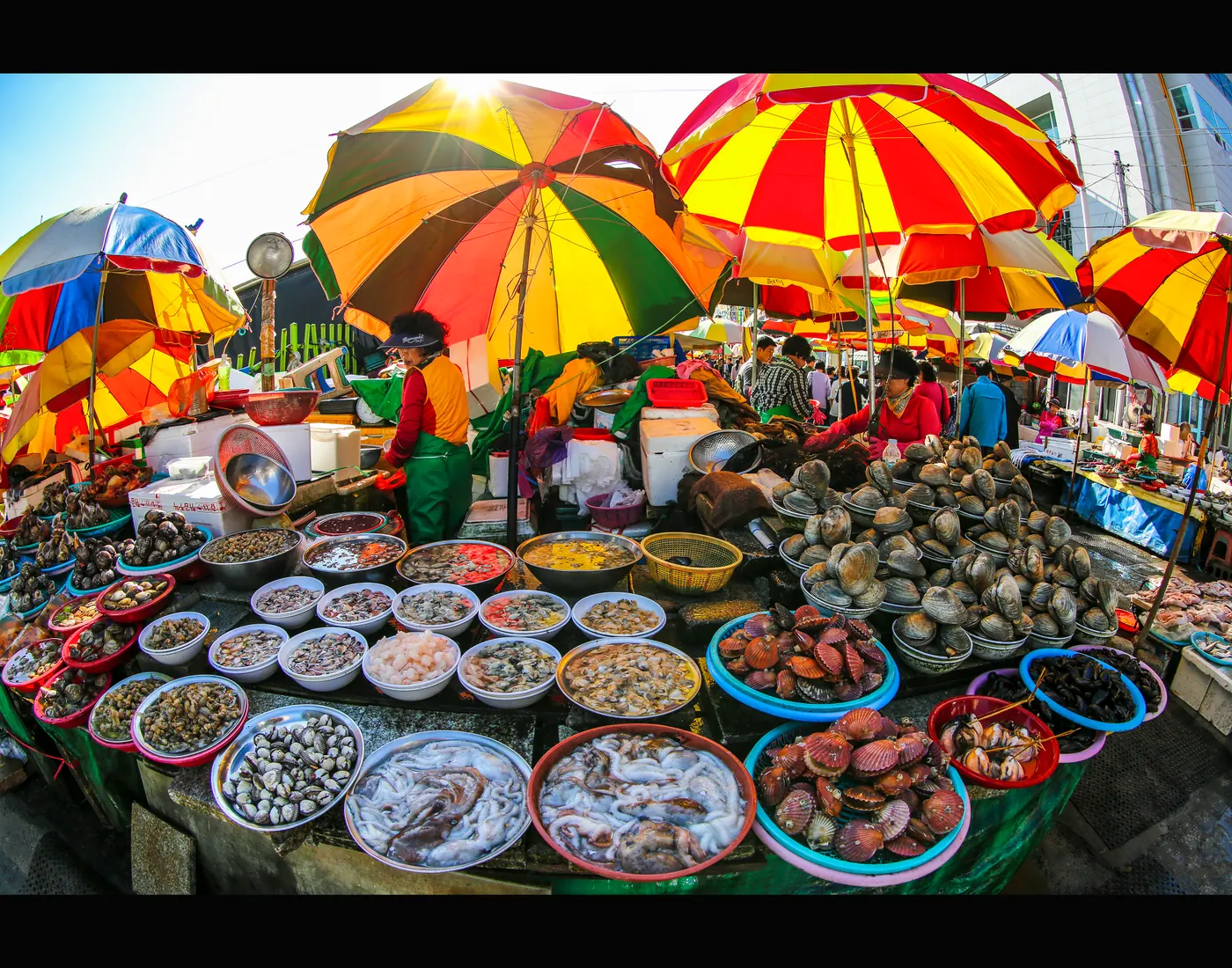
Jagalchi Market, 2019 · Photo: 박경란 / Busan Metropolitan City, via Busan Tourism Archive · KOGL Type 1.
Gamcheon: a hillside neighborhood
Gamcheon Culture Village is known for colorful buildings on a hillside. Its history includes people who came to Busan during the Korean War, and it remains a residential neighborhood as well as a visitor destination. Expect slopes and steps, stay on appropriate routes and be considerate of the people who live there.
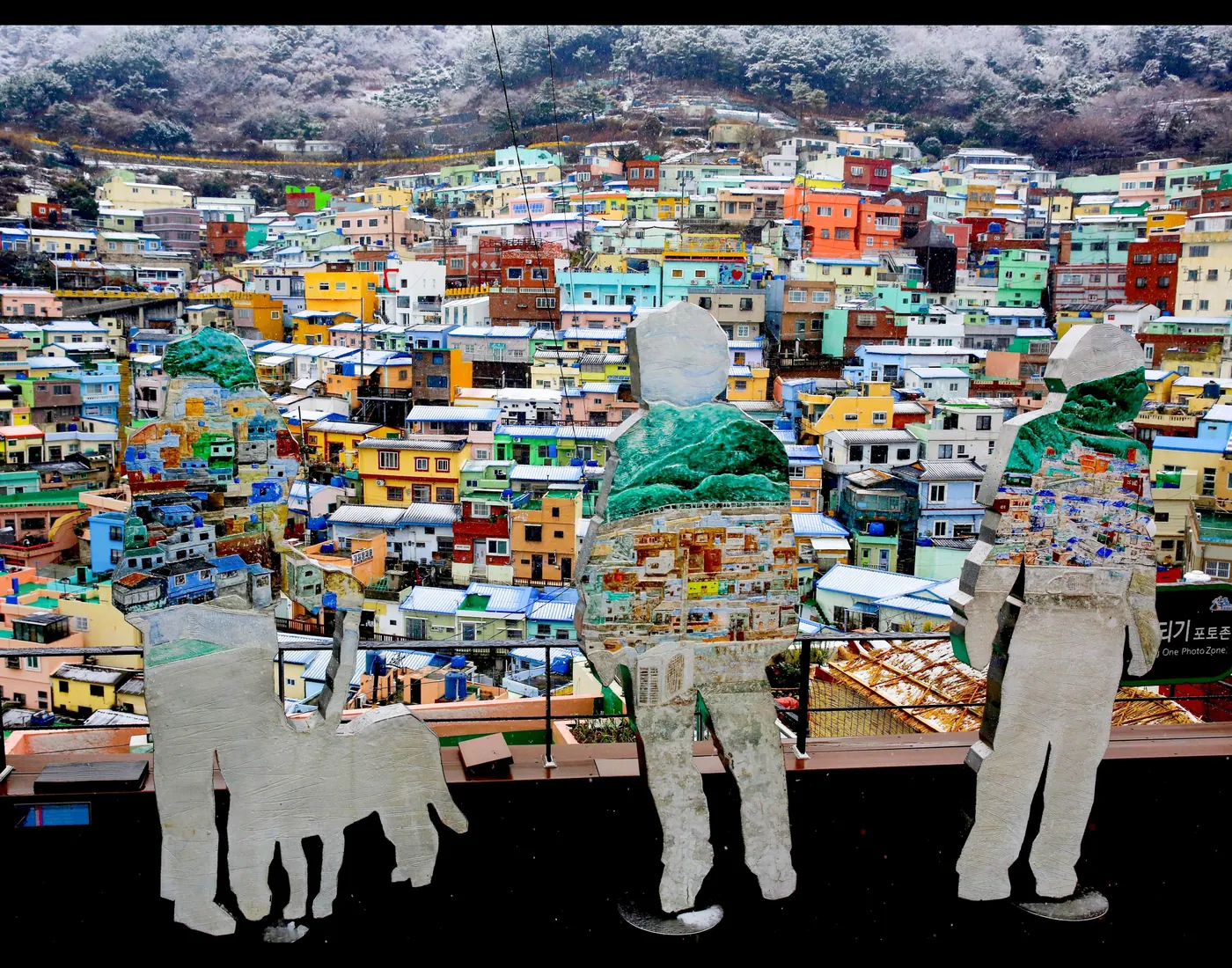
Gamcheon Culture Village · Photo: 주현정 / Busan Metropolitan City, via Busan Tourism Archive · KOGL Type 1.
How do you get to Busan from Seoul?
The KTX high-speed train is a common choice, with services connecting Seoul and Busan. Express buses are another option; the best choice depends on where you are starting, your budget and the departure time that suits you. Busan also has an airport, so some travelers can arrive without going through Seoul at all.
Before booking, check your actual departure and arrival stations, current schedules, fares and ticket conditions. Travel time varies by service. If you are connecting from an international flight, allow time for arrival formalities and the journey to your departure station; a tight connection can turn a good plan into a stressful one.
KORAIL’s English reservation page lets you search for Seoul-to-Busan services. Korea’s official tourism guide also lists express-bus booking resources. We will cover booking in more detail in a separate guide.
Can you get around Busan without a car?
Yes. Metro, buses and taxis can be combined for a first visit, although the best route depends on the neighborhood and your destination. Look up the full journey—including the walk from the station or bus stop—before arranging a day around several places.
Use Naver Map to check Busan’s metro and bus routes, transfers and the walk from your stop. Our guide to using Naver Map in English focuses on Seoul, but the setup and route-reading tips can help you plan in Busan too. Check your route again on the day you travel.
A useful planning habit is to group stops by area. For example, a market-and-harbor day and a separate beach day will often feel more relaxed than moving back and forth across the city. Give yourself extra time for hills, stairs, luggage and a café that turns into a longer break than planned.
What should you eat?
Busan has enough food to be a reason for the trip on its own. Dwaeji gukbap is a pork-and-rice soup associated with the city; milmyeon is a cold noodle dish; and eomuk, or fish cake, appears in many forms. Seafood is another obvious choice, especially around markets—but you do not have to eat seafood to enjoy Busan.
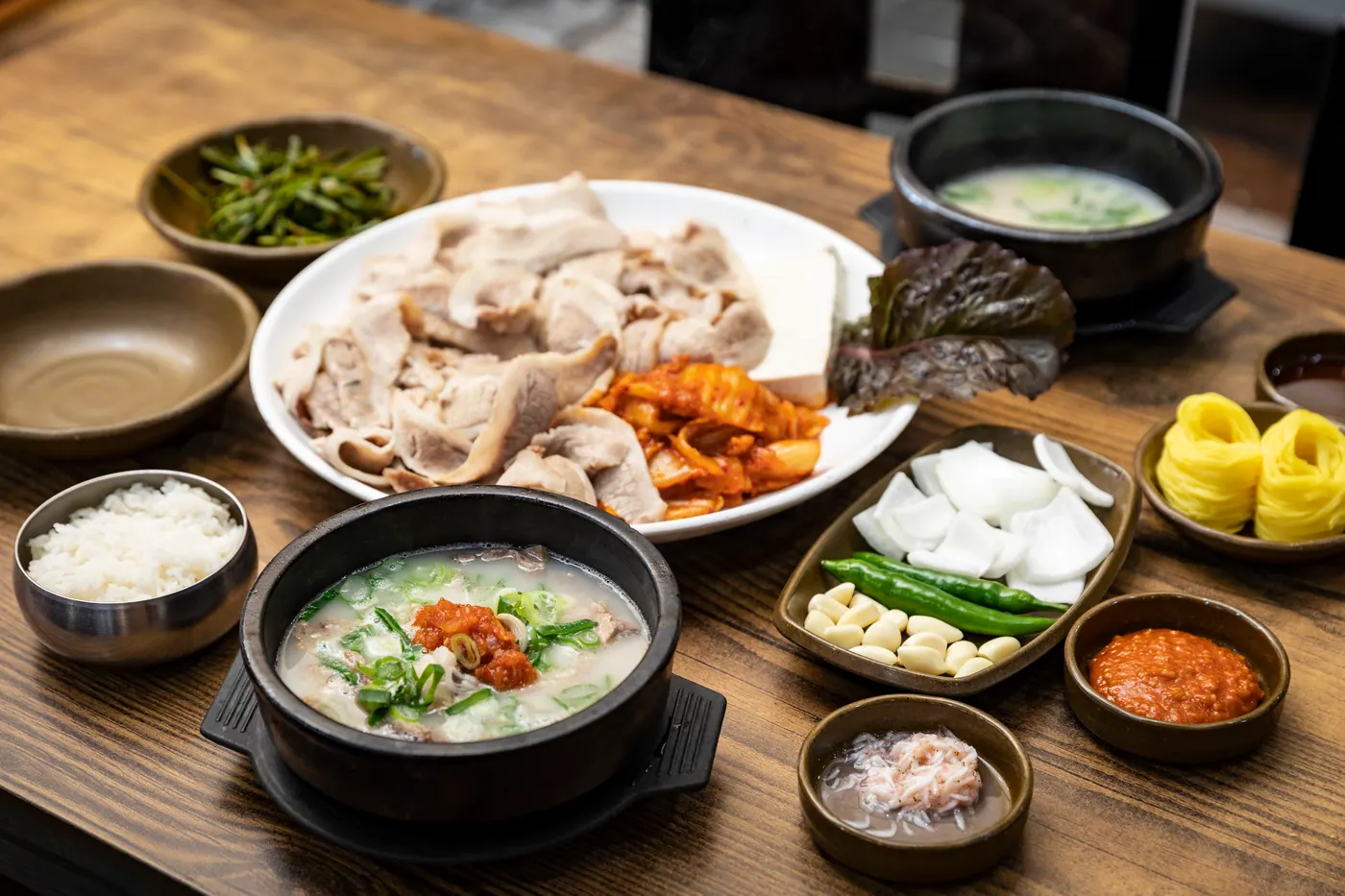
Dwaeji gukbap · Photo: (주)써머트리 and 이음미디어(주) / Busan Metropolitan City and Busan Tourism Organization, via Busan Tourism Archive · KOGL Type 1.
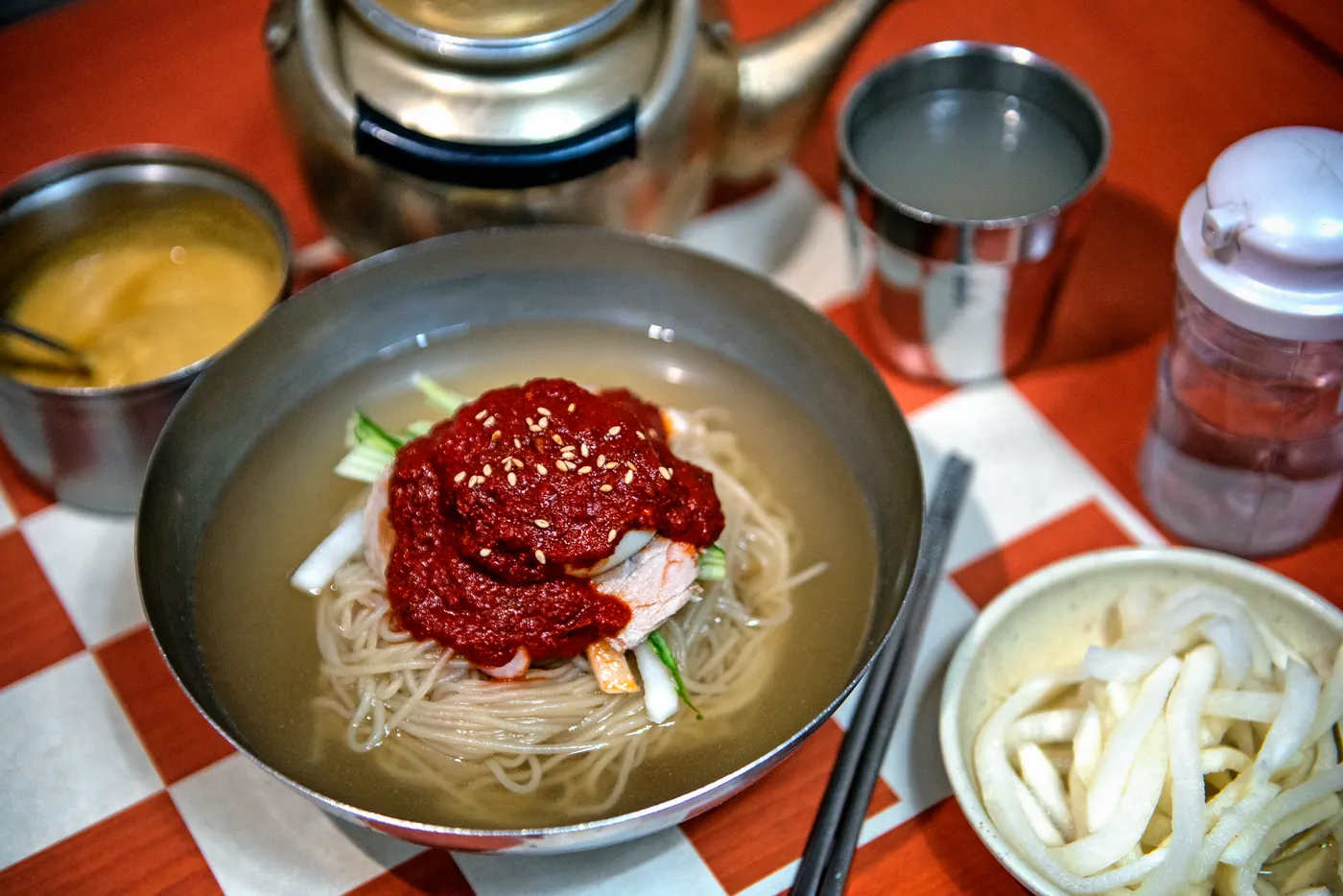
Milmyeon, 2019 · Photo: (주)써머트리 and 이음미디어(주) / Busan Metropolitan City and Busan Tourism Organization, via Busan Tourism Archive · KOGL Type 1.
Start with what sounds good to you and check ingredients if you have dietary restrictions. Restaurant practices, prices and availability vary. A future Busan food guide will explain the dishes and ordering experience in more detail.
So, is Busan worth visiting?
If you can give it at least a night, want to see Korea beyond Seoul and enjoy a city with room for both markets and the sea, we think so. Two nights give the first visit more breathing room. If your schedule is very short, there is no need to force it: Busan will make a better second chapter than a rushed footnote.
Start with the places that sound like you. A beach at dusk, a bowl of soup, a market street or a café on a hill can be enough to make the journey feel worthwhile.
A Drop of Busan is our ongoing introduction to the city: its food and neighborhoods, its coastline and the everyday moments in between. We will begin with the practical questions, then take the time to discover what makes each place worth slowing down for.
Not sure how much time to set aside? Our guide to how many days to spend in Busan compares day trips and longer stays.