Where to Stay in Busan for Your First Trip
How to choose a neighborhood that fits the way you want to spend your days
By A Drop of Seoul Editorial Team ·
Seoul-based reporting and human editorial review · How we work
In Busan, choosing where to stay is also choosing how your days begin. Do you want to walk toward the sea after breakfast, explore markets near the harbor, or have a busy transport hub and a choice of restaurants at your door?
For a beach-centered first visit, start with Haeundae or Gwangalli. Haeundae suits a beach-centered stay with an active commercial area; Gwangalli suits travelers who want to return to the bridge view in the evening. For an inland base with metro connections, consider Seomyeon. Nampo suits travelers drawn to markets and the older harbor area; around Busan Station can be useful for an early train. The best base depends on your plans and the exact address, not just the neighborhood name.
| Area | Best for | Why choose it | Consider |
|---|---|---|---|
| Haeundae | Beach-focused trips | Beach, hotels and dining | Busy in peak season |
| Gwangalli | Cafés and evenings | Bridge views and waterfront walks | Distance to sea varies by property |
| Seomyeon | Exploring across Busan | Metro connections, food and shopping | Not beside the sea |
| Nampo | Markets and port culture | Old-town streets and markets | Longer trip to eastern beaches |
| Busan Station | Short rail-focused trips | Convenient for trains | Choose for transport rather than a beach atmosphere |
Haeundae: for a classic beach stay
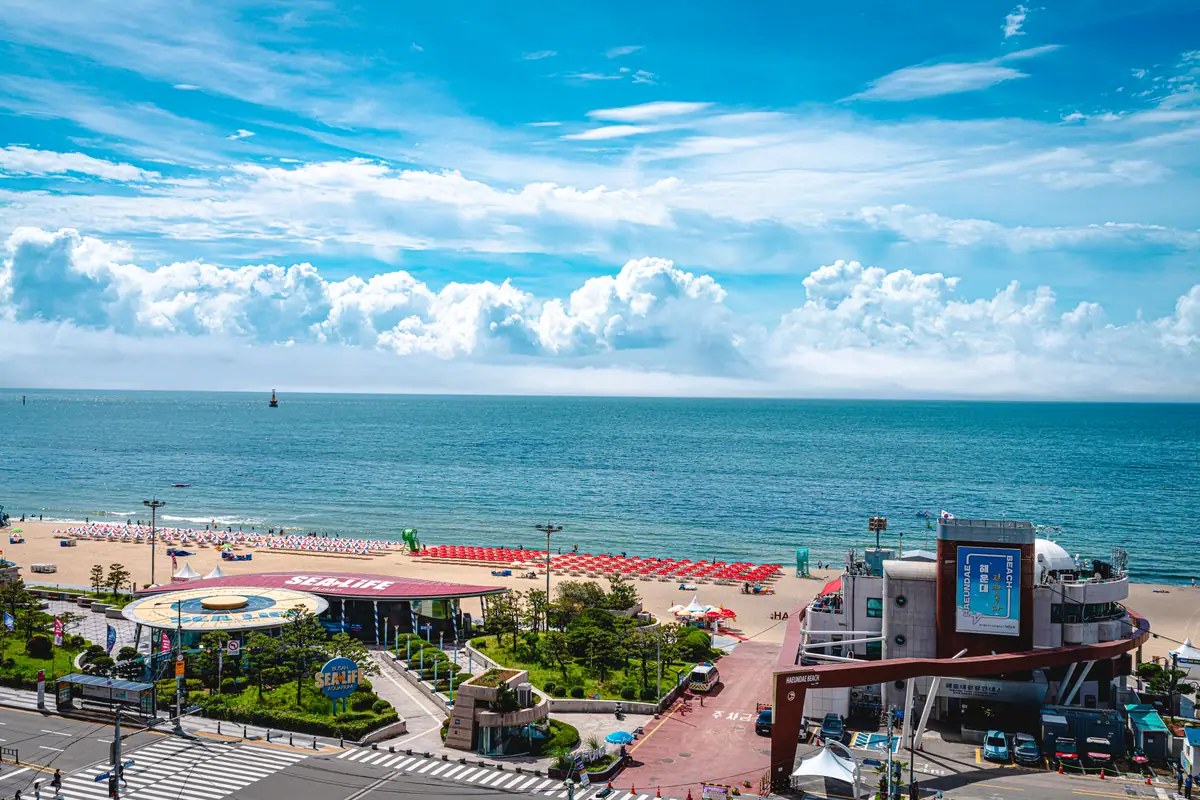
Haeundae Beach, 2024 · Photo: 써머트리, 정호윤 / Busan Metropolitan City Tourism Policy Division, via Busan Tourism Archive · KOGL Type 1.
Choose Haeundae if the beach is central to your trip and you like having restaurants, shops and accommodation choices nearby. Gunam-ro runs from the area around Haeundae Station toward the beach. It is a well-known area, so its busy stretches can feel lively rather than secluded, particularly in popular seasons.
Gwangalli: for evenings by the water
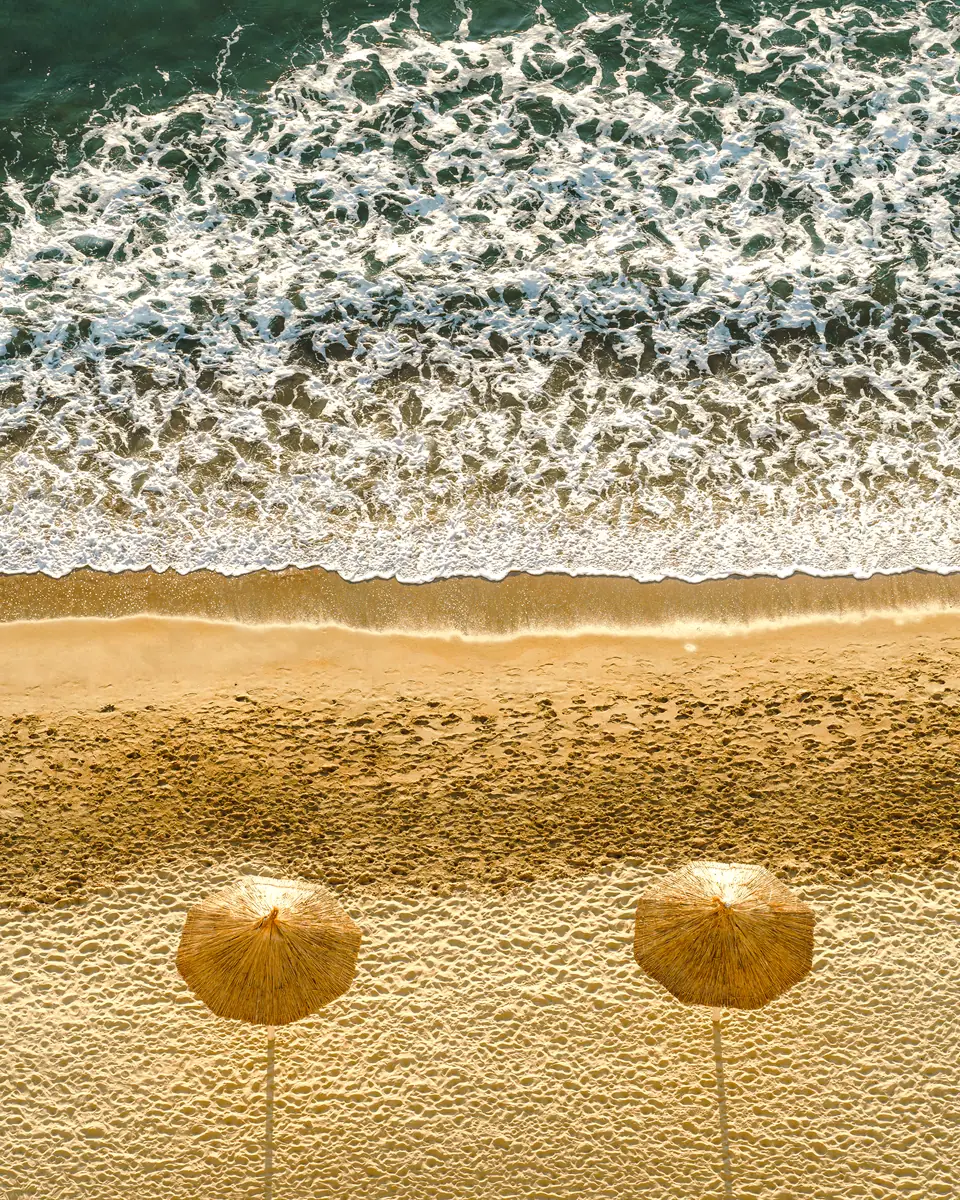
Gwangalli Beach, 2021 · Photo: 써머트리, 임성환 / Busan Metropolitan City Tourism Policy Division, via Busan Tourism Archive · KOGL Type 1.
Choose Gwangalli if you would like a beach walk and a view of Gwangandaegyo Bridge to be part of your evening. Cafés and restaurants line the wider beachfront area. Check the exact location: a property described as ‘Gwangalli’ may be several streets from the sea or the metro. Events can draw crowds, so look up the current schedule if quiet evenings matter to you.
Seomyeon: for a city base
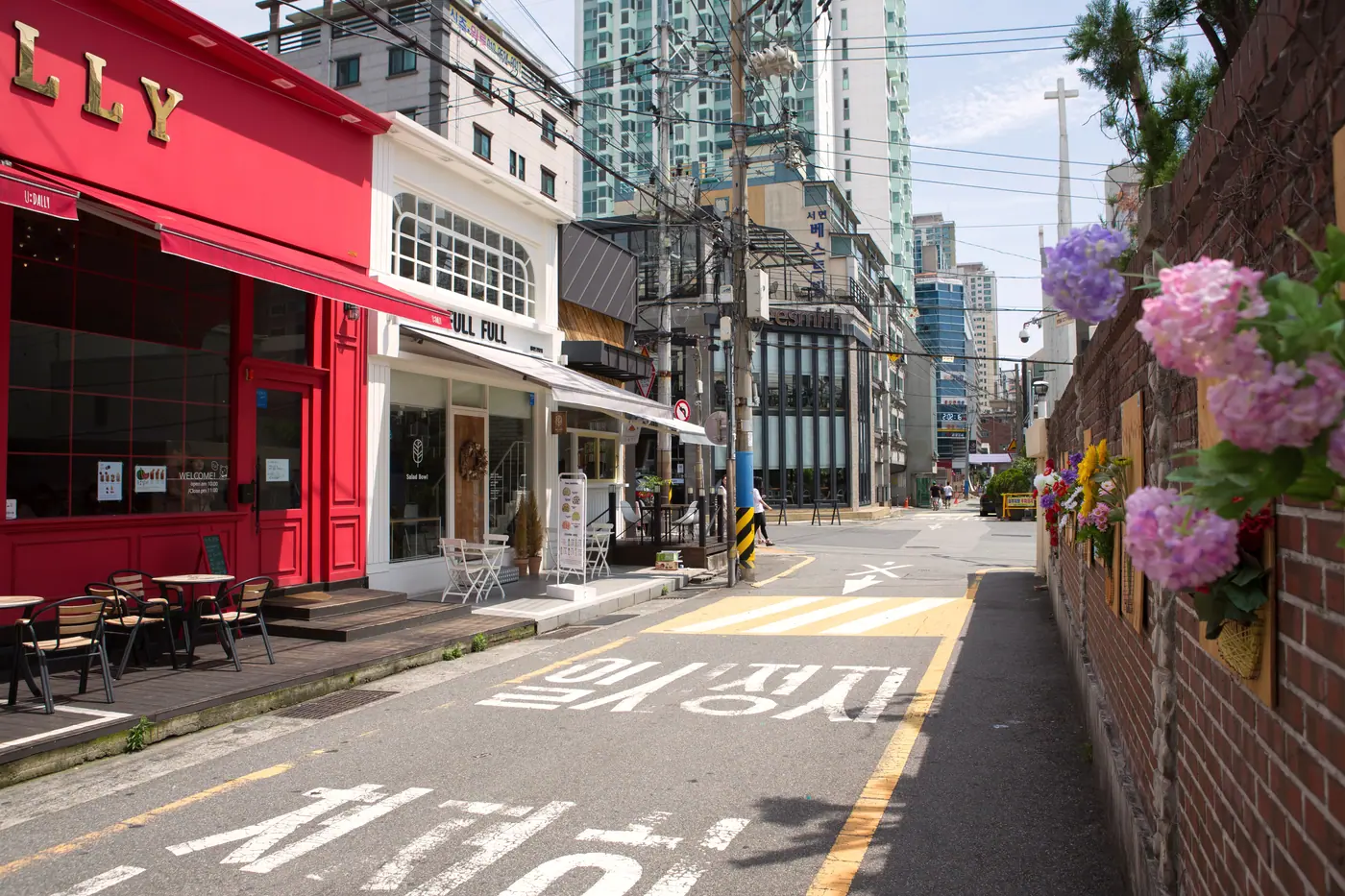
Jeonpo Café Street, 2017 · Photo: Busan Metropolitan City, via Busan Tourism Archive · KOGL Type 1.
Seomyeon is a busy commercial area with food, shopping and metro connections. It is worth considering when your plans are spread across the city and a beach view is less important than an inland base. Jeonpo adds café streets nearby. From Seomyeon Station, Line 2 runs directly to Haeundae Station; an independent timetable-based guide estimates about 31 minutes on the train, excluding waiting and the walk to the beach.
Nampo and Jagalchi: for markets and the harbor
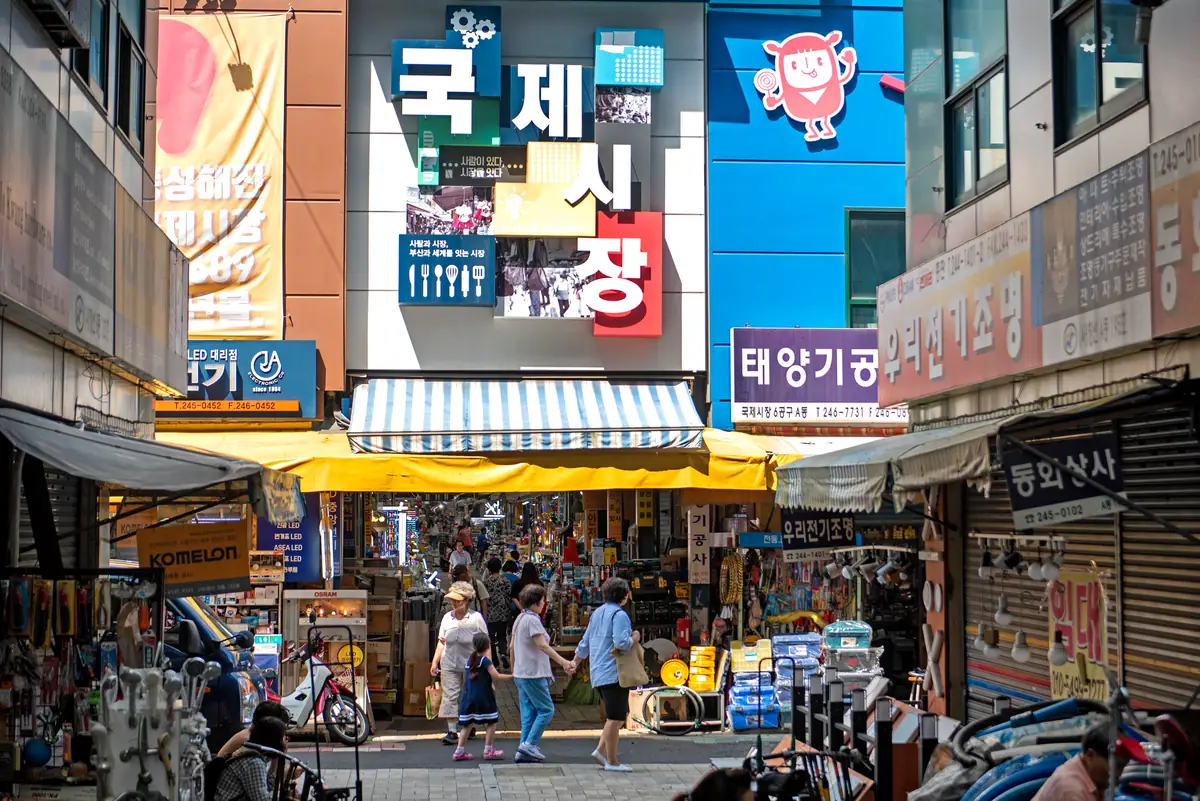
Gukje Market, 2019 · Photo: 써머트리 and 이음미디어 / Busan Metropolitan City and Busan Tourism Organization, via Busan Tourism Archive · KOGL Type 1.
Nampo and Jagalchi put market streets and older harbor-side areas high on the agenda. This is a good choice if you want to spend time browsing, eating and walking around that part of the city. From Nampo Station to Haeundae Station, take Line 1 and change to Line 2 at Seomyeon. An independent timetable-based guide estimates about 47 minutes including a standard transfer, excluding train waiting and walks.
Busan Station: for a train-focused stay
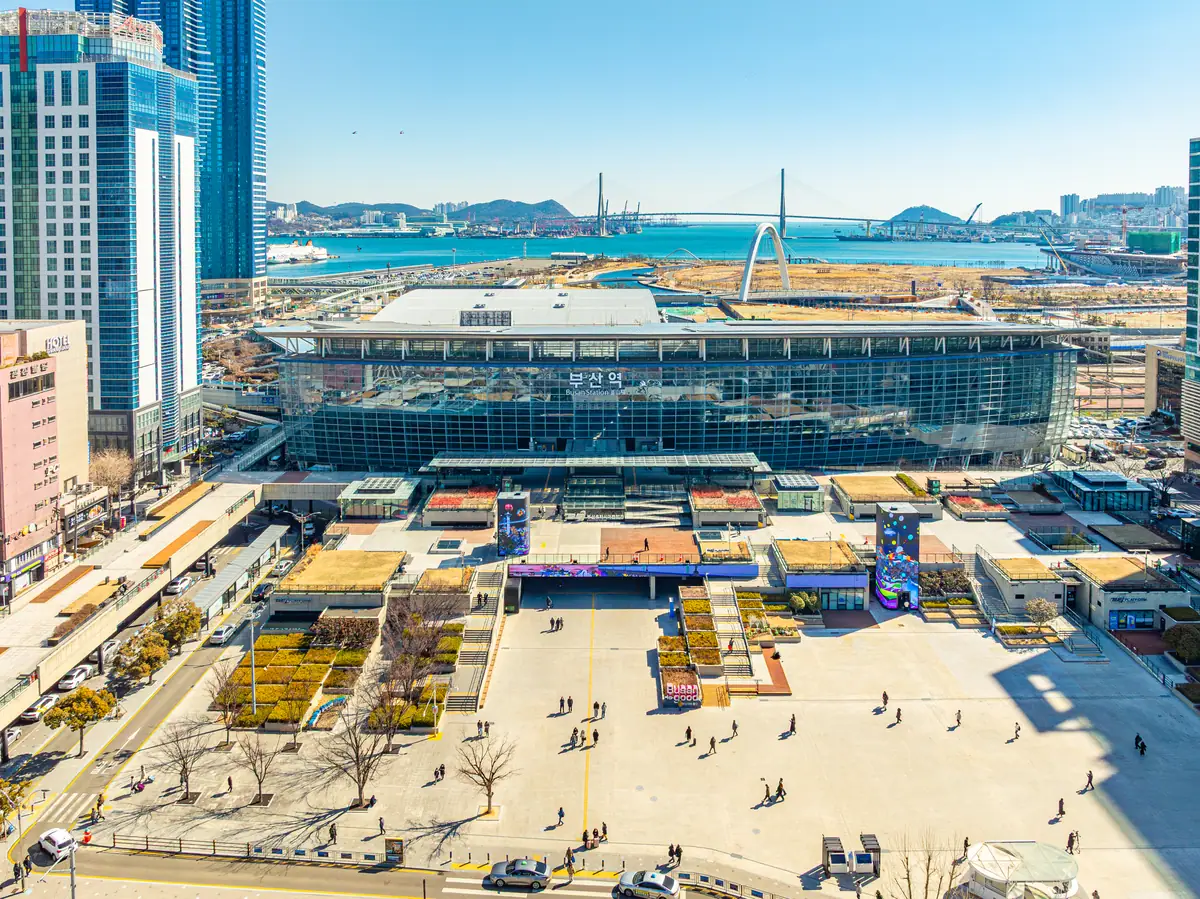
Busan Station, 2024 · Photo: Hyphen Group / Busan Tourism Organization Global Marketing Team, via Busan Tourism Archive · KOGL Type 1.
The area around Busan Station may be convenient for an early departure, late arrival or a short rail-centered visit. To reach Gwangalli, take Line 1 from Busan Station, change at Seomyeon to Line 2 for Gwangan Station, then walk to the beach. A third-party guide gives around 41 minutes for the metro journey; Visit Busan gives an example 13-minute walk from Gwangan Station Exit 5 to the beach. Waiting and your actual hotel address add time. The following are third-party estimates, not a real-time journey prediction: https://landinkorea.com/posts/korea-busan-fireworks-festival-gwangalli-guide ; https://visitbusan.net/index.do?lang_cd=en&menuCd=DOM_000000302011001000&uc_seq=1962
Before you book
Plot your accommodation and your first two or three destinations on a map, including the walk to the station or stop. Consider luggage, stairs and hills; check whether your room actually has the view you expect, as well as cancellation terms, noise and the latest guest reviews. Prices change with dates and events, so compare actual options for your stay.
You do not have to choose the ‘best’ neighborhood in Busan. Choose the one that makes the part of the trip you care about most easier to enjoy.
Still planning your first visit? Start with Is Busan Worth Visiting? and How Many Days Do You Need in Busan?.