The Korean Skincare Routine, Simplified — by Skin Type
You don't need ten steps. You need the right four or five, in the right order, for your actual skin.
By A Drop of Seoul Editorial ·

Most people who take Korean skincare seriously end up with a shelf full of products and a much shorter list they actually reach for on a normal weekday. That gap — between the shelf and the actual routine — is the whole story of Korean skincare that nobody tells you when they show you a 10-step flat-lay on Instagram.
The "10-step Korean skincare routine" was never really a daily routine. It was a marketing summary of everything a routine could include across a week — double cleanse, exfoliant, essence, serum, sheet mask, eye cream, moisturizer, sleeping pack, sun cream. Most of that is occasional, not daily. What you actually need, every single day, is four to six steps done in the right order, matched to your skin.
The order that actually matters
Regardless of skin type, the sequence is: cleanse → tone → treat → moisturize → SPF (AM only). Get the order wrong and even good products underperform.
- Cleanse — oil cleanser first if you wore SPF or makeup, then a water-based cleanser. Skip the oil step on a bare-skin morning.
- Tone — not a Western "toner" that strips; a Korean toner rehydrates and preps skin to absorb what's next.
- Treat — your actual active: a serum or ampoule targeting the thing you care about (brightening, redness, texture).
- Moisturize — seals it in. This step is not optional, even on oily skin.
- SPF — every morning, rain or shine, non-negotiable if you want any brightening or anti-aging step to actually work.
Essence and serum are often treated as separate steps in K-beauty marketing, but functionally they're both "treat." That's one honest way the 10-step count collapses to 5 without losing anything.
The realistic version, at a glance
- Morning: cleanser → toner → treatment → moisturizer → SPF (5 steps, under 5 minutes)
- Night: double cleanse → toner → treatment → moisturizer (skip SPF, obviously)
- 2–3x a week: exfoliant OR sheet mask, never both same night
- Total daily product count: 4–5, not 10
By skin type
Oily skin
The instinct is to strip everything. Don't — stripped skin overproduces oil to compensate. Use a gentle foaming cleanser (Round Lab's Dokdo Cleanser is a common starting point), a lightweight toner like Anua's Heartleaf 77% Soothing Toner, a niacinamide serum for oil control (Anua's Peach 70 Niacinamide is a frequent recommendation for this), and a gel moisturizer instead of a cream. Oily skin is also the type most likely to over-exfoliate in pursuit of a matte finish — cap it at two nights a week and let the niacinamide do the daily work instead. For a longer breakdown of serum options by concern, see our guide to the best Korean serums by skin type.
Dry skin
This is where a Korean skincare routine for dry skin earns its reputation — the layering of hydrating toners and essences is genuinely built for this. Cleanse gently (cream or low-foam cleanser only), pat in a hydrating toner, layer a humectant serum (Beauty of Joseon's Rice Serum + honey glow shows up constantly in dry-skin routines), and finish with a heavier ceramide cream — Illiyoon's Ceramide Ato Concentrate Cream is an affordable, drugstore-shelf staple in Korea for exactly this. Dry skin is also where skipping toner hurts the most, since a dehydrated base makes every product after it work harder to absorb.
Combination skin
Treat zones differently rather than picking one product for your whole face. A balancing toner everywhere, then a lighter gel-cream on the T-zone and a richer cream on the cheeks. This is the skin type most likely to actually benefit from having two moisturizers in rotation — not a flaw in your routine, a feature. Combination skin is also the type most often mis-treated as purely oily, which leads to over-stripping the cheeks while the T-zone stays shiny anyway.
Sensitive skin
Fewer steps, fewer actives, more patience. Cleanse once (skip the oil-cleanse step if it stings), use a fragrance-free centella or heartleaf toner, skip exfoliating acids until your barrier is calm, and moisturize with something plain and ceramide-heavy. Introduce one new product at a time, and wait at least a week before judging it. Sensitive skin is also the type where "more steps" backfires fastest — if your skin has been reactive lately, cutting back to three products for two weeks tells you more than adding a fourth.
The honest negative
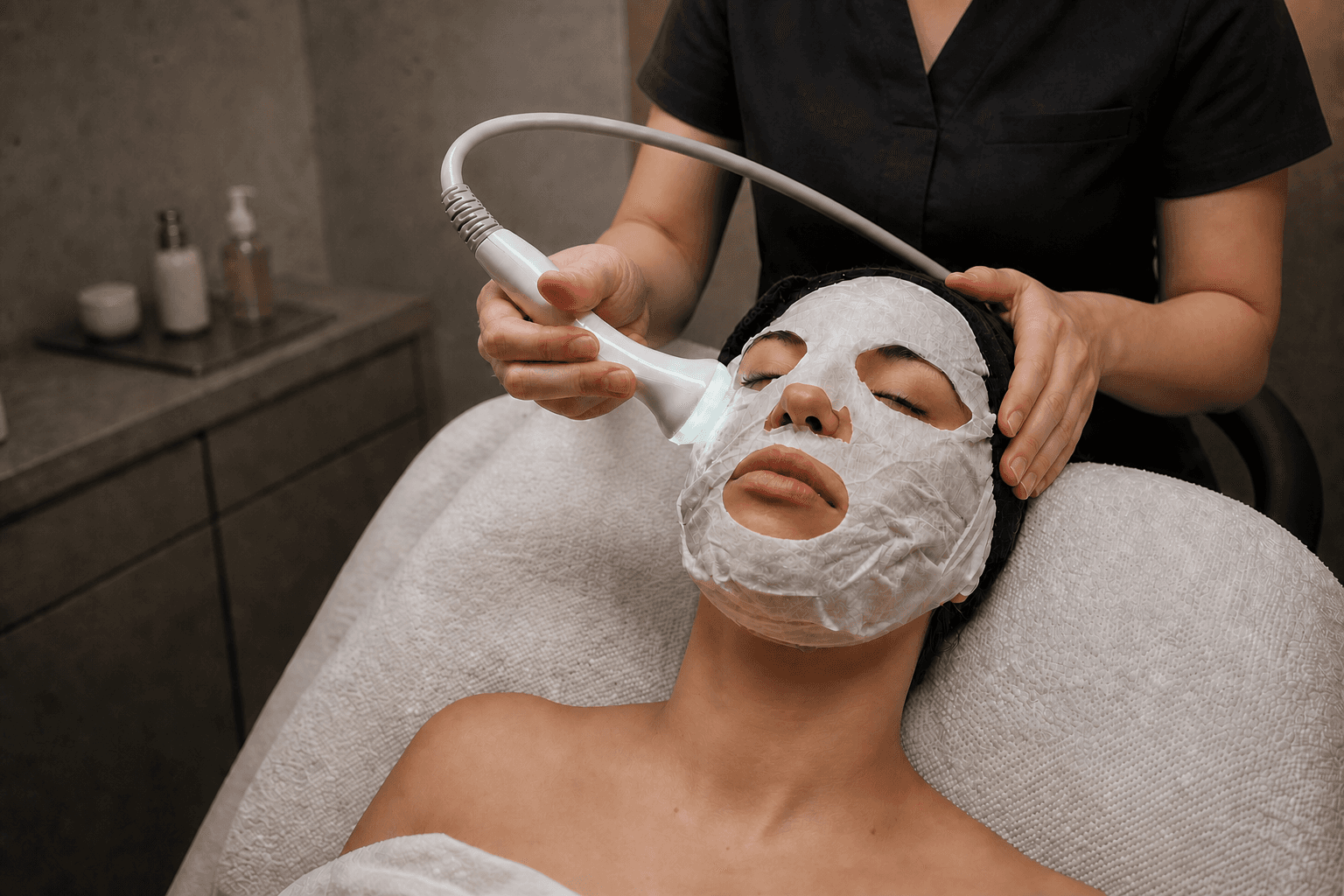
Sheet masks are the most overrated step in this whole system. They feel luxurious, but a good serum applied twice will out-hydrate a single 15-minute sheet mask most nights, and the packaging waste is hard to justify for daily use. Keep them as a once-a-week treat, not a routine step. If glowing, hydrated skin is the actual goal rather than the ritual, our breakdown of what glass skin really requires is a better place to focus than a drawer full of masks.
We'd also flag that exfoliation gets recommended too casually. Two to three nights a week is the ceiling for most skin, and sensitive or already-dry skin should start at once.
We'd also push back on the idea that you need a Korean-specific SPF to get Korean results. The technology is genuinely good — lighter textures, less white cast — but a sunscreen you'll actually reapply beats a "better" one that sits unused in a drawer. If you're choosing a first sunscreen, our guide to Korean sunscreens by skin type covers the trade-offs in more depth.
Building the routine, in practice
Start with cleanser, toner, moisturizer, and SPF for two weeks. Add one treatment serum after that, matched to your skin type above. Resist buying a fifth product until you've used the fourth for three weeks — consistency matters more than variety here.
FAQ
Is the 10-step Korean skincare routine realistic for everyday use? No, not as a daily habit. It's a weekly-maximum list. A realistic daily routine is 4–6 steps: cleanse, tone, treat, moisturize, and SPF in the morning.
What's the correct order for a Korean skincare routine? Cleanse, tone, treat (serum/ampoule), moisturize, then SPF in the morning only. Thinnest, most water-based products go on first; richer, occlusive products go last.
What's the best Korean skincare routine for dry skin specifically? Gentle cream cleanser, a hydrating toner applied in light layers, a humectant serum, and a ceramide-rich moisturizer. Skip foaming cleansers and skip daily exfoliation.
Can I skip steps and still get results? Yes. Cleanser, moisturizer, and SPF alone will maintain healthy skin. Toner and treatment serum are where you address specific concerns — add them once the basics are consistent.