Seoul Etiquette Visitors Actually Need to Know
Fewer invented rules, more ways not to inconvenience the person beside you.
By A Drop of Seoul Editorial ·
Most Seoul etiquette lists turn ordinary consideration into a museum of mysterious rules. The useful version is shorter: notice when a space belongs to residents, follow the system in front of you, and do not create work for someone else.
On trains and buses
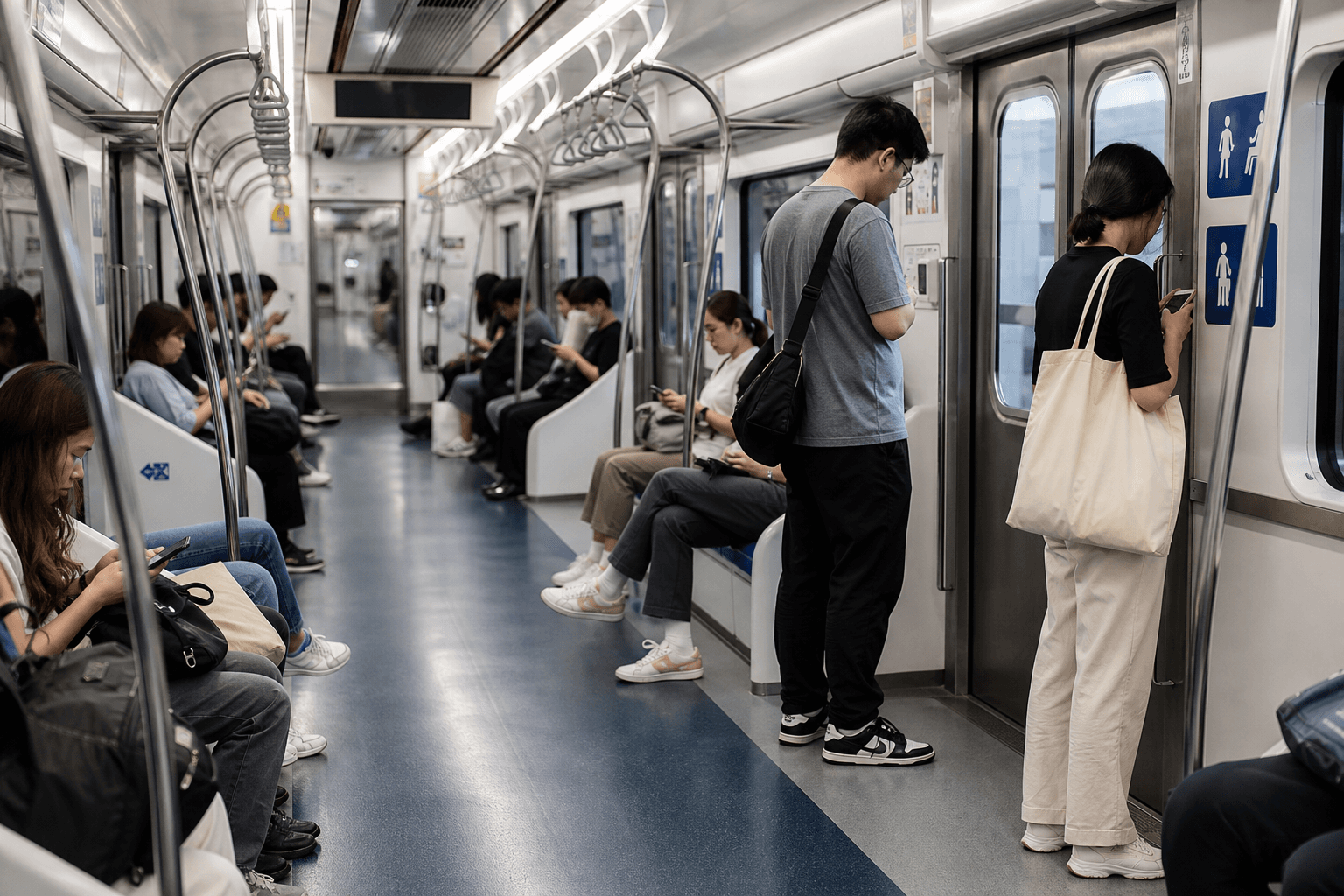
Let passengers exit before boarding. Keep bags out of seats and doorways. Priority seats are marked for people who need them; pregnancy seats are particularly visible. Phone calls and loud group conversations stand out in a quiet carriage.
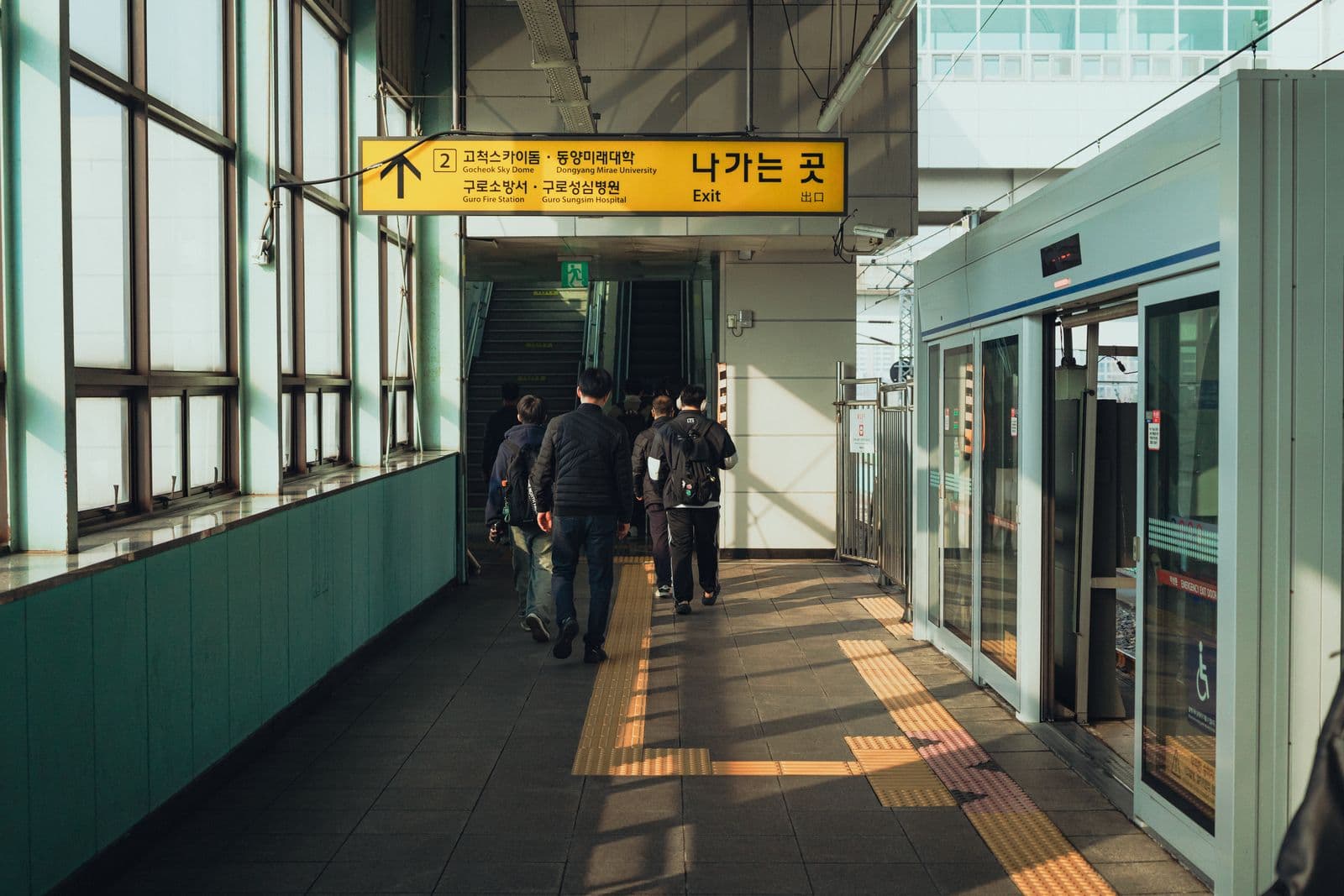
On escalators, follow current station signs rather than relying on an old “stand on one side” rule. Seoul has repeatedly encouraged riders not to walk on escalators for safety.
| Situation | The useful rule |
|---|---|
| Subway and bus | Let people exit, keep doors clear, use quiet voices |
| Residential lanes | Visit only when permitted; never enter private space |
| Restaurant | Follow the room's seating and ordering system |
| Rubbish | Carry it until you find the correct separated bin |
| Tipping | Usually not expected; follow explicit service policies |
| Photography | Ask when a person is the subject |
In residential neighborhoods
Bukchon is the clearest case. A designated red zone restricts tourist entry outside 10am–5pm, and residents live behind the doors visitors photograph. Do not enter courtyards, block alleys, fly drones or stage loud shoots. The same courtesy applies in Ikseon, Seochon and hillside Hannam even where no fine is posted.
At restaurants
Wait to be seated when the room suggests it, use the call button when provided, and return shared utensils to shared dishes rather than using your personal chopsticks. Some restaurants are not designed for solo diners or single portions of grilled meat; that is a format constraint, not personal hostility.
Rubbish
Public bins are less common than many visitors expect. Carry small waste until you find the correct bin. A convenience store's bins are for its customers and may be restricted. Separate recycling where labels ask you to.
Tipping
Tipping is generally not expected in ordinary Seoul restaurants, cafés and taxis. Do not force cash on staff. Premium hotels or services may have their own policies; follow the bill.
Photography
Ask before making a person the subject. Do not photograph worshippers closely in temples, customers receiving beauty treatments, or residents through windows. “Public” does not mean consequence-free.
Read next
The rule with the most direct itinerary impact is explained in One Perfect Day in Old Seoul. For transit behaviour and payment, use How to Use Seoul Public Transport. For food formats, read What to Eat on Your First Trip.
FAQ
Is tipping expected in Seoul?
Tipping is generally not expected at ordinary restaurants, cafés and taxis. Follow explicit hotel or premium-service policies and the amount shown on the bill.
Can tourists visit Bukchon at any time?
No. The designated Bukchon red zone restricts tourist visits from 5pm to 10am and imposes fines. Other residential areas also deserve quiet behaviour even without formal hours.
Is it rude to eat on the Seoul subway?
Avoid meals and messy or strongly scented food on trains and buses. Drinks may be common, but preventing spills and inconvenience matters more than finding a universal prohibition.
Should I give up my subway seat?
Priority and pregnancy seats are clearly marked for passengers who need them. Keep them available and follow the carriage's visible guidance.
Can I leave rubbish at a convenience store?
Only use a store's waste facilities according to its signs and as a customer. Many branches restrict bins; carrying your waste is better than forcing it into the wrong place.
Map and verified places
Directory entries are published only after their address and source record have passed our place-verification pipeline. Recheck the live map before travel because individual businesses and access routes can change.
Last checked
August 2026. Bukchon rules checked against Seoul Metropolitan Government; venue-specific policies always take precedence.