Meet the People Shaping Seoul Beauty
Six jobs that decide what ends up on your face. You've heard of roughly one of them.
By A Drop of Seoul Editorial ·
Beauty coverage tends to feature two kinds of people: founders with a good story, and celebrities with a contract.
Both are real. Neither is where the decisions get made.
The person who determined the texture of the cream you bought last week almost certainly does not appear on its packaging, has never given an interview, and works for a company you've never heard of. The person who decided that cream would exist on a shelf at all works in an office in Jung-gu and has a spreadsheet.
We're starting an interview series. This is who we want to talk to, and why.
Quick answer
Six roles shape what Korean beauty becomes: the contract formulator, the retail buyer, the salon director, the dermatologist, the founder, and the space designer.
Only one of those routinely gets asked anything.
1. The formulator you'll never hear of
Korean beauty runs on contract manufacturing. Cosmax did around ₩1.6 trillion in revenue last year, Kolmar Korea about ₩1.3 trillion, Cosmecca Korea about ₩353 billion. Between them they make an enormous share of what leaves this country in a bottle.
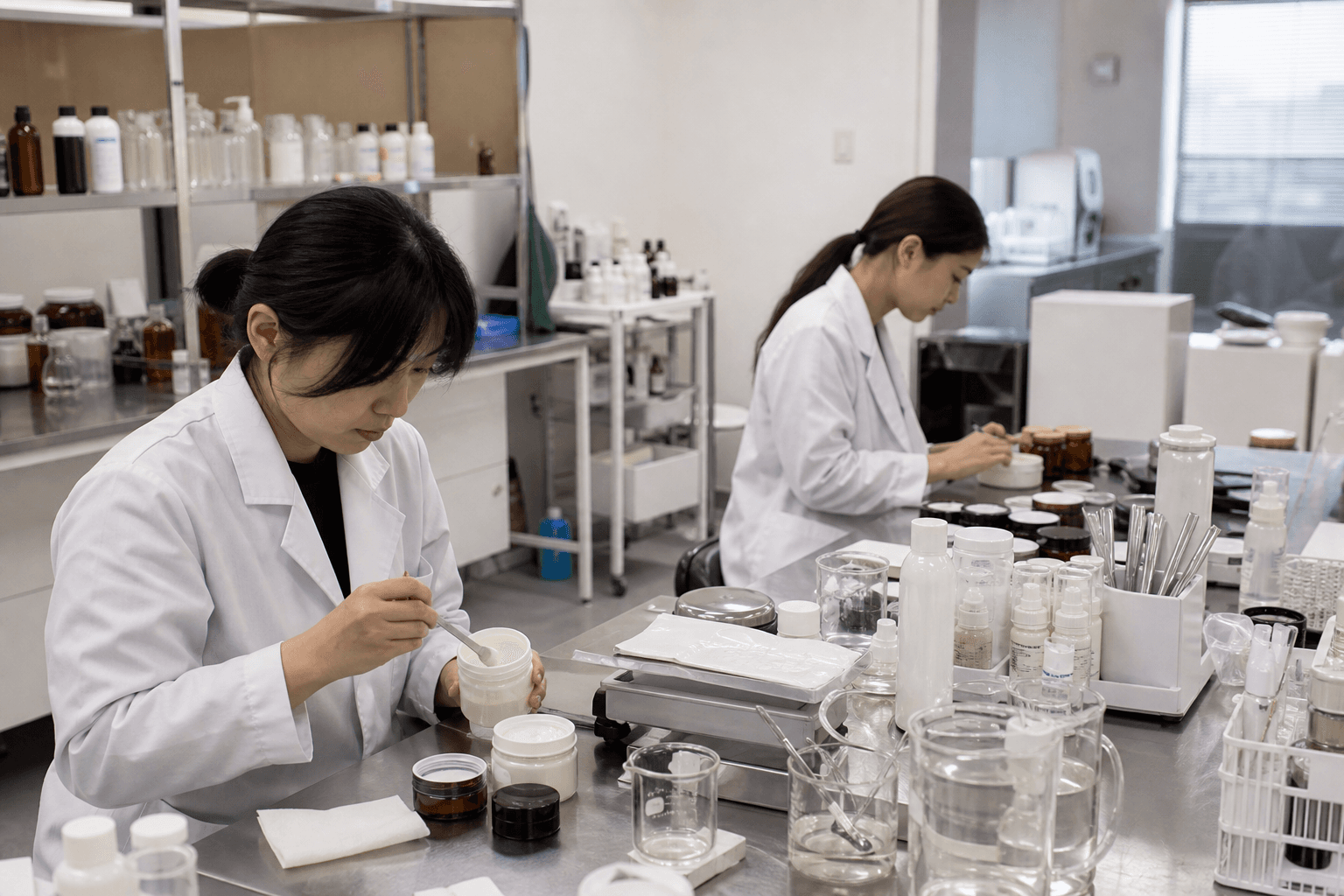
Which means the people who actually develop these products are chemists at manufacturers whose names appear nowhere on the box. They see every brief in the market. They know which "breakthrough active" is three brands using the same base at different concentrations. They know what a trend looks like eighteen months before it reaches you, because they were asked to formulate it.
Why we want to talk to them: they are the only people in this industry with a genuinely complete view, and structurally the least incentivized to talk. That's exactly what makes it worth trying.
2. The buyer who decides what exists
A large Korean beauty retailer carries tens of thousands of products and could carry ten times that. Somebody decides.
Olive Young's own awards include a category called MD's Pick — a merchandiser's selection sitting alongside rankings computed from roughly 180 million purchases. That's a rare public acknowledgment of a role that's usually invisible: the buyer who takes a bet on something the data doesn't support yet.
Why it matters: for a small brand, a shelf at Olive Young is the difference between a business and a hobby. The person granting that is one of the most consequential figures in Korean beauty, and there is essentially no published account of how they think.
3. The salon director
Hair trends do not start in a product development meeting. They start on somebody's head, in a chair, in Cheongdam or Apgujeong, and the products follow twelve to eighteen months later.
Seoul salon culture is unusually structured — scalp diagnosis is a routine part of a haircut, and directors carry personal followings that function like brands. The salons in our directory include studios where the director's Instagram is effectively the portfolio.
What we'd ask: what they're being asked for right now that doesn't have a product yet.
4. The dermatologist
Korea's clinic culture is unusual in that it doesn't stop at the clinic door. The procedure-to-home-care cycle is a single loop — you get something done, you're told exactly what to use for the next two weeks, you come back.
That gives Korean dermatologists real influence over ordinary bathroom routines, not just over procedures. It's part of why the derma tier — Aestura, Zeroid — is as strong here as it is: doctors have been recommending it for two decades.
What we'd ask: which popular ingredient they most wish people would stop using.
5. The founder — but a harder version of the question
Founders do get interviewed, constantly, and the results are mostly identical. We'd like to ask different things.
The stories worth telling are specific. Cha Hye-young launched Nonfiction in 2019; the brand went from around ₩5.5 billion in 2020 revenue to roughly ₩47.9 billion last year, on a scent brief about the warmth of arriving somewhere familiar. 107 grew out of a fermented-vinegar brewery lineage and launched in the United States a year before it launched in Korea.
What we wouldn't ask: the origin story. It's on the website.
What we would: what they got wrong, what they'd cut, and who actually makes the product.
6. The person who designed the room
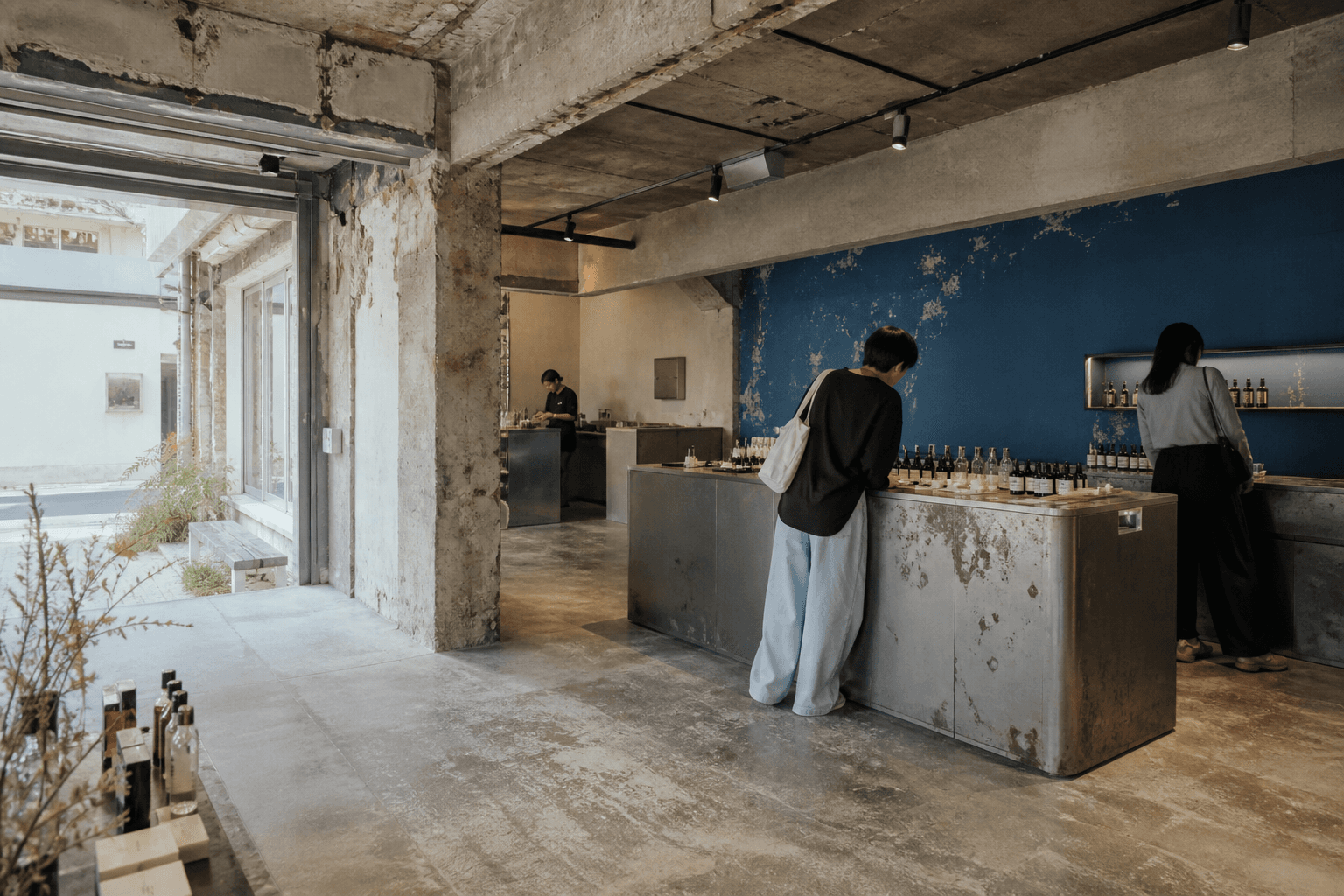
We've argued that in Seoul, the space frequently is the product — that when contract manufacturing makes formulas broadly available, brand world becomes the only defensible asset.
If that's true, then the architects and interior designers behind Amore Seongsu, Tamburins, Ader Error, and the rest are doing brand strategy, not decoration. They're just not credited that way.
What we'd ask: what the brief actually said.
And one more: the people not being asked
A note we'd rather put in writing than leave implied.
Korean beauty's public voices skew heavily toward founders, marketers, and creators — people whose job includes talking. The people whose job doesn't include talking are the ones with the least filtered view: the counter staff who watch what actually sells, the aestheticians who see a hundred faces a week, the QA person who kills a formula.
We'd like this series to include them, and we're aware that it's harder and less clickable. We'd rather do it anyway.
What this series will and won't be
It won't be promotional. If we interview a founder, we'll write what they said and what we think about it. A conversation is not an endorsement, and we'll say so on the page.
It won't be a ranking. No power lists, no thirty-under-thirty.
It will be specific. One person, one job, one set of things they know that we don't.
And it will say what we don't know. We haven't run these interviews yet. This piece is a statement of intent, not a summary of work already done — and we'd rather be honest about the sequence than pretend a series exists because we published an introduction to it.
If this is you
We're actively looking for first conversations — formulators, buyers, directors, dermatologists, designers, and the people who don't usually get asked.
You can reach us through the contact page. Korean or English, both fine. We'll tell you in advance what we intend to publish, and we don't do copy approval.
Read next
The industry shift behind all of this: why everyone is looking at Korean beauty differently now. What the new brands are doing: the new generation we're watching. Why the rooms matter: what makes a beauty brand feel Seoul.
FAQ
Who actually creates Korean beauty products?
Frequently a chemist at a contract manufacturer rather than at the brand itself. Cosmax, Kolmar Korea, and Cosmecca Korea between them produce a large share of Korean cosmetics, and their formulators are named nowhere on the packaging.
What is an MD's Pick?
A merchandiser's selection — a buyer's personal recommendation, awarded alongside the sales-data rankings in Olive Young's annual awards. It's one of the few public acknowledgments of how much influence retail buyers have over which products exist at scale.
Why do Korean salon directors matter to beauty trends?
Because hair trends originate in salon chairs rather than in product meetings, and products follow roughly a year later. Seoul directors often carry personal followings that function as brands in their own right.
Is this interview series available now?
Not yet. This piece introduces the series and sets out who we intend to speak with; the interviews themselves will publish as individual articles as we complete them.
How can I take part?
Get in touch through our contact page, in Korean or English. We'll be clear about what we plan to publish before we publish it, and we don't offer copy approval.