The Things From Seoul We Can't Stop Talking About
THE DROP LIST — August 2026. Ten things: an object, a number, a room, an idea, and one we're not sure about.
By A Drop of Seoul Editorial ·
Not everything worth knowing is a product, and not everything we talk about at dinner makes it into an article.
So: a monthly list. Ten things — objects, numbers, rooms, ideas, and at least one thing we're genuinely unsure about, because a list where the editors are confident about everything is a catalogue.
This is the first one.
01 — The object
A heated eyelash curler
Fillimilli won the beauty tools category in Olive Young's 2025 awards with a heated eyelash curler, and we cannot stop buying them as gifts.
It costs almost nothing. Nobody outside Korea has one. It produces a visible result in about four seconds, which is a strike rate no serum in this building can match.
The wider point: beauty tools are the most systematically under-exported category in Korean beauty. Brushes, curlers, spatulas, the small silicone things. Korea makes them well and cheaply, and essentially nobody writes about them because tools don't have a story. More brands nobody has caught onto yet.
02 — The number
One every five seconds
Amorepacific's figure for the Aestura Atobarrier365 cream: roughly one sold every five seconds, based on domestic and overseas volume for the first half of this year.
It also took Olive Young's cream category two years running, and Euromonitor ranked Aestura Korea's number one dermocosmetic skincare brand by 2025 retail sales.
What we like about this number is how boring the product is. It's a barrier cream. It's not photogenic, it doesn't glow, and nobody is filming themselves applying it. It just works, and people keep buying it. The starter pack it belongs on.
03 — The ₩1,000 thing
The Italy towel
이태리 타올 — the small rough exfoliating mitt in every Korean bathhouse, named for the Italian viscose it was originally made from.
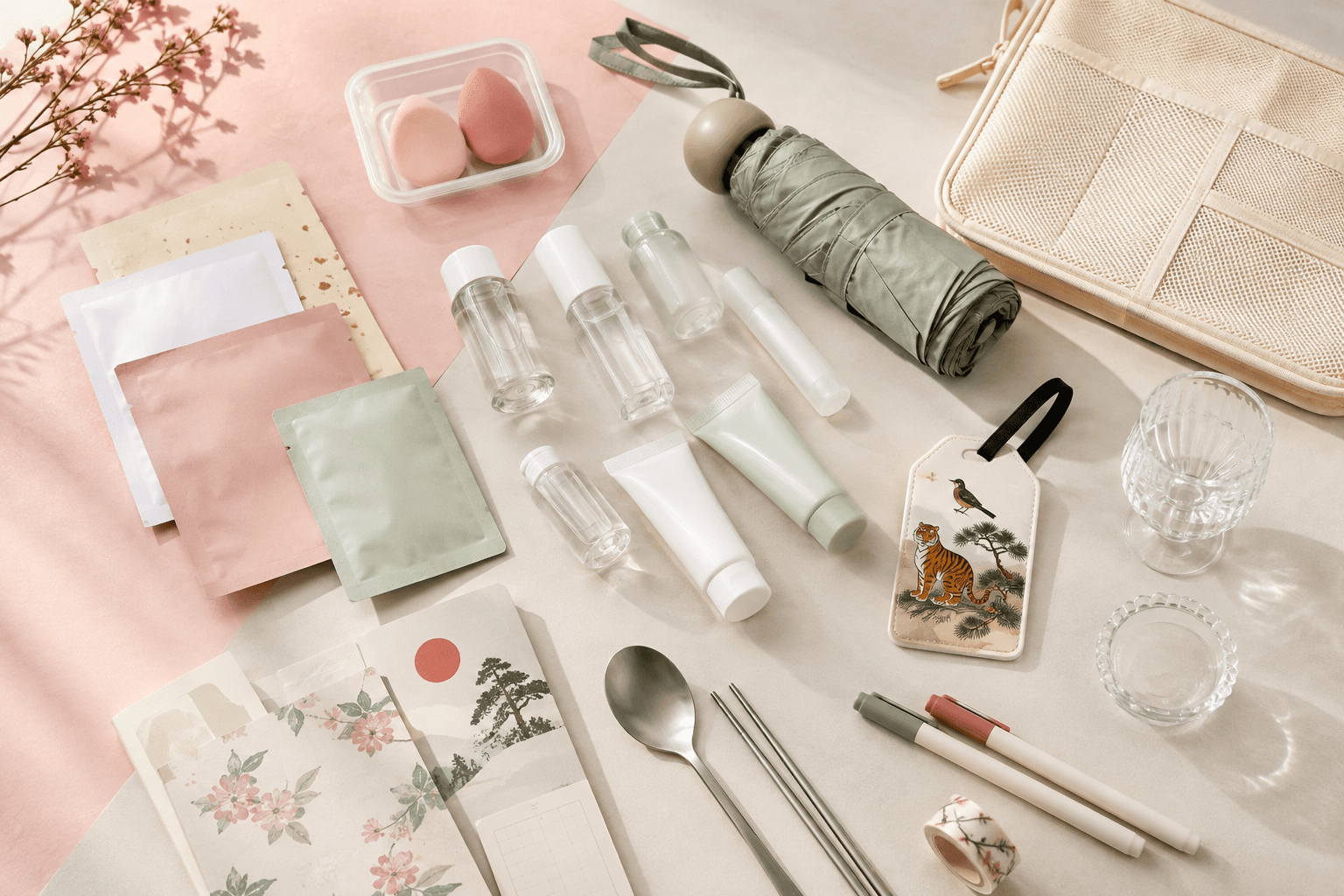
It costs about a thousand won, weighs nothing, and is the single best souvenir in this country. Use it on soaked skin, not dry, and not more than once a week. Our full souvenir list.
04 — The stat that reframes a category
52% versus 12%
Functional scalp ampoules and serums grew about 52% in a year in Korea. Ordinary shampoo grew 12%.
That four-to-one gap is the clearest signal in Korean beauty right now, and almost nobody abroad has noticed. Korea didn't start buying more shampoo — it started buying leave-on scalp treatments, which is a different product with a different logic. Olive Young's whole haircare category grew roughly 200% year on year.
If you only track one thing in K-beauty over the next two years, track this one.
05 — The room
Amuse Pink House, Seongsu
Amuse's Seongsu flagship opened in mid-2025 and is entirely, unrelentingly pink. No neutral floor. No wood accent to soften it.
That's why it works. Seoul brands that commit fully to one gesture read as statements; the ones that hedge read as pop-up shells. It's the most photographed makeup showroom in the neighborhood and it earned that.
Go early. Everyone else read the same thing.
06 — The snack
Protein chips at the beauty store
Olive Young's own snack line, Delight Project, wins awards in the food category and has broken into the top ten sellers to foreign shoppers.
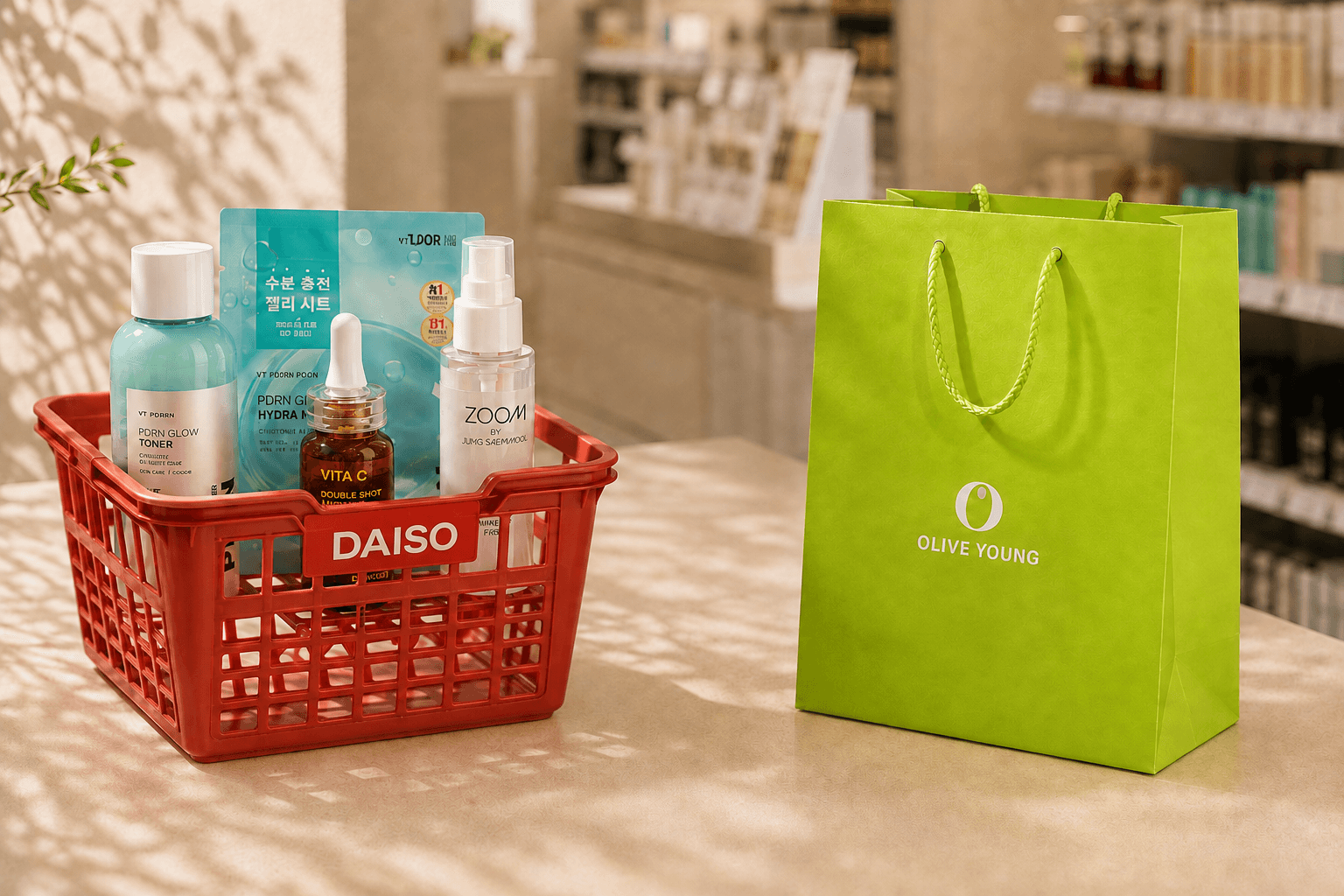
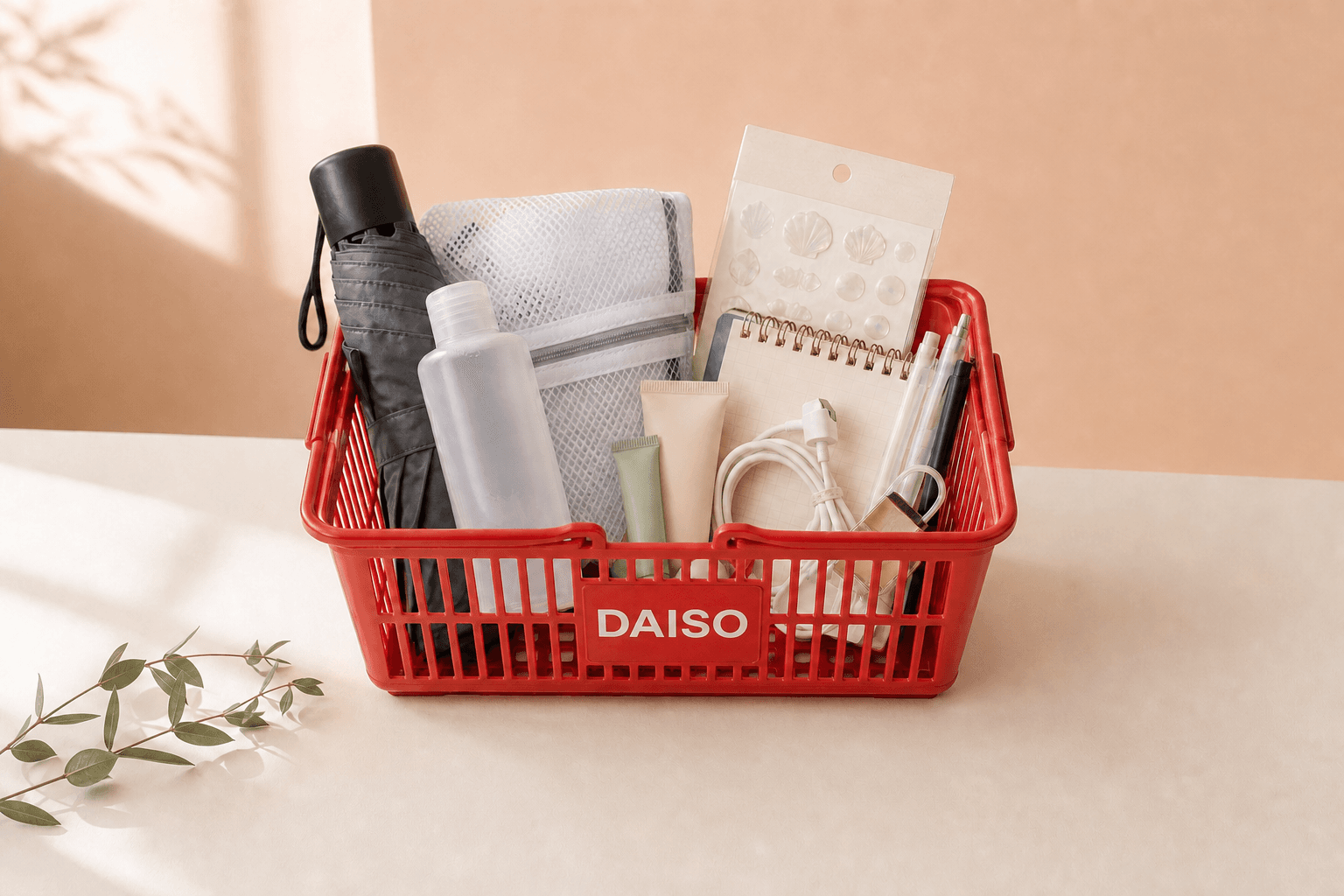
We keep bringing this up because it's the most accurate signal about what that store actually is. Not a beauty temple — a convenience-store-shaped errand that happens to be very good at skincare. The most local thing you can do in one is leave with a serum and a bag of protein chips. What else we'd put in the basket.
07 — The idea
Start with the rice
저속노화 — jeosok-noh-hwa, low-speed aging — is the Korean wellness idea of the decade, and its entry ritual is almost comically ordinary: put beans and whole grains in your rice.
That's it. That's where everyone starts. A national health idea propagating through the rice cooker, because Korean meals are built on a bowl of it and changing the bowl changes everything downstream without changing anything else.
It's the best thing on this list to actually take home, and it costs nothing. The full explanation.
08 — The shift
Away from summits
Around 78% of Korean adults visit a mountain at least once a month, and Bukhansan — inside Seoul's city limits — drew roughly 7.53 million visitors in 2025, more than any other national park in the country.
But the interesting part is the direction. Roughly 83% of surveyed hikers say light trekking is what's growing, not peak-bagging, and 84.5% report more people on low hills and 둘레길 perimeter trails near the city.
Korea is walking more and climbing less, socially, with food afterward. Habits worth stealing.
09 — The record
Second in the world
Korean cosmetics exports hit $11.4 billion in 2025, up 11.8%, passing the United States to become the world's second-largest cosmetics exporter behind France. The trade surplus crossed $10 billion for the first time. Importing countries went from 172 to 202 in a single year, and the US became the largest destination for the first time.
The number underneath all of that: small and mid-size companies drove about 71% of it. Why that changes what "K-beauty" means.
10 — The one we're not sure about
Glucose monitors on healthy people
Continuous glucose monitors — the small sensor on the back of the arm, originally for diabetics — have gone mainstream here. One figure puts non-diabetic users at 41.4% of the total. You see them at the gym, in cafés, at dinner.
We find this genuinely interesting and we are not ready to recommend it. The evidence that CGMs improve outcomes for metabolically healthy adults is thinner than the adoption rate suggests, and we've watched more than one person become quietly anxious about a post-lunch curve that was always going to happen.
Filed under: watching, not endorsing. Which is where a lot of the most interesting things in this city sit.
Next month
The Drop List runs monthly. If something here should be on it — a room, an object, a number, a thing you can't stop talking about — tell us.
Read next
The launch issue's opening argument: why everyone is looking at Korean beauty differently now. The category we think is most underrated: Korean haircare is having a moment. The day we'd actually plan for you: a slow Sunday in Seoul.
FAQ
What is The Drop List?
A monthly editorial round-up from A Drop of Seoul — ten things worth knowing, mixing products, places, numbers, and ideas rather than only covering new launches. It always includes at least one thing we're unsure about.
What's the best cheap thing to buy in Seoul right now?
The Italy towel, at roughly ₩1,000, and a Fillimilli heated eyelash curler. Neither costs much, both are difficult to find outside Korea, and both get used.
Why is Korean scalp care growing so fast?
Functional scalp ampoules and serums grew about 52% in a year against 12% for ordinary shampoo, and Olive Young's haircare category grew roughly 200%. The driver is format — leave-on treatments applied to the scalp, rather than rinse-off cleansers.
Is Korea now the world's biggest cosmetics exporter?
Second. Exports reached a record $11.4 billion in 2025, ahead of the United States at $10.8 billion, with France first at $24.3 billion.
Should I get a continuous glucose monitor?
We're not recommending it. It's genuinely popular in Korea — non-diabetic users make up around 41.4% of the total — but the evidence for benefit in metabolically healthy adults is weaker than the adoption suggests.