What to Buy for Your Skin Type, from the Aisle
A shopping list, not a routine — for when you're standing there holding two bottles that look the same.
By A Drop of Seoul Editorial ·
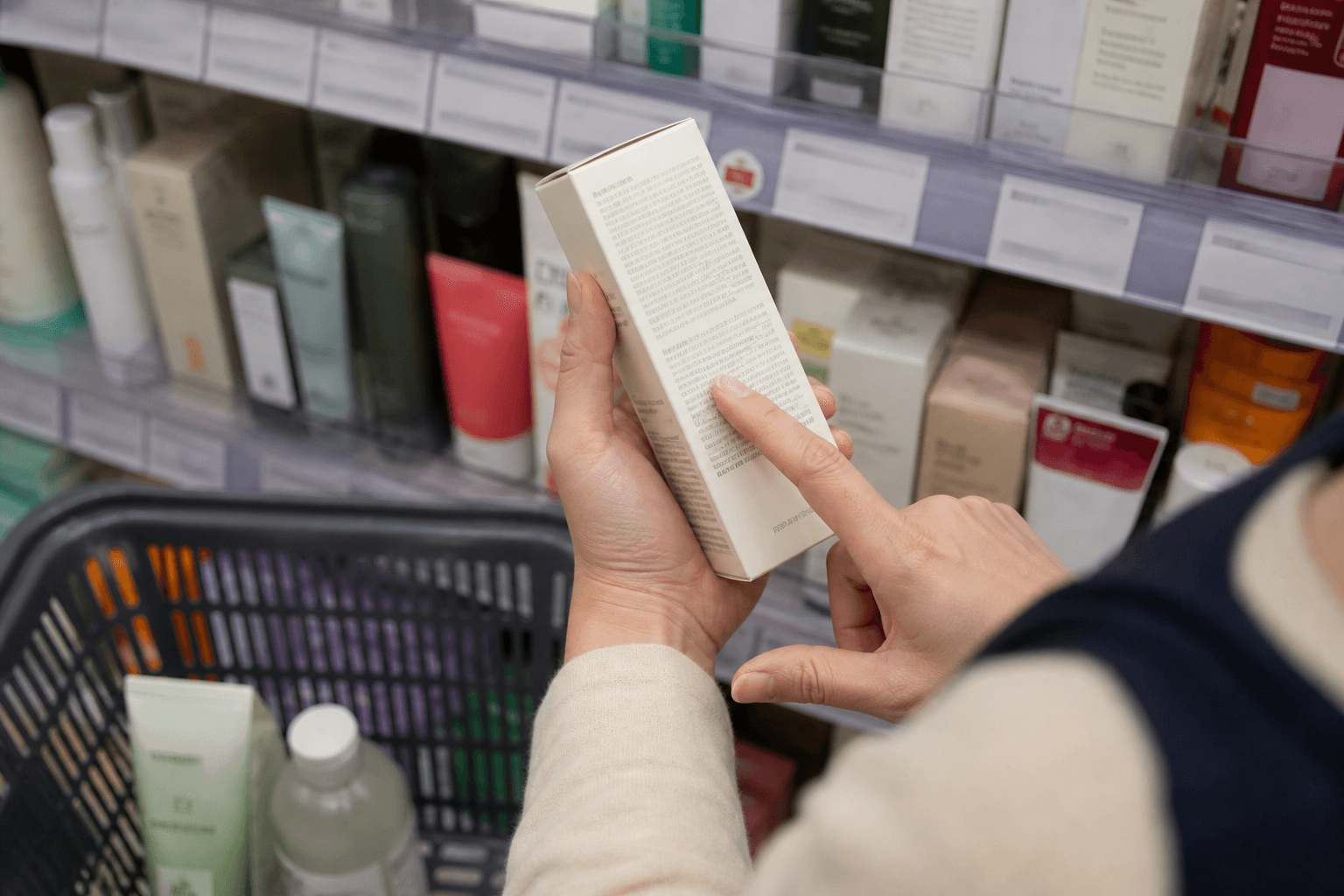
We get sent a lot of photographs. Two bottles, held up under store lighting, with a message that just says: which one?
Usually we can't tell either, because the photo doesn't show the back. But the question underneath it is a good one, and it isn't really about those two bottles. Korean beauty aisles are organized by brand, then by packaging, then by whatever launched last month — never by skin. So you end up deciding with the part of your brain that responds to nice fonts.
This is the shopping list we'd hand you before you go in. Not a routine. Just what goes in the basket, and how to tell which bottle is which.
Quick answer
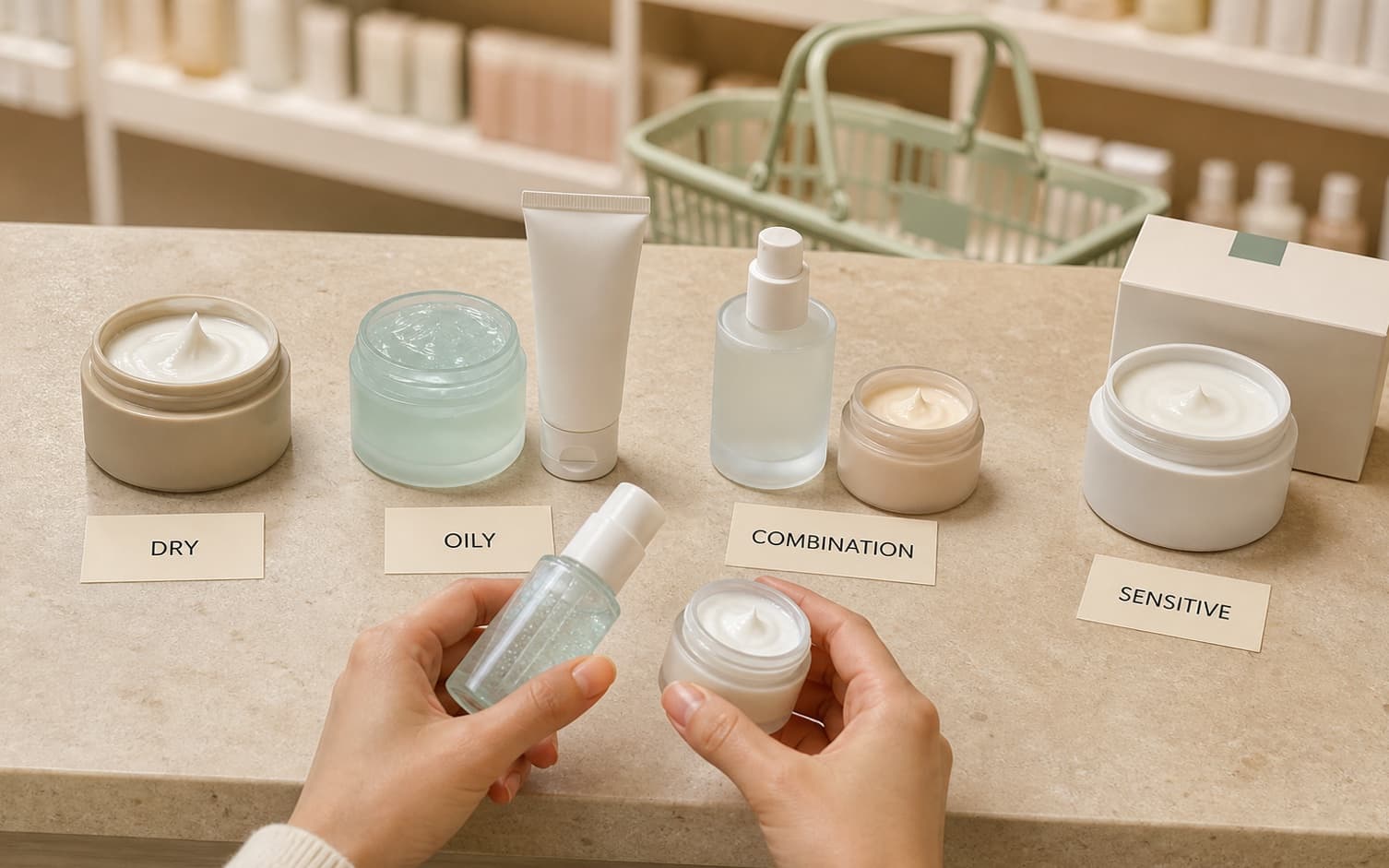
- Dry: a proper cream with ceramide NP or squalane, a cleansing oil or balm instead of a foam, and a hydrating toner.
- Oily: a low-pH gel cleanser, a gel-cream moisturizer, and a fluid sunscreen.
- Combination: one light moisturizer and one small rich cream. Two products, used in different places.
- Sensitive: short ingredient lists, no fragrance, and panthenol, madecassoside, or heartleaf extract on the front.
Everybody buys sunscreen. That part isn't negotiable.
Work out what you have — not what Seoul is doing to it
Most people get this wrong, and the city actively makes it worse. Seoul in August is humid enough that dry skin behaves like normal skin. Seoul in January is dry enough to make oily skin panic and buy a cream it will never finish. Whatever your face is doing on day three of a trip is not a diagnosis.
Wash with something plain, put nothing on, wait an hour.
Tight and a bit rough everywhere — dry. Shiny on the forehead, nose and chin while the cheeks feel fine — combination. Shiny all over, with pores visible on the cheeks too — oily. Pink, stinging, reacting to a product that never used to bother you — sensitive, which stacks on top of any of the above.
Then there's the fifth situation, the one that drives the worst purchases: oily and tight at the same time. That's not a type, it's a state, usually from over-washing or too many actives at once. Buying something stronger will not fix it. Read the barrier repair routine before you buy anything at all.
Dry skin
You're shopping for a cream you can feel. The kind that holds its shape a little when you tilt the jar. Look for ceramide NP, squalane, glycerin, or panthenol high on the label.
Swap the foaming cleanser for an oil or a balm. Then add a hydrating toner with hyaluronic acid or sodium hyaluronate — the cream needs something to seal in, otherwise it's sealing in nothing.
Leave the sebum-control products, the clay masks, and the strong exfoliating acids. Dry skin usually needs the barrier working again before it needs resurfacing.
One habit worth stealing, and it costs nothing: put the cream on while your face is still damp. It is the cheapest upgrade in skincare and half of us do it without thinking about it.
Oily skin
The instinct is to strip. Resist it — oily skin that gets attacked retaliates, and the tight-then-greasy cycle is almost always self-inflicted.
Buy a low-pH gel or foam that rinses clean without leaving your face squeaking. Buy a gel-cream or lotion; yes, moisturizer, even though it feels counterintuitive. Buy a fluid, light, watery sunscreen, which is the single category Korean brands do better than nearly anyone.
Then pick one targeted thing: niacinamide if it's oil and tone, salicylic acid if it's congestion.
What to walk past: anything promising to eliminate oil, alcohol-forward toners used twice a day, and a thick sleeping mask bought because it was 1+1.
Combination skin
The mistake here is buying one product to satisfy two different faces. It never works. The compromise moisturizer is too heavy for the T-zone and too thin for the cheeks, and you end up disliking a perfectly good product.
Buy a light gel moisturizer for everywhere, and a small tub of something richer for the cheeks and wherever flakes. Gentle gel cleanser. Toner pads are unusually good for this, because you can treat one zone without flooding the whole face — more on that here.
And be a little suspicious of "for combination skin" as a phrase on packaging. It usually describes a middling product that satisfies neither zone.
Sensitive skin
Short ingredient lists. Nothing with something to prove.
Look for panthenol, madecassoside, centella asiatica, heartleaf extract, or allantoin. Cream cleanser rather than foam. A mineral or hybrid sunscreen if chemical filters have stung before.
Skip the essential-oil-heavy "natural" lines, anything advertising a warming or tingling sensation, and multi-acid toners.
Here's the part where we sound like somebody's mother: patch test properly. A little on the jawline, once a day, three days, before it goes anywhere near your whole face. This matters more on a trip, not less. A reaction that starts three days after you fly home is a miserable souvenir.
If fragrance is the issue, the phrase to look for is 무향, muhyang — "no fragrance." It's on more Korean packaging than people expect. Reading Korean labels covers the rest of them.
Four things that outrank your skin type
- Sunscreen beats any serum you're considering. If the budget only stretches to one good decision, this is it.
- One new active at a time. Introduce two and you'll never know which one caused the problem.
- Buy sizes you'll finish. Skincare degrades. A giant promotional jar is only a saving if it survives the year.
- This isn't your last chance. Korean brands ship internationally now. Buy what's cheaper or bulkier to carry; reorder the rest from your sofa.
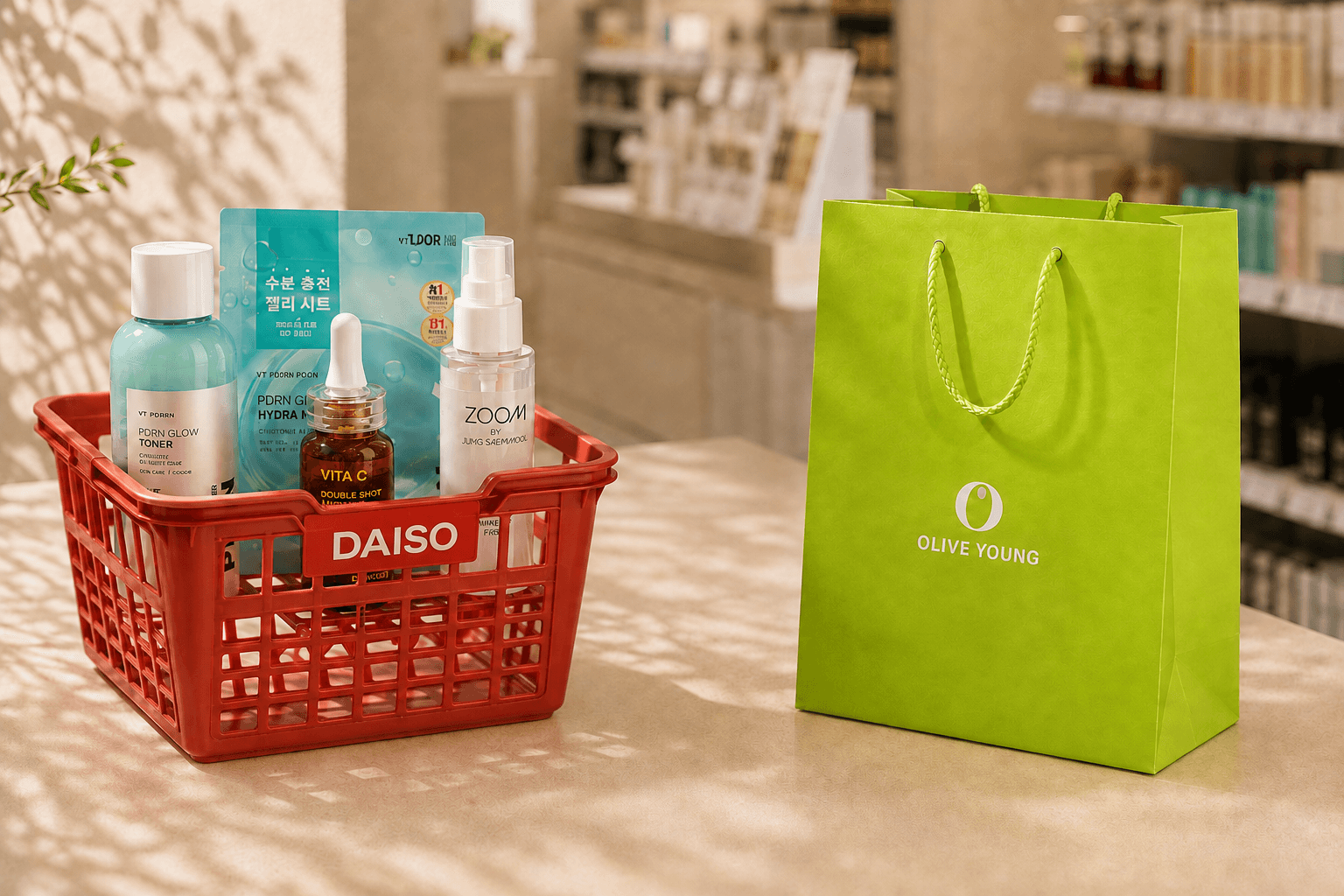
For where to do all of this without losing an afternoon, read the Olive Young guide.
When a shopping list isn't the answer
Persistent acne, eczema, rosacea, melasma, or a reaction that won't settle — none of that is a shelf problem, and no amount of centella will resolve it. Keep the routine short and go to a dermatologist. Seoul is full of them, they're comparatively affordable, and it is a completely ordinary thing to do here. Our clinic-to-home guide covers what happens afterwards.
Read next
To turn the basket into a routine, read the Korean skincare routine by skin type. If you'd rather own fewer things and use them properly, skip-care makes that case.
FAQ
How do I know my skin type before shopping in Seoul?
Wash with a plain cleanser, apply nothing, wait an hour. Tight all over is dry, shiny only in the T-zone is combination, shiny everywhere is oily. Stinging or redness means sensitivity, which can sit on top of any type. Travel and humidity distort the result, so judge by how your skin behaves at home.
What Korean skincare should I buy for dry skin?
A rich cream with ceramides or squalane, a cleansing oil or balm instead of a foaming wash, and a hydrating toner. Apply the cream to damp skin, and hold off on strong acids until your skin feels comfortable again.
What should oily skin buy in a Korean beauty store?
A low-pH gel cleanser, a gel-cream moisturizer, and a lightweight fluid sunscreen. Add niacinamide for oil and tone, or salicylic acid for congestion. Don't skip moisturizer — stripping oily skin usually makes it oilier.
Is Korean skincare good for sensitive skin?
Often, because calming ingredients like centella asiatica, madecassoside, panthenol, and heartleaf extract are common and cheap here. The catch is fragrance, which is widely used. Look for 무향 (muhyang, fragrance-free), buy short ingredient lists, and patch test for three days.
How much should I buy on one trip?
Less than the promotions will encourage. A sunscreen, a cleanser, a moisturizer that suits your type, and one product for a specific concern is a complete purchase. Add masks or toner pads only if you'll genuinely get through them.